
GB Energy is more rooted in ‘big state’ ideology than climate ambition

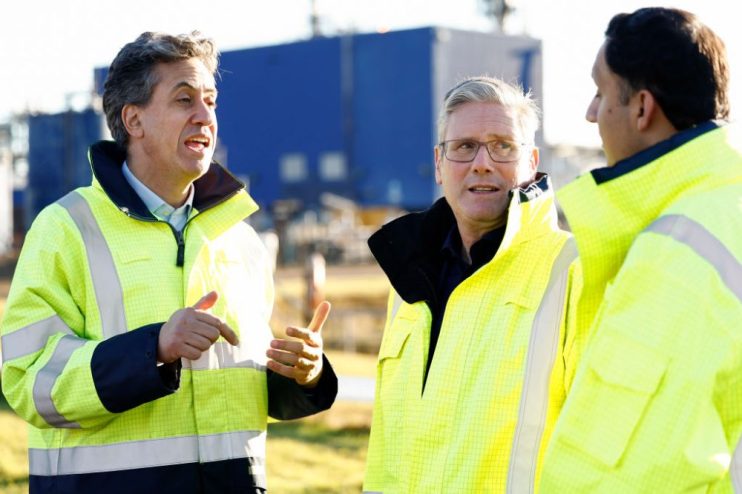
Conservatives need to hold Labour accountable for wasting taxpayers’ money and crowding out private finance through GB Energy, writes Sam Hall
The environmental ambition of the King’s Speech should be applauded. Labour had clearly signalled throughout the election campaign that climate action would be a priority – and it is now following through on that in government. With the Climate Change Committee this week warning that emissions reduction must accelerate to hit our 2030 climate target, this emphasis is undoubtedly vital, but the new government risks taking a far more expensive route to net zero for businesses, consumers and taxpayers with a series of misguided ‘big state’ legislative measures.
The symbol of Labour’s new collectivist approach is GB Energy, which featured on Sir Keir Starmer’s pre-election pledge card. It spoke to people’s understandable desire to take back control of energy markets from dictators like Vladimir Putin, whose throttling of gas supplies to Europe sent our energy bills soaring. But the precise functions of this new body are still poorly defined. The King’s Speech briefing vaguely suggests it will co-invest in both established and nascent clean energy technologies alongside private companies, while also supporting more community energy projects.
Whichever of these roles it assumes, GB Energy is clearly rooted more in Labour’s ‘big state’ ideology than actual climate ambition. It risks duplicating the functions of existing government bodies like the UK Infrastructure Bank and crowding out private capital. This represents a wasteful use of limited public funds which would in fact be better invested in the kind of clean infrastructure that the private sector won’t finance – for instance rail electrification.
The last government showed that private finance is more than willing to lead the way. Contracts for difference, which provide revenue certainty for developers, are sufficient to unlock private investment in clean energy, including the five largest offshore wind farms in the world – without government co-investment.
Another example of Labour’s statist instincts in the King’s Speech was the Passenger Railways Service Bill, which will nationalise franchises as they expire. The last government had also come to the conclusion that the franchising model was broken. But it would be mistaken to think that we should start again with nationalistion. Before the pandemic hit, the railways delivered a third more journeys than pre-privatisation. If we want more people to use this greener mode of transport by keeping fares low, there should still be an important role for competition both in tendering service contracts and in expanding open-access routes.
As the UK is reverting to British Rail, several European countries are going in the opposite direction and opening up their rail networks to more competition. Nations such as Spain, Austria and Italy have all shown how open-access routes can cut rail fares, increase passenger numbers and improve efficiency.
However, not everything in Labour’s agenda involves growing the state’s role in the economy. In particular, conservatives should get behind the pro-growth planning reforms, such as the easing of onshore wind restrictions in England and new legislation to accelerate major infrastructure projects.
There are strong conservative arguments for these changes based on respecting property rights, removing state-imposed barriers to private enterprise and enhancing our energy security. It was a mistake for conservatives to have ceded this ground to the left.
Of course we have to make sure that a race to build does not damage public support for the energy transition, as happened with onshore wind in England in the 2010s. We need best practice community engagement by developers as well as mandatory energy bill discounts for people who live near to new infrastructure. If the new government gets this wrong and alienates rural communities, their 2030 clean power mission will fail and only serve to set back decarbonisation efforts.
The Conservative opposition has been given a political opportunity here. After the wettest 18 months on record which have damaged farmers’ crops, climate ambition should not be the enemy for conservatives. But we should certainly hold Labour accountable for wasting taxpayers’ money and crowding out private finance – as well as set out an ambitious, market-led alternative pathway to net zero.