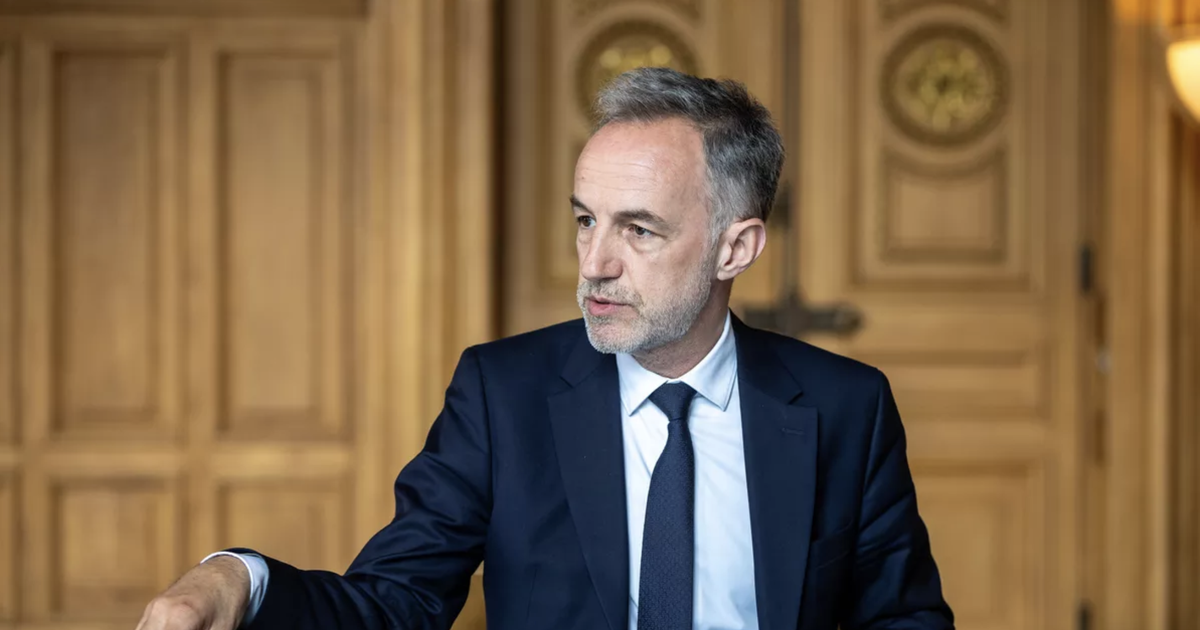
Former first deputy to Mayor Anne Hidalgo, Emmanuel Grégoire was elected mayor of the capital in the latest municipal elections.
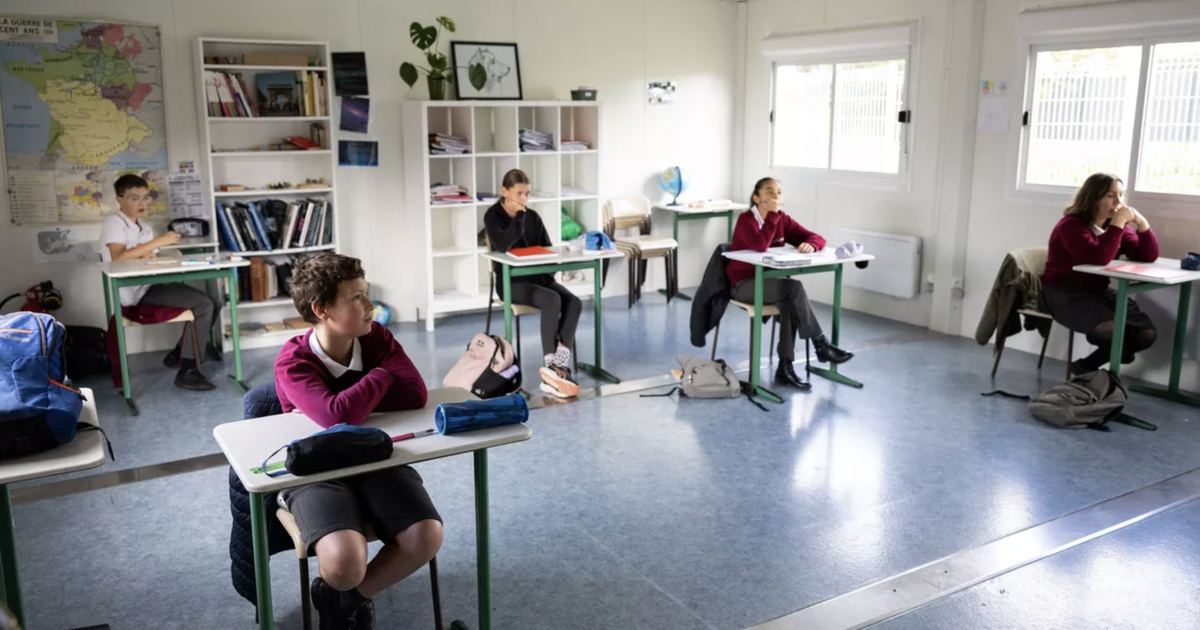
the newspaper — You are expected this Monday at Saint-Dominique school to meet with staff and parents at this institution, where sexual abuse scandals have multiplied in extracurricular activities. What are you going to tell them?
EMMANUEL GRÉGOIRE. — I will talk to them directly, but first I am coming to listen. This issue is an absolute priority for me. The citizens’ convention, which begins on May 18, will conduct its work without taboos, and I will draw whatever conclusions are necessary from it. In complete transparency with parents and victims.
PSG’s qualification for the Champions League final led to new scenes of chaos in Paris. Are these acts of violence inevitable?
First of all, I firmly condemn these disturbances, and my thoughts are with the police officer who was most seriously injured. As mayor, I am obviously saddened when an event leads to vandalism or clashes with law enforcement. I would add that this does not make things easier for all those who, like me, would like supporters to be able to celebrate their club’s great victories with dignity.
You mentioned setting up a fan zone for the final before being rebuked by France’s Interior Minister, who reproached you for a lack of consultation...
That surprised me, but I do not want to engage in polemics. The city obviously cannot organize anything without authorization from the police prefecture, and given the sensitivity of the matter, likely also from the Interior Minister and probably the President of the Republic himself. So we are going to work jointly between the club, the city and the state, with the safety of people and property as the number one criterion. I want this sporting moment to also be a moment of popular joy.
Ironically symbolic as it was, the “Living Together” exhibition on Place de la Concorde was vandalized. Can people still believe in living together in Paris?
The city supported that exhibition, and I had the pleasure of inaugurating it a few weeks ago. As soon as I was informed, the city sent staff to restore it. I would like to take this opportunity to thank the staff, but also the Parisians who spontaneously offered help, proof that yes, living together still exists in Paris.
You wanted your public space transformation projects to be the central communication focus of the first regular Paris Council meeting. What are you going to say there?
The maintenance and development of public space is, from my point of view, an absolutely essential issue. I spoke about it a great deal during the campaign and I now want to work on it forcefully. We will continue the transformations already underway, particularly in adapting to climate change, but we will considerably improve the quality of execution, maintenance and overall living conditions. That is my conviction, and I believe it is also the conviction shared by Parisians: one does not go without the other. With three guiding principles: universal accessibility; equality between women and men; and a child-centered bioclimatic city, with spaces better adapted to the youngest and most vulnerable people. And a change of method: I want to considerably strengthen the role of district mayors in local planning policies, while I focus myself on strategic and metropolitan issues. Finally, I want to protect Paris’s heritage, but the city must remain this capital that ranks among the world’s leading economic cities. That requires maintaining a certain agility in transformation in the name of prosperity.
You structure your strategy around five priorities, the first of which is “living public space better on a daily basis”…
Despite the daily work of city employees, I know that many Parisians are dissatisfied with the quality of public space, and I sometimes share that feeling. I could point out that Paris is subject to an extreme intensity of use, but I want to affirm my standards in terms of cleanliness, decluttering and comfort. In particular, greater attention to sidewalks, construction sites, terraces and everyday incivilities. We will present an action plan targeting 1,000 trouble spots, meaning sectors where we have identified recurring problems. Whenever there is a combination of overcrowding and poverty, public spaces deteriorate very quickly. This is for example the case in station districts or ultra-tourist areas such as the Champ-de-Mars or the Trocadéro. As well as places like Château Rouge or Barbès. The rather spectacular results we achieved at Porte de la Chapelle show that when the necessary resources are deployed, it works. During the campaign, I announced the creation of a “general delegate for design and aesthetics,” responsible for implementing my plan for a “right to beauty” in every Paris neighborhood. This person will coordinate and supervise aesthetic and design issues in development projects.
A “general delegate for design and aesthetics,” but no deputy mayor for heritage?
This controversy is pointless. What is the most powerful tool for protecting heritage? Urban planning rules! We appointed a heritage delegate attached to the deputy mayor for urban planning because a simple heritage delegate, with no leverage other than the title “heritage,” would not be able to do much in practice. The rules are in the bioclimatic local urban plan: we modified it during the previous term, and we are not going to revise it again. It is extremely protective in terms of heritage because it is the first urban plan that, for example, protects historic street furniture. Greater attention will be paid to façades, pavements, historic furniture, bridges — notably the Pont des Arts — as well as other engineering structures. But also to ordinary heritage and all the elements that make up Paris’s identity. You see: heritage is so important that I intend to take charge of it personally.
Greening and pedestrianization also occupy a major place in your project…
These are structuring axes of an ecological policy for transforming public space. We are planning the creation of 80 “pedestrian hearts.” The goal is also to guarantee, wherever possible, at least one shaded sidewalk on every street, in order to make walking more comfortable. The pedestrianization of the Seine riverbanks will be accelerated in order to create a continuous 25-kilometer promenade. The opening of the Petite Ceinture will continue, with an additional 10 kilometers of calm, green promenade. We also want to transform a first section of the ring road into an urban boulevard; we will work on this with neighboring municipalities.
Even if that means reducing the place of cars even further?
My mantra is not to be against cars, but to ensure that everyone who can do without them does so, so that those who cannot do without them — craftsmen, shopkeepers, people with reduced mobility, etc. — can use them under good conditions. We will undertake a small revolution in parking: we want to increase specialized parking spaces to simplify the lives of all those for whom the car is a work tool and who need it every day.
What about paid parking? For two-wheelers, for SUVs…
With a few adjustments, we will maintain the current situation. However, I would like to study the possibility of making a few changes to certain conditions. This is notably the case for some family electric vehicles.
Will you also improve public transportation to make Paris more accessible?
We have created enhanced-accessibility neighborhoods — one in each arrondissement — in which 100% of public buildings are accessible to people with reduced mobility. We are going to continue. We will deploy 15 express bus lines, which will benefit from super-priority at intersections. I can also announce that we are going to recreate a protected bus lane on Rue de Rivoli. An experiment with 24-hour metro service on automated lines will be studied with the regional authorities, in order to better meet needs, particularly for night workers. The municipal police’s action against traffic code violations will be strengthened. Calming public space requires compliance with street rules by all users, including cyclists. We will create a specialized brigade against motorized violence. With one overarching goal: zero deaths, zero serious injuries. Finally, we will act more forcefully against noise that degrades quality of life, whether from overly loud motorized two-wheelers, deliveries, terraces or poorly managed nighttime activities.