“Less Affluent Customers Are Gradually Being Driven Out”: The Slow Disappearance of Budget Hotels in Paris
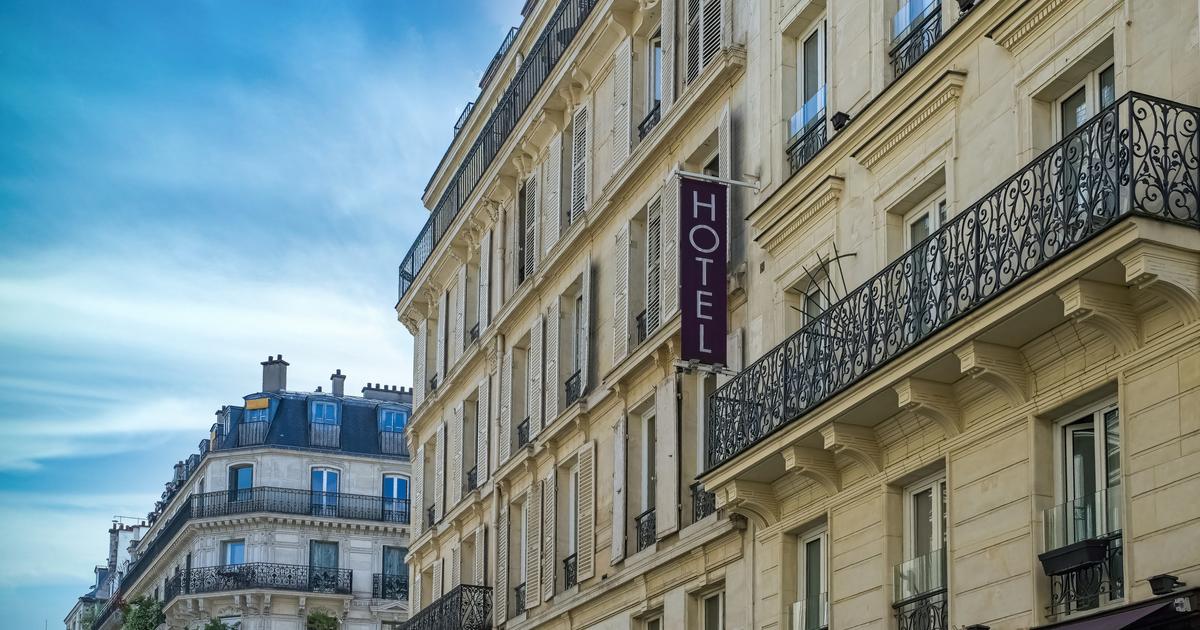
In the lobby of the Artemisia Hotel, just a stone’s throw from Pigalle, dozens of American tourists are waiting for their bus to the airport. Valérie Allichon-Genest, the hotel’s director, thanks them for their five-night stay before giving a tour of the premises. It is hard to imagine that just a few years ago, this was the site of the Royal Fromentin, an aging three-star hotel. After more than two years of renovation, the hotel reopened in late 2023, now boasting a fourth star. Everything has been revamped: light-colored hardwood floors, vintage furniture, Art Deco headboards, a spa, a sensory shower — even the old elevator, which has been kept as a backdrop for guests’ photos.
“The hotel had enormous potential,” says the director, adjusting a curtain in a room. “We’ve worked on standards, service, amenities and energy efficiency. Today, we offer rooms from around €200, depending on the season, up to €550 for suites,” she says. Two new ones, complete with a hammam and jacuzzi, are set to open by spring 2027. The goal is to transform the establishment, once covered in green carpet and orange walls, into a chic “oasis of well-being” in Montmartre.
This transformation is far from an isolated case. Across the capital, hotels are renovating their rooms, expanding their services, and moving upmarket in the process. This trend is driven by travelers’ expectations but risks leaving some of them — those with fewer financial resources — behind.
“Since 2019, Paris has lost three-quarters of its one- and two-star hotels,” says Didier Arino, director of the consulting firm Protourisme. Of nearly 1,600 establishments, fewer than 200 remain in these categories, while high-end and luxury hotels have proliferated. Compared to other capitals, “Paris is now the only destination where luxury and mid-range accommodations account for more than 80% of the market,” the expert says. It is now difficult to find a hotel for €50 or even €80 a night during peak season.

History, identity, authenticity
Olivier Petit, managing partner at In Extenso Tourisme, shares this observation. Nationwide, nearly 50,000 two-star rooms have disappeared over the past 10 years. In Paris, the number of four- and five-star hotels continues to grow. “The cost of real estate and renovations is such that if I buy a three-star hotel, the only way to make the investment profitable is often to upgrade it to four stars,” he explains.
This view is shared by Christie & Co, which facilitates hotel transactions: “In Paris, a high-end hotel often represents an investment of €1 million per room. It is therefore much more profitable to offer a four-star property than a three-star one.”
Guest expectations are accelerating this trend. “After COVID, we’ve seen a real demand for service,” says Sara Brami, general manager of Hospya, which manages 27 hotels in the Paris region. Complimentary amenities, a coffee machine, bottled water and tasteful decor have become standard features, even in establishments that were not previously required to provide them. “Today’s guests expect more for the same price. They no longer want just a room to sleep in but a story, an identity and authenticity,” Brami says.
A wealthy international clientele
But this move upmarket is driving up the cost of stays. Since COVID-19, the average price of Parisian hotels has risen by more than 40%, according to Protourisme, reaching an average of about €210 per night. That increase far outpaces inflation. “Over the past two years, upscale and luxury hotels have raised their rates by 25%, compared to 10% for budget hotels,” Arino says.
According to Christie & Co, the average price has even reached nearly €330 over the past 12 months in Paris, making the French capital one of the most expensive in Europe. In contrast, the mid-range segment hovers around €125 per night, according to the Louvre Hotels Group, while budget hotels average around €45, outside of central Paris.
This trend is also driven by the return of international guests. “Paris attracts high-value guests who are looking for more upscale offerings,” says Alexandra Dublanche, president of Choose Paris Region.
Christie & Co notes that the return of Asian tourists now offsets the decline in travelers from the Middle East, while Americans remain a significant presence.
According to Arino, “two-thirds of hotel stays in Paris are now booked by foreigners,” a clientele whose purchasing power often exceeds that of European tourists.
“Beyond the ring road”
“Less affluent customers are therefore gradually being driven out of Paris,” Arino says. Some are moving to the inner suburbs, while others are opting for short-term rentals or youth hostels.
“Demand isn’t disappearing; it’s shifting along the metro lines, beyond the ring road,” Olivier Petit says.
Dublanche, however, qualifies this interpretation: “The working-class clientele isn’t disappearing; rather, their behavior is evolving. Our goal is therefore to direct visitors more toward other areas of the [Paris] region.”
Faced with this persistent demand, a new generation of establishments is attempting to reinvent affordable accommodations. “I felt that budget hotels had become outdated,” says Emmanuel Petit, founder of Eklo. His concept focuses on compact rooms, dormitories, dining areas and coworking spaces to offer a more appealing experience without aiming for luxury.

For Olivier Petit of In Extenso Tourisme, this evolution does not signal the disappearance of budget hotels but rather their transformation. Youth hostels, new-generation hostels and apartment hotels are expected to continue growing, particularly in the Paris region, to cater to young people, families and international guests seeking more affordable accommodations. “The budget hotel sector is going to become more hybrid,” he concludes, with family rooms, dormitories and common areas designed as much for sleeping as for working or socializing.