Rick Atkinson: “Without France, there would have been no American independence in 1783”
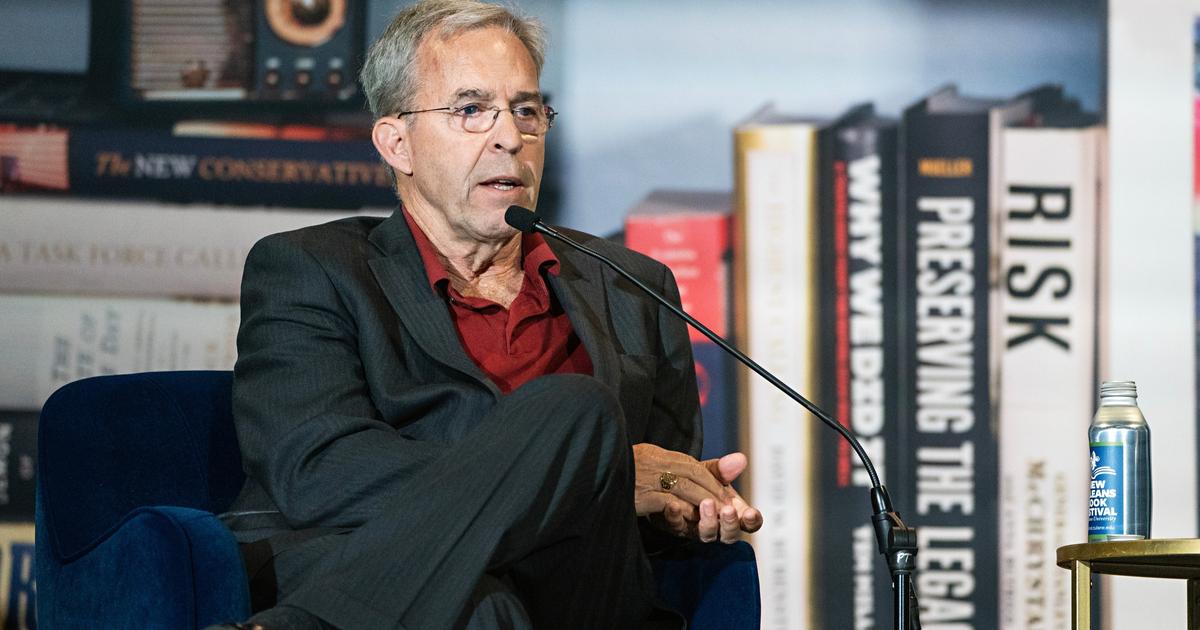
Rick Atkinson is notably the author of The British Are Coming and The Fate of the Day (not yet translated into French).
LE FIGARO. — What significance does the Declaration of Independence still hold, 250 years after its proclamation?
RICK ATKINSON. — We Americans have grown up with the myth of independence. The Founding Fathers tend to be revered as saints in the United States. This is not always based on solid historical foundations. Part of my work, as is the case for many other historians, consists of dismantling this mythology. Because the true history of this period is far more complex, far more interesting and far more in tune with the country we have become. It is very difficult to identify with a marble statue. Yet that is not what the figures of that era were like. The subsequent accumulation of veneration and myths has turned them into austere and unapproachable figures.
George Washington, who is rightly regarded as the central figure of American independence, had, at the time of his death in 1799, hundreds of slaves working on his estate at Mount Vernon. There is no clear-cut way to resolve this moral dilemma. We must come to terms with it one way or another. Thomas Jefferson owned even more slaves, whom he did not free upon his death, as Washington did. Both are part of the highly complicated, highly confused and highly uncomfortable history that is the founding of the United States.
Since the bicentenary in 1976, a majority of Americans have come to recognise that this is part of our history. This country’s early prosperity was largely based on slavery. The ambitious ideas on which it was founded, notably the famous phrase from the Declaration of Independence: “We hold these truths to be self-evident, that all men are created equal”, were not true in 1776, when Jefferson wrote the text. But these words are an aspiration, which has served as a guide for our country as we strive to follow and achieve the ideals of the Declaration and to honor the commitment the Founding Fathers made when they rebelled against Great Britain, which at that time was the world’s largest empire and most powerful navy.
Does the United States still agree on its meaning, at a time when the country is going through a period of division over its collective identity?
There is indeed a certain amount of anxiety. One of the lessons of history — and one of the pleasures of being a historian — is that we can take a step back and see that this country has been arguing and dividing itself since 1775, and indeed long before that. It is part of the national DNA; it should come as no surprise to anyone today.
And certainly not the generation of the War of Independence, which also took on the dimensions of a civil war. Over the course of these 250 years, we have experienced, just like France, numerous crises and very serious challenges, in which the country’s very existence was threatened. Just like France, we have muddled through and overcome these tests. This demonstrates a certain resilience and the country’s ability to unite when necessary in the face of existential crises, such as the Revolutionary War, the Civil War, the two world wars, the Great Depression, and so on. The period we are currently going through, however unpleasant and toxic it may be, is nothing compared to what we have experienced in the past. This should be cause for celebration in itself.
Independence Day also celebrates the Franco-American alliance. Would this have been possible without French assistance?
Our alliance with France is one of the things we should be celebrating today, because without France, there would have been no American independence in 1783. It might have happened later, but the French played a crucial role in the victory. The war was no easy feat. The American cause went through some very dark times. When George Washington was driven out of New York in the autumn of 1776 and pursued by the British across New Jersey and the River Delaware into Pennsylvania, he wrote to his brother: “I think the game is pretty near up.” In 1780, when an American army was surrounded and routed by the British at Charleston, with 5,000 men killed or captured, the situation was extremely grave.
This is where France entered the fray in a big way. Louis XVI and Vergennes had already provided substantial aid, but Rochambeau’s arrival in 1780 turned the tide at a critical moment for the American cause. An initial attempt at intervention led by d’Estaing had not been very successful. He was simply unlucky. Rochambeau was different. His 1781 campaign unfolded almost to perfection, which is highly unusual in any war, where the rule is that events never turn out as one expects. This was the exception to the rule. Rochambeau and Washington got on well. Rochambeau was very deferential towards Washington, as he had been ordered to be at Versailles; however, he managed to dissuade Washington from launching a campaign against New York. Admiral de Grasse also demonstrated remarkable ability and arrived just in time to drive off the Royal Navy squadron and seal off the Chesapeake Bay. Everything fell into place, partly thanks to luck, partly thanks to the commitment of the American and French allies to ensuring that everything worked out.
The French also provided money, in hard currency, to pay the American soldiers, at a time when America was quite simply ruined, and the Continental dollar was literally worthless. This, then, is another reason why the country was so dependent on France. This aid naturally contributed to the destabilization of the French economy, and we know where that led. But this alliance between an absolute Catholic monarchy in France and Protestant republicans determined to overthrow their legitimate king was by no means an easy one. Yet it came to pass and proved victorious.
La Fayette, another Frenchman who played a central role during this period, remains more famous in the United States than he is in France: what does he represent for Americans?
Americans see La Fayette as one of the heroes of independence. He was only 19 when he arrived, having left France against the king’s orders, aboard a ship he had chartered himself. He landed in South Carolina before traveling to Philadelphia. He presented himself very humbly to Washington and Congress, as he had very little military experience. When he was appointed major general, it turned out he wasn’t half bad. Above all, he was a quick learner. His wound at the Battle of Brandywine earned him a great deal of sympathy. Although the fatherly bond he formed with Washington — who had no children of his own — was no doubt somewhat exaggerated, there was a sincere affection between them. They went through many trials together. La Fayette had immense respect for Washington. The legend of the War of Independence was taking shape when La Fayette returned in 1824 for his grand tour of the United States. He arrived at just the right moment and was received as a celebrity, which further cemented his reputation in the United States. Americans are unaware of his role in the French Revolution, and of the fact that he is viewed with a certain ambivalence in France for his role during that period.
Are there still discoveries to be made by historians regarding this period?Like all major historical events, American independence and the French Revolution are inexhaustible subjects. There are still things to discover, to put into context, and myths to debunk. Given my background as a military historian, I am also always interested in what is happening on the other side of the hill. I have tried to understand what the British are up to. I spent a great deal of time in the archives of George III at Windsor, trying to understand why they waged war against their own people for eight years across an ocean in the age of the sailing navy. It’s far more interesting than the caricature the Americans paint of George III and the “stupid Brits.”