First, the numbers. They speak for themselves. No. 2 on the U.S. bestseller list (Literary Hub, April 5, 2026), I Who Have Never Known Men has sold 501,677 copies across North America and is racing ahead with 515,000 copies in the United Kingdom.
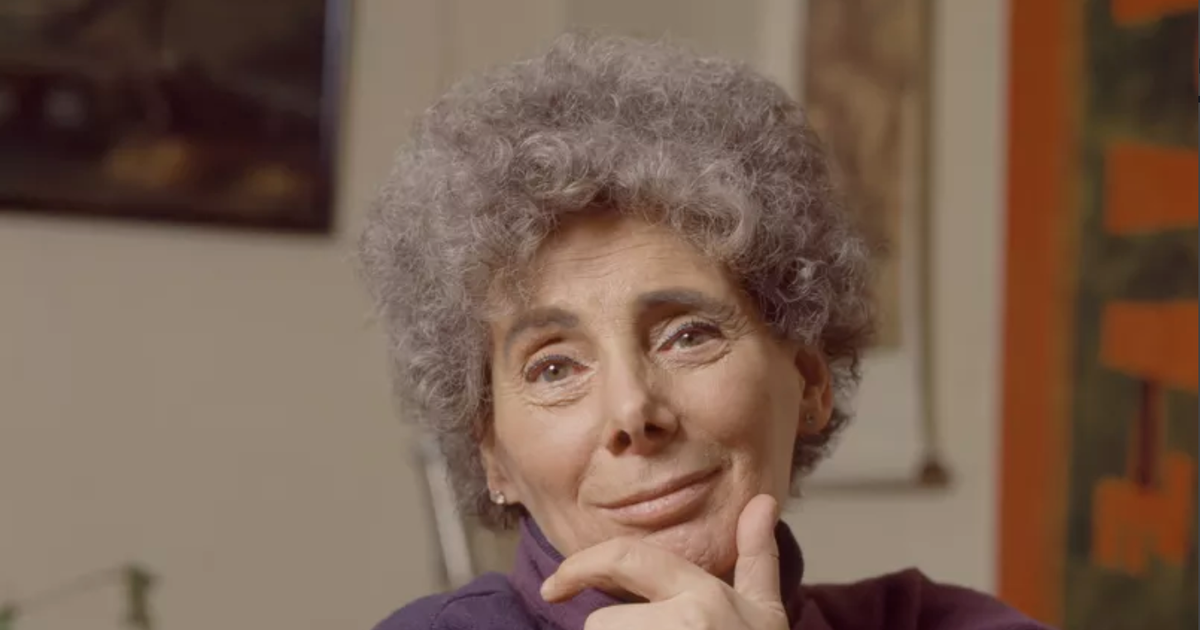
Altogether, 1,044,410 books have been sold worldwide, with 40 foreign rights deals and soon a film co-produced with Disney Studios. “I’ve just signed a contract,” says Marianne Puttemans, one of Jacqueline Harpman’s two daughters. Harpman (1929–2012), whose “utopian novel (...), a story of the end of the world narrated by a sole survivor, the narrator,” as Philippe Cusin wrote in the newspaper in 1995, is now the subject of an unexpected publishing craze. And this, 30 years after its original release.
The Handmaid’s Tale for Gen Z
Who are the architects of this revival? BookTok creators—reading enthusiasts who share their favorite books on TikTok. Among them is singer Dua Lipa, who has contributed in a major way to renewed interest in this dystopian work that resonates with Gen Z preoccupations.
People aged 20–25 were deeply affected by lockdowns and then by Donald Trump’s re-election in the United States. How could they overlook a dystopia featuring 40 women, including a 15-year-old girl, locked in an underground cage under the watch of guards who never speak to them, forbid them from touching one another, deprive them of all privacy, and then suddenly disappear. Left entirely on their own, the women return to the surface and discover a deserted, uninhabited plain where they have no bearings whatsoever.
The revival of I Who Have Never Known Men began in 2019 when Vintage Publishing republished the apocalyptic novel, which had achieved only limited success in the UK in 1997. Halfway between The Road by Cormac McCarthy, with its wandering father and son in a hostile world, and The Handmaid’s Tale by Margaret Atwood, Harpman’s novel shares common ground with the work of the Canadian writer: a love of science fiction and a denunciation of the subjugation of women under a totalitarian regime. A story of transmission but above all of female resilience in extreme circumstances, the novel undoubtedly speaks to today’s young women. The book took off, earning the nickname “The Handmaid’s Tale for Gen Z.”
For an anxiety-ridden era
“It’s incredible, it’s insane,” says publisher and writer Blandine de Caunes, who originally published I Who Have Never Known Men in 1995. A finalist for the Femina Prize, the book had attracted attention at the time—but nothing compared with its current success. “Certainly, this is a very difficult, very anxiety-ridden era, very much marked by end-of-the-world and climate fears. And suddenly this story of a group of women surviving and managing on their own in an apocalyptic world, without our even knowing whether they are on Earth or another planet, probably explains why the book speaks to us,” the publisher suggests. “But once you’ve said that, it remains an extraordinary stroke of luck. Literature occasionally grants us these little miracles. Because this truly is a miracle.”
The meeting between Jacqueline Harpman—winner of the 1996 Médicis Prize for Orlanda (jointly with Jean Rolin for L’Organisation)—and Blandine de Caunes owed much to chance. Much like the novels of the Belgian writer and psychoanalyst, who loved nothing more than staging unexpected stories born during her train journeys between Paris and Brussels. Such was Orlanda, a nod to Orlando by Virginia Woolf, where a woman’s transformation into a man begins at the Gare du Nord. And also L’Orage rompu (1998) (The Broken Storm), the story of love at first sight between a young widow and a bored businessman on a train. A theme revisited in Le Placard à balais (The Broom Closet), one of three short novels gathered this May by Stock in a single volume.
Des femmes imaginaires (Imaginary Women), with a preface by Amélie Nothomb, reinforces the importance Harpman gave to her heroines: rebels who cast off conventions to gain autonomy. “Many people wondered about my mother’s feminist convictions. Yes, she was clearly a feminist; she couldn’t understand how anyone could not be,” writes her daughter. To which Blandine de Caunes replies that her own mother, writer and feminist activist Benoîte Groult, and Jacqueline Harpman “liked each other very much and read each other’s work.” With one exception: “Jacqueline opposed the feminization of job titles. I told her, if you keep this up, my mother won’t love you anymore. But it wasn’t a big deal. We laughed about it.”
This fiercely independent spirit had already been praised by André Brincourt in September 1996 in his weekly Figaro littéraire column, celebrating Orlanda and its focus on transsexuality. The fact that Jacqueline Harpman did not want to “write morally correct stories... is fortunate for us,” he wrote. He had no idea how right he was. Because although Harpman’s literary world stood apart from introspective self-exploration, “her psychoanalytic practice nourished everything, without ever interfering with the narrative,” Blandine de Caunes explains.
Marianne Puttemans adds: “My mother simply wrote well, without embellishments, without needing to use precious vocabulary to impress people.”
Nothing sugary or self-pitying in her writing
“Her writing contains nothing sugary, nothing self-pitying, and this dryness coupled with a powerful imaginative universe has everything to appeal to Anglo-Saxon readers,” confirms Manuel Carcassonne. The CEO of Éditions Stock also notes with amusement that he is the only member of his current young editorial team who actually knew the Belgian author. “I found her very intelligent but also very mysterious, very distant. I visited her several times in her house filled with books, built by her husband, architect Pierre Puttemans. I was impressed by the discipline of her working life. She would always tell me, ‘Manuel, I only have an hour for lunch,’ because she divided her time between writing and seeing patients at home.”
At the time, Carcassonne was literary director at Grasset. Harpman had just received the Médicis Prize for Orlanda. Yet although she enjoyed considerable fame in Belgium, “she was not part of any circle in France, which perhaps worked against her,” he observes.
“She had neither the desire nor the need for it; she saw no point,” explains Blandine de Caunes. It was also true that she had a commanding presence. She was “physically impressive. Very tall, very thin. With very curly white hair. You noticed her. But she didn’t engage in power games or displays of excessive feelings she did not genuinely feel. Like ‘the little one’ in I Who Have Never Known Men, she had that curiosity about the world, that desire to understand. She embodied impertinence to the highest degree.”
The publisher also recalls that after beginning her career in the late 1950s and winning the Rossel Prize in 1960 for Brèves Arcadie at Julliard, Jacqueline Harpman stopped writing for 20 years to study psychology, before returning to writing as suddenly as she had abandoned it. The new fame she enjoys today would have pleased her all the more because it comes from the United States “through the gigantic web of social networks,” Blandine de Caunes says happily. Though she regrets that her friend, so fascinated by novelty, never had the chance to experience this new medium that enabled her to reach a new generation of readers.
Maintaining a catalogue
But this literary “revival,” together with the royalties it generates for her heirs and for the publishing house Carcassonne runs within the Hachette group, also prompts him to reflect. “What would have happened if the management of author rights had not been maintained?”
The question comes at an opportune moment. Writers who left Grasset following the dismissal of its CEO Olivier Nora are currently calling for a “conscience clause” allowing contracts to be terminated in the event of changes in publishing management. “A dangerous break,” warns Manuel Carcassonne. “Because part of a publishing house’s work is also, despite changes, to preserve the memory of its catalogue. Provided, of course, that there is a catalogue to preserve.”