
Your GP surgery is a gateway to a host of medical professionals there to help, whatever the issue

It seems strange to think that as recently as the 1970s, ambulance drivers weren’t trained paramedics: they simply picked you up from the site of your emergency and drove you to the hospital – if you required triage on the way, you were generally out of luck.
Today, of course, they’re highly trained professionals, your first lifesaving point of contact and a vital part of the medical network.
We can think of reception staff at your General Practice surgery in the same way: trained professionals who can guide you towards the care you need and ensure you’re seen as soon as possible.
Like all great institutions, the NHS is always evolving. We no longer live in a world where a single man or woman acts as a one-stop shop; now a multitude of specialists work as part of your GP surgery team. The introduction of new health and care staff – more than 29,000 in total – means more patients will get the right help quicker from the right health professional first time, as it’s not always necessary to see a GP for certain conditions. This also has the benefit of freeing up more GP appointments for those who really need them, helping to tackle the ‘8am rush’.
When you need an appointment, advice or other help, the information you provide to staff in your GP surgery helps them to link you up with this growing team of professionals, from Care Coordinators to Physiotherapists, Mental Health Practitioners to Health and Wellbeing Coaches, Pharmacists to Nurses.
And if you get to see and be treated by these expert clinicians first and often sooner than you might see your GP, what’s not to like? After all, if you need physiotherapy for a sports injury, it’s probably a physio you need to speak to, not a GP.
This more modern way of thinking sits alongside a wider change taking place throughout the NHS, which has moved on from analogue to smarter, more digitally connected systems.
Using a form on the website of your GP surgery enables you to request an appointment from your laptop or mobile. Just complete the details, click send and one of the surgery’s team of health professionals will get back to you with the help you need. For millions of users, it’s already a convenient way of getting in touch.
And however you do so – online, by phone or by visiting the practice – your request will always be carefully assessed so you get the care you need. You may have a consultation by phone or over a video call, they may text or email you, or offer a face to face appointment. However you get in touch, the surgery’s growing team of professionals will respond with the care that’s best for you.
Covid put an unprecedented strain on every aspect of the NHS, but it also led to innovation and a more joined-up approach to healthcare. Here’s an introduction to some of the professionals you can be linked with through the staff at your GP surgery:
Care Coordinators
Care Coordinators work with people who may need extra support to navigate the health and care system, helping to connect them to the right services or professionals at the right time. Care Coordinators act as a central point of contact to ensure support is available to help people manage their care.
Clinical Pharmacists
Clinical Pharmacists are experts in medicines and can help people stay as well as possible. They can support those with long-term conditions like asthma, diabetes and high blood pressure, or anyone taking multiple medicines, to make sure their medication is working. Many Clinical Pharmacists can also prescribe medicines.
Health and Wellbeing Coaches
Health and Wellbeing Coaches support people to take steps to improve their physical and mental health conditions, based on what matters to them. They help people develop their knowledge, skills, and confidence in managing their health, to prevent long-term illness, and any existing conditions from getting worse
Nursing Associates
Nursing Associates work under the guidance of a nurse or another health professional. They help with routine health checks, wound care, and provide patients with general health and wellbeing advice.
Paramedics
Paramedics work in a variety of roles within general practice. Their training means that they are used to working with people with a range of health conditions from minor injuries to more serious conditions such as asthma attacks. They help manage routine or urgent appointments and carry out home visits.
Physician Associates
Physician Associates diagnose and treat a wide range of health conditions. They work alongside GPs and the wider practice team to provide care to people, including those with long-term conditions.
Physiotherapists
Physiotherapists are experts in musculoskeletal conditions. They can assess, diagnose and treat a range of complex muscle and joint conditions, reducing the likelihood of needing a referral to a hospital team.
Social Prescribing Link Workers
Social Prescribing Link Workers help people to focus on their social, emotional, and physical wellbeing, working alongside their medical team. They give people time to focus on what matters to them, helping to connect them with local groups and services for a range of practical and emotional support. This could include physical activities and social groups, volunteering and gardening, or even debt and housing advice.
How an evolving NHS is helping patients get the help they need
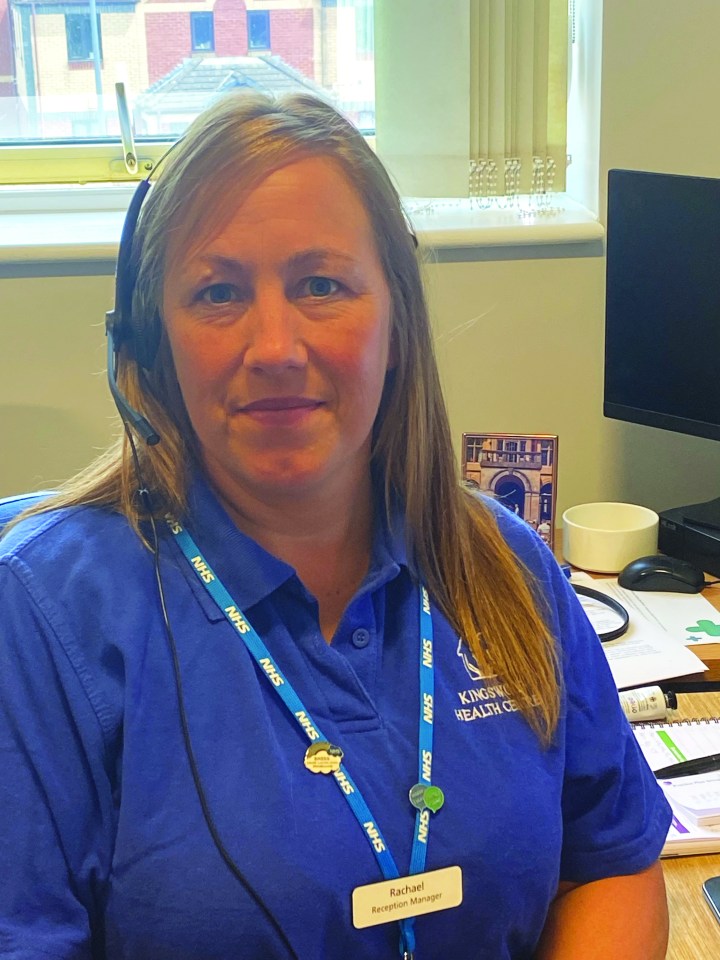
There are lots of ways to make appointments. We encourage people to use online forms on our website, where patients can request care, or they can call us or visit us if they prefer.
Rachael Bird, 41,
Rachael Bird, 41, reception manager, Kingswood Health Centre, Kingswood, Bristol
I’ve been at Kingswood Health Centre for nearly seven years and worked as a manager there for just over a year – before that I was a receptionist and a healthcare assistant. The practice serves approximately 12,000 people with a real mix of ages and ethnicities.
There are lots of ways to make appointments. We encourage people to use online forms on our website, where patients can request care, or they can call us or visit us if they prefer.
If they turn up at the desk, we have a tablet in the reception area with the app on it; we’re happy to show them and explain how it works.
We [receptionists] spent a couple of months training and going through the system. Before appointments were on a first come, first served basis.
The new system allows receptionists to look at the information and book appointments appropriately, with the right member of our team, freeing up appointments of some of our busiest team members.
When the forms come through to us a lot of the patients would like to have a GP appointment but when we
look at the information and their history we can signpost patients to other clinicians that are more suitable for their symptoms (or condition), like paramedics, physios and nurses.
Positive impacts
We have fewer phone calls to deal with and more time to assess the patients’ information and discuss with clinicians what help they need. Around 70-80 per cent of patients are using the online forms to request appointments and most are happy to do it that way.
In-depth training
I have14 receptionists and we’ve all been trained to book appointments appropriately based on clinical need, assessing and directing patients to the right care. The online forms come through and we have an urgent inbox and a routine inbox. A care coordinator or care navigator assesses whether it’s urgent and requires a same day appointment or a routine appointment that we would book within a week.
We get quite a lot of patients with muscular pain. So if a patient sends us an online form for leg pain, we would refer that to our physio. We get a lot of rashes, which we can refer to community pharmacies or our paramedics. Patients with warts and moles go to the community pharmacist. There is a whole list of conditions that the team has been trained to assess, following guidelines set by the GP and clinical team, and direct patients to the right care – if it’s not on there, then we ask a GP.
Sometimes we need to reassure patients who want to see a GP. We encourage them and say to them we have paramedics and nurse practitioners who have been trained to deal with their problems.
I say to them a GP is always on hand if the nurse practitioner is unsure, but they are trained to do these roles… It’s just encouraging people – they deal with these things all day long.
The chances are they will be able to resolve the problem and if they can’t, the patient will be referred to somebody who can.