
Why does Britain suck at building major infrastructure?

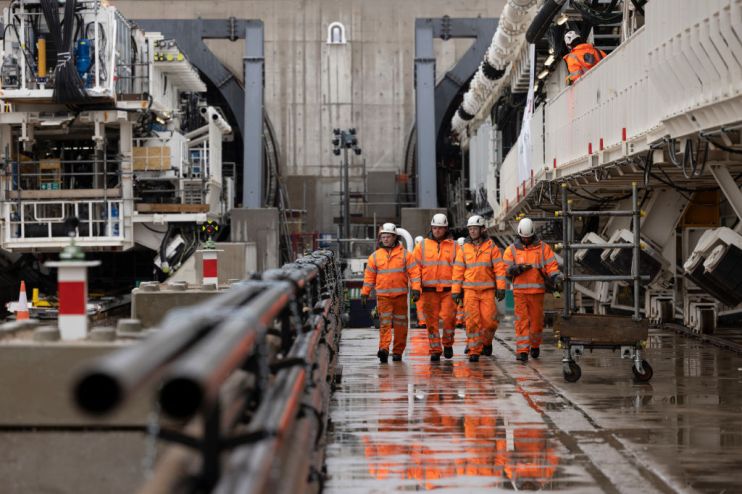
Poorly defined objectives, an overzealous planning system and a disjointed supply chains are all reasons why the UK lags behind its peers on building major infrastructure, a report has found.
Researchers at the Boston Consulting Group’s Centre for Growth dug into why exactly Britain’s infrastructure projects are often long-delayed and way over budget.
The study comes after the i paper reported that the 14-mile Lower Thames Crossing – which is yet to see spades in the ground – has cost £297m in planning permission alone.
While MPs have warned running HS2 from London and Birmingham without the extension to Manchester – as announced by Rishi Sunak at Tory conference – would be “very poor value for money” and that it was not yet clear how it would operate as a “functioning railway”.
Analysis of four major UK schemes – Crossrail, the Arundel A27 bypass, Hinkley Point C and the Royal Liverpool Hospital – have revealed the common themes driving costs and delays.
Poorly defined objectives, which change over time, over complicate projects, while valuation is too focused on narrow criteria, researchers said, while the UK fails to look at key projects within a wider, “portfolio” setting or to identify the most efficient path to key outcomes.
“Gold-plating new standards” and going above and beyond, rather than using existing safety or environmental regulations, add to delays and exacerbate costs, researchers found.
Additionally, planning consultation allows for “multiple opportunities to object, delay and force changes”, while feasibility assessments are “arduous and unnecessarily complicated”.
Projects are often redesigned and rescoped after construction begins, the report said, often due to inadequate “understanding of engineering risks” and a lack of “upfront investment”.
While UK construction firms tend to be smaller with “disjointed supply chains”, multiple small firms are needed, increasing expenses and delivery time and meaning economies of scale cannot develop and alignment between construction and operation is absent or lacking.
Firms also lack “incentive or ability to invest in capital [or] tech improvements”, it stated, and technological capability on sites is lower or “sub-par” relative to nations such as France.
Solutions identified focused on how to “take risk out of the system” and how the government could “be a better client”.
Researchers advised creating a Centre of Infrastructure Excellence to boost “portfolio” thinking for the UK as a whole and create clear multi-year strategies and project pipelines.
The planning process should be reformed, they said, with participants encouraged “to vote for the ‘least bad’ options rather than asked to choose ‘the best’”, and gold-plating avoided.
Public sector contracts should offer more direction and clarity as well as sticking to choices and objectives made and defined early with “discipline” and “ruthless enforcement”.
Construction, delivery and operation should be linked and risk management made less “elaborate”, while contracts “should not be obsessed” with passing on risk to other parties.
Labour has pledged it would reform the planning system as part of its mission to deliver the highest sustained growth in the G7.
A government spokesperson said: “We’re focused on speeding up the delivery of UK infrastructure while driving efficiency as we grow the economy, and last week we published our roadmap for the construction sector on the next decade of projects, projected to amount to over £700 billion.
“We are also delivering over £600bn of planned public sector investment in infrastructure, R&D and defence over the next five years, including an unprecedented package to improve connections in our city regions and billions of pounds to decarbonise buildings.”