
Whisky investment in 2026: Structure, new markets and scarcity

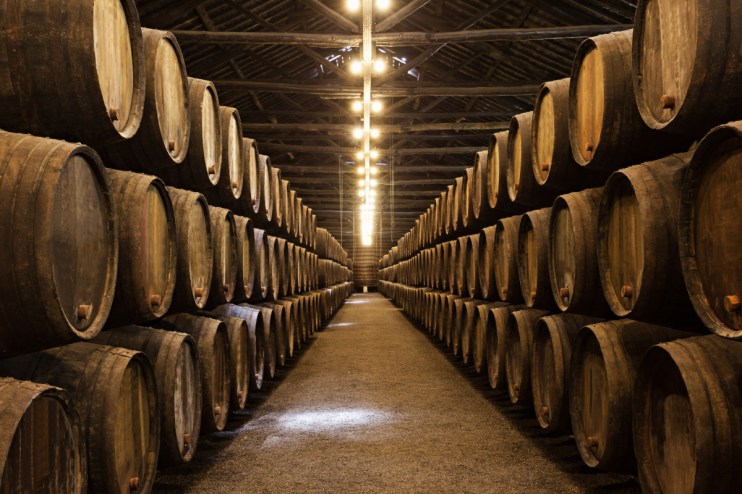
For investors seeking diversification in their portfolios to counter this era of stock market volatility and geopolitical pressures, the biggest takeaway is this: whisky investment has grown up. Premium spirits are no longer a niche asset characterised by the flipping of limited releases to make easy-money following the speculative surge during the pandemic. Instead, whisky is a recognised alternative asset class alongside other collectibles like art or fine wines, and one that is transitioning into a more disciplined, structurally supported phase. And with this change has emerged a more serious investor base with buyers, in VCL Vintners’ experience, who value brand and distillery reputation, age statements, cask fundamentals and maturation and mid to long-term investment approaches. From a personal investor perspective whisky can sit alongside other alternatives so long as you treat it like a business asset, one that has clear documentation, chain of ownership, protection, taxes, and an exit route.
Against a global backdrop of geo-political uncertainty – where are investors’ opportunities?
International tariffs, increased business costs in the UK and a softening of consumer demand led to Scotch Whisky exports declining by 0.6 per cent value and 4.3 per cent volume according to the Scotch Whisky Association (SWA) figures for 2025.
Historically, the USA has been a prime export market for Scotch Whisky but the re-introduction of tariffs has introduced uncertainty resulting in a 15 per cent drop in volume and 7 per cent loss in value since its introduction in April until December 2025 (SWA). In fact, the shift to regionalisation of trade has sharpened focus for other trade deals, such as those recently secured between both the UK and Europe with India and other Asian markets. The deals with India, which take effect in April 2026, will see whisky tariff reductions from 150 per cent to 75 per cent initially for the UK before dropping to 40 per cent. Brands and investors will be watching this closely for opportunities.
Firstly, because big brands and smaller international operators are investing for the long term with improved affordability. In India, these, alongside domestic brands that are producing single malt whisky, are broadening access to the premium whisky market for the growing number of affluent Indian consumers. This trend of premiumisation, or consumers trading up, is anticipated to continue to be a main driver in the whisky category for the second half of this decade and anchors value even when volumes can fluctuate. Much like in the production of quality whisky itself, brands recognise that in these emerging markets across Asia they are in a committed process of building brands over many years initially developing trust and loyalty for day-to-day consumption and then latterly for more sophisticated investment behaviours.
While these environmental factors often have an immediate impact on the volatility of other investment categories as compared with collectibles, whisky’s correlation to financial markets remains low, and volatility tends to be slower and less dramatic than in stocks, equities or crypto.
Scarcity and supply constraint drivers
Looking at a wider Asia context, a few things stand out. High-net-worth buyers in Hong Kong, Singapore and mainland China are accumulating maturing inventory, usually casks not bottles, effectively locking away future aged stock before it reaches the secondary market. This behaviour reduces long-term supply availability and can amplify price movements. Peculiarly to China, buyers tend not to enter the market incrementally; they arrive in waves.
Historically, buying surges coincide with improving domestic liquidity, easing capital controls and stronger luxury sentiment. Demand tends to concentrate on aged Scotch from regions such as Speyside and Islay, where brand prestige carries gifting and status value. Investors should expect episodic volatility from Asia, but structurally upward demand over the long term.
The most significant forward-looking driver, however, is supply. Multiple distilleries have reduced production in response to short-term market conditions. While this may weigh on primary volumes today, it sets up a potential scarcity window six, 10 or 12 years from now when fewer casks reach optimal age.
For 2026, expect a market defined by disciplined capital rather than exuberance. Returns are likely to come from genuine rarity, older age statements and globally recognised brands rather than short-term release cycles.
Tariff adjustments or improved UK-China trade dynamics could reignite demand. The pattern is cyclical rather than linear but fundamentally increasing over the long term.
2026 predictions: what a “grown-up” whisky market looks like
Whisky investment in 2026 is not for the impatient. The easy gains from the pandemic-era surge have largely passed and now we are seeing a quieter phase characterised by recalibration, professionalisation and long-term positioning. Ironically, this more subdued environment may represent a better entry point for investors.
Periods of quieter sentiment typically set down a marker for future scarcity. Production slowdowns today, combined with growing global wealth and increasing premiumisation across Asia and emerging markets, suggest that the whisky entering warehouses now may come across a very different demand landscape when it reaches maturity. Investors are therefore not buying current market momentum; they are underwriting future availability.
The whisky maturation process by its very nature also forces discipline – it cannot be rushed unlike equities, and requires time, storage and strategic exit planning. Consequently, it favours investors prepared to approach the investment in years rather than quarters. In an age progressively dominated by short-term news cycles and algorithm-driven markets, assets that reward patience can play an important psychological as well as financial role within diversified portfolios.
As transparency improves, global distribution expands and investor sophistication rises, whisky casks are regarded less as speculative collectibles and more as tangible, long-duration assets linked to global luxury consumption.