
What’s to blame for Tory woes? Boris Johnson and Brexit

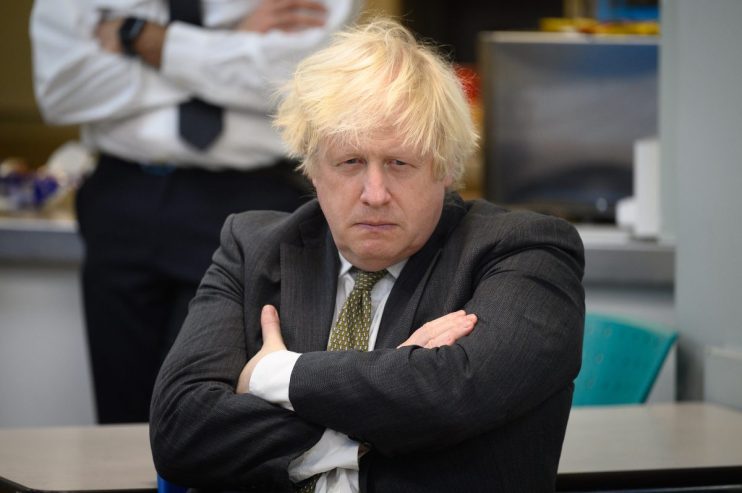
If Boris Johnson hadn’t backed Brexit, the Tories could still be in power – and further pandering to the right will only push voters further into the pinstripe embrace of Nigel Farage, argues Alys Denby
As an endorsement of Keir Starmer, this election result was equivocal. His thumping majority was won with a vote share of just 34 per cent, lower than Jeremy Corbyn achieved in 2017. But as a referendum on the past 14 years of Conservative government, it was decisive.
That’s hardly surprising, because for much of that period the party has been incapable of governing. And the reasons for that are the two Bs: Boris Johnson and Brexit.
Consider the counterfactual: If Boris Johnson hadn’t backed Leave in the referendum, Remain could have won, sparing the country the subsequent convulsion. The Conservative Party would have reunited behind a policy agenda that was delivering the fastest growth in the G7. David Cameron would have stepped aside as he planned at the end of his second term. Covid and the war in Ukraine were always going to be difficult, but without the additional economic shock of having left the EU, the impact would have been less severe. The Conservatives would soon be going to the country to ask for a historic fourth term united behind the leadership of Prime Minister George Osborne.
That may sound like either wishful thinking or a bone-chilling nightmare depending on your outlook. But we all know what happened instead. Whether through principle or opportunism Johnson led first the Leave campaign, then the Tories to great victories followed by the squalid depths of lockdown parties and Carlton Club cover-ups. Liz Truss, Sunak’s sodden election announcement and D-Day are just footnotes, the game was over for the Conservatives on 24 June 2016 – that’s the day they stopped running the country and started squabbling with themselves.
For the past eight years governments’ overwhelming focus has been Brexit, then the pandemic. Vast civil service resources were expended on preparing for a ‘no-deal’ Brexit that never happened. As for Covid, the real insult of ‘Partygate’ isn’t what a few people did in Downing Street, it’s the suffering and sacrifice they imposed on everyone else while they were doing it. When you consider that the entire machinery of government was first directed at divorce from the EU then at deliberately shutting the entire economy down, it’s no wonder nothing works.
Whatever the merits of Brexit for the UK (including those yet to materialise) it has been a disaster for the Conservative Party. It appalled Cameron-voting, metropolitan liberals and its unfulfilled promises have betrayed the ‘red wall’. Far from cauterising the anger on the right and taking the poison out of immigration debates, it has inflamed both and handed success to Nigel Farage. The result is one of the worst election defeats in the party’s centuries-long history, with just 121 MPs left to battle over the ashes.
Any Tories looking longingly at Boris Johnson as some kind of Reform whisperer who can restore the right should remember that he was the architect of a visa scheme that delivered legal migration of close to 1m a year. They might bear in mind, too, the contempt he has shown the Conservative Party since leaving office, turning up for an existential election campaign too late to make any difference but just in time to make headlines.
His 2019 election campaign convinced many that there had been a ‘realignment’ in politics providing Conservatives with an opportunity to build a new coalition with more working class, non-graduate, pro-Brexit demographics. But perhaps in voting to “get Brexit done”, the public were really asking not to have to think about it anymore. What is clear is that the Tories’ pursuit of this cohort with promises of ignoring international law to get planes off to Rwanda has only pushed them further into the pinstripe embrace of Farage.
Who cares, you may say – but this matters for the country too. We may now have a government with an overwhelming majority, but its support is shallow and against it are ranged populists and cranks with newly elected voices in parliament. This fragmentation is a threat to the stability our new government has promised and a capable opposition is a vital component of our democracy.
Keir Starmer has shown that parties win from the centre, not by pandering to extremists. Conservatives facing an identity crisis should heed that lesson.
Alys Denby is opinion and featured editor of City PM