
Stop lecturing consumers on climate change, make them afraid

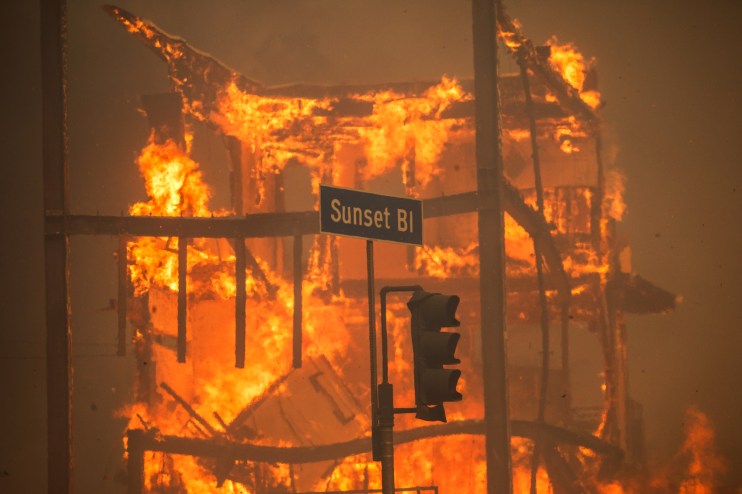
No one understands the 2°C climate change target, it’s time to reframe the debate around the real, tangible impact of climate change – like floods and wildfires, says Lewis Liu
I was recently at a dinner for venture capital investors in New York when someone asked me, “As a trained physicist, what’s more investable: fusion or quantum?”
I thought for a moment and answered, “Sadly quantum, even though fusion has a more tangible impact on humanity.”
The rationale I gave: fusion can elevate our civilization to orders of magnitude more energy consumption, with well-known applications. Quantum computing’s practical uses remain somewhat mysterious except for breaking the current cryptographic system. Yet quantum feels more investable because it triggers human urgency through defense applications – specifically, the looming threat of Q-day, when quantum computers could break all mainstream cryptography protecting banks and hospitals. Fusion, by contrast, is just “making something we already have but cleaner”.
Last week was Climate Week in New York. As my wife attended various events (she works in carbon finance), this thought kept nagging at me: climate change has a branding problem.
The 2°C problem
The general consensus from climate experts is that we’ll miss the 2°C target. My mind wandered: sure, I grasp the fundamental principle, but what exactly is the 2°C target again? In reference to what exact date, precisely? Why 2°C and not 1.5°C or 3°C? This all felt arbitrary.
I see it mentioned constantly in mainstream media by climate experts and politicians, but I couldn’t recall the exact context. I had to look it up. The fact that I, someone with a physics PhD who deeply cares about climate, had to Google this immediately concerned me. If I need to look it up, what does that say about messaging effectiveness?
I’ve since informally tested this with dozens of people. Most can’t articulate what the 2°C target means exactly. And I understand why: 2°C simply isn’t a tangible concept for most people to grasp. This is true especially for Americans, who don’t think intuitively in Celsius. And this is true especially for those who wonder: so what if everything heats up by two degrees? That just makes things slightly warmer, right?
Two failed messaging camps
As a gross generalization, there are two groups messaging climate warnings today – and both are failing.
The first consists of hyper-technical experts who talk about 2°C targets, parts per million, and climate models. This group is credible but hasn’t provided language that sells urgency.
The second group uses extreme language or disruptive actions to shame or inconvenience others in the name of climate action. This exact approach has triggered right-wing backlash against climate action, to the point where corporations now fear sending delegates to climate conferences. A senior executive at a Fortune 500 FMCG company told me over lunch this week they’re scared that publicly appearing at NY Climate Week will tarnish their brand.
Meanwhile, China has leapfrogged ahead of the US and West in climate tech. This summer, a group of American venture capitalists visited China and concluded it’s essentially “game over” for competing in climate tech. What’s instructive about China’s approach: it’s not primarily about humanistic altruism (though many in China surely care). It’s about national security. Energy independence for an oil-poor country is paramount for sovereignty.
Similar to the quantum versus fusion debate, there’s a fundamental, tangible threat driving action.
The language we need
Climate change is having real effects on American lives right now. In many parts of the US, wildfires have become so severe that entire regions are becoming uninsurable, including large swathes of California and the Pacific Northwest. This July, I attended a venture capital retreat in Oregon where the constant threat of nearby wildfires hung thick in the smoke-filled air. Every year brings “record-breaking wildfires”.
This summer, the New York area received dramatically heavier rainfall than typical, flooding homes and subway lines, fundamentally changing how we prepare for future summers. More tragically, 135 people (including 35 children) died in Texas due to extreme flash floods amid contentious government responses. In fact, 2025 has seen more flash flood warnings year to date than any other year on record and is on track to double the national average for the year.
These aren’t abstract concepts like 2°C. These aren’t topics for shaming people about their consumption choices. These are real problems and real deaths impacting the fundamental health, safety and economic security of Americans.
Reframe it as national security
We need to fundamentally shift messaging from abstract targets to tangible threats. Climate change shouldn’t remain a polarising political issue or a slowly boiling frog abstraction. It needs to be framed as what it is: a national security problem.
Investment in climate tech shouldn’t be underpinned by abstract temperature targets or moral lectures. Like quantum computing, it should be driven by genuine fear that, if we do nothing, fundamental aspects of our society and sovereignty will collapse.
The wildfires aren’t coming; they’re here today. The floods aren’t theoretical; they’re destroying infrastructure we see every day in New York City. The insurance crisis isn’t hypothetical; it’s making entire regions economically unviable.
We need to change the narrative from abstract morality to concrete security. Make people understand what they’re actually losing: their homes’ insurability, their cities’ viability, their children’s safety.
Fear drives action. And right now, we should be afraid.