
Should politicians try to understand the people behind the polling?

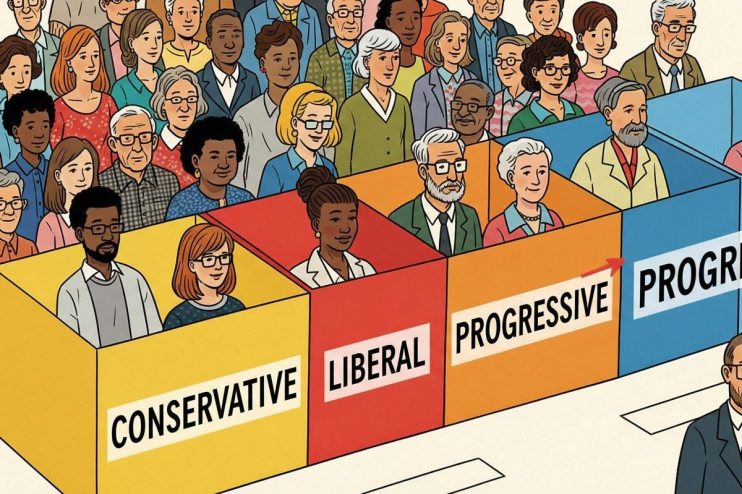
Trying to identify different types of voters is fun, but ultimately a futile exercise in reducing people to stereotypes, says John Oxley
There was one question doing the rounds this week in Westminster – “Which one are you?”. It was raised by a new report from think tank More in Common, which set out to sort the UK population into seven new segments. Each was informed by a mixture of factors, from policy positions to engagement with the news and respect for institutions. From the Progressive Activist to the Traditional Conservative, the aim is to give a feel for voters that goes beyond mere party preference. Yet such segmentation can be deceptively simple, and blind us all to the complexities of those around us.
Such analyses tend to strike a chord. They are a fun way of looking at voters and create a buzz in the media. After all, most Millennial journalists, policy wonks and politicians were raised on years of online personality quizzes. Clicking away at them is like finding which Harry Potter house or member of So Solid Crew you had a natural affinity to.
Everyone wants to fill out the form and either celebrate or repudiate what the computer thinks they should be. I suspect many City PM readers played with it too, hoping to be declared an iconoclastic “Dissenting Disrupter”, only to find they are a run-of-the-mill “Established Liberal”.
The segmentation serves a better purpose, too. It looks not just at how people vote, but at the sort of things that drive them to do so. It is less focused on policies and parties, and more on values, lifestyle and sources of information. It can yield useful insights about how voters might move and what might appeal to them. Like the advertising exercise of building personas, it challenges policymakers to think about the people behind the polling.
False confidence
Yet it runs the risk of lulling them into just another handful of stereotypes. The idea of seven segments is an attractive one, but it often involves shoehorning quite different voters into the same boxes. It ignores some of the divergences within each bloc, in terms of their motivation, character and desires. More than that, it gives false confidence to those who go on to opine about them.
One of the perpetual problems in politics is that decision makers tend to be drawn from a narrow section of people. They are the keen, committed and engaged – and often their experience of other groups comes from reports and quizzes like this, rather than real engagement. As a result, they can imbibe these stereotypes, rather than delving into the complexities behind them. The segments become a shorthand, which starts to shape politics and policy in ways which gloss over the details.
Repeatedly in politics, people have looked for quick ways of understanding voters, especially those geographically and spiritually far from Westminster. In recent years, we have cycled through assumptions about Leave voters, the Red Wall, then the Blue Wall, each in turn often adopted by people who failed to question some of the complexities behind these terms. It usually led them astray, floundering as they struggled to appeal to sections of voters they had barely bothered to understand.
Reports like these rapidly become a Westminster-village meme. They are fun, and the quizzes tap into an endless desire to be understood by a machine. And they do have their uses, pulling people away from simply thinking about party voters, or a left-right spectrum that politicos cling to more than ordinary people. The real lesson, however, should be about the need to investigate further levels of complexity, rather than just relying on a new crutch. After all, a bit like the endless multiplication of blades in razors, who knows whether eight, or even nine, groups might be better.
John Oxley is a political commentator