
Selfridges’ new chief faces an uphill battle

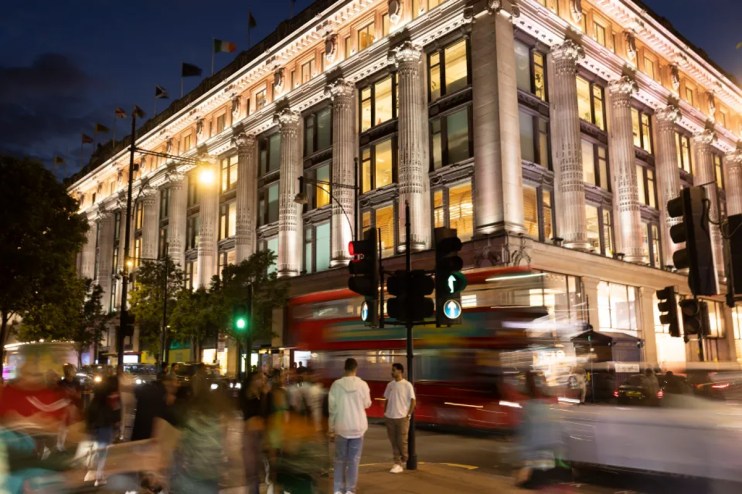
Selfridges’ new CEO, André Maeder, has his work cut out for him.
The company has managed to survive the gruelling pandemic years – largely by cutting jobs and moving online – a tough cost-of-living crisis and an acquisition in 2022.
But seasoned retailer Maeder, who was officially announced two weeks ago and starts in November, has to grapple with a different kind of challenge: structural change.
The decline of department stores is not new. Since the advent of online stores, customers have had less of a need for a big marketplace where they can buy a range of brands.
But a cocktail of pressures has upped the ante recently: high costs and low spending have hurt those just about managing, and there is an increasing trend of brands who want to go directly to the consumer themselves rather than use a department store as a middle man.
Fenwick, an iconic store, closed earlier this year, and John Lewis has just announced a deep restructuring plan. House of Fraser cut nearly half its stores last year.
“Why would a customer go to a department store when they can also go to the stores of a more specialist furniture homeware provider or clothing brand or electrical retailer?” Tim Black, associate director at Frontier Economics, asked.
The answer lies in quality of service and a distinctive offering.
You have to become “the place that continues to be successful at winning the customers, at getting brands committing to you rather than being one of the ones that falls by the wayside because they’re not distinctive enough,” Black said.
Stuck in the middle
A key issue that Selfridges has faced is that it is has been caught between affordable and luxury, an area of the market which has been significantly squeezed in the last year.
Just 25 per cent of consumers see Selfridges as ‘luxurious’, compared to 49 per cent of consumers for Harrods, according to research firm Savanta.
‘Consideration’ of Selfridges – whether consumers would consider shopping with them – has dropped from an average of average 30 per cent of all consumers in 2022, to just 24 per cent in July 2024, Savanta said.
“Selfridges has suffered in a similar way to other major department stores, with our behavioural data suggesting that the in-person retail market, as well as the ‘treat yourself’ shopping occasion, is in decline,” John Laughton, global head of Vue Products for Savanta said.
“This means that the brands operating in that space are being consolidated in consumers choice-sets… Selfridges is feeling the pinch more than most,” he added.
Customers are having to make choices about “where to continue to spend and pay a premium for a certain experiences, versus where to cut back and save,” Black said. Maeder will need to provide the cache to attract customers who are on the fence about what to spend, and where.
It’s a “virtuous circle”, Black said. If Selfridges manage to attract enough consumers who want to spend their money at the store, they will find it easier to make deals with the trendy brands that customers look for. “That’s going to be his [Maeder’s] challenge.”
Being seen as distinctive – through branding, events and curation – is key, he added. “It’s the [distinctiveness] of the range and the products that you can get, the range that you have and the service that the customers experience.”
Takeover talk
Maeder will have to contend with uncertain ownership as well as a changing customer landscape. Takeover rumours have circled the company after one of its co-owners went bankrupt.
Signa, which held a minority stake in the retailer, went bankrupt last autumn. Its stake in the company was bought by Central Group in a £317m debt-for-equity deal, making Central a majority owner. Signa plans to sell its minority stake in Selfridges, possibly to a middle eastern investment fund looking to acquire the UK retailer for an attractive price.
Signa itself was the unfortunate victim of its own heavy bet on department stores – part of its bankruptcy was due to the collapse of some of its department-store investments in Europe.
Earlier in July, Saudi Arabia’s Public Investment Fund – which already has a 10 percent stake in the Selfridges retail properties – reportedly offered a cash price of £1m for Signa’s stake.
Selfridges’ other co-owner, Central Group, was reportedly considering a bid to expand its ownership of the company last autumn.
However, no deal has been officially announced, and it is likely that the uncertainty will carry on into Maeder’s tenure in November.
The tourist tax
In an unfortunate added pressure for Maeder, the UK used to allow tourists from non-EU countries to claim tax refunds on goods bought in the UK, but scrapped the scheme last year.
The removal of tax-free shopping has “really altered the landscape of tourists” in the city, co-founder of pre-loved retailer Loop Generation, Piotr Krzymowski, said. “There are less and less of them… there is no incentive for them to basically come to London and, and shop if they can have it 20 per cent less in Paris or Milan.”
All luxury retailers have felt the pinch of fewer wealthy tourists, including Selfridges – and it’s unlikely to change with the new Labour government.
Last year, Selfridges blamed the tourist tax for its decision to cut 70 roles at its head office.
“The continued absence of a tax-free shopping scheme in the UK has significantly impacted international sales,” the company said.
Around 162,000 tourists from non-EU countries sought tax refunds in the UK in 2019, but 20 per cent of those visitors are now claiming them in EU countries that still run the scheme, figures from Global Blue have shown.
Is the department store dead?
“If you’re the optimist on this side, there is still some value in a department store,” Black said.
It’s good for brands to have a “viable set of department stores that target the right set of customers, that are appealing to their target customers who will come in and then be exposed to their products.”
For customers, the curation of products in a department store, and a service which can help them find what they’re looking for, is valuable too.
Here’s hoping Maeder, who has over 30 years experience in retail, can guide Selfridges towards that point for both brands and customers.