
Even as Signa struggles, Selfridges is still the beacon of Oxford Street retail

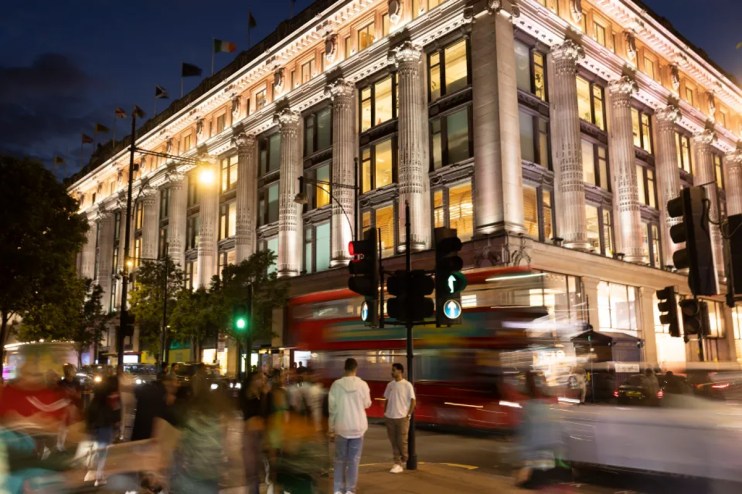
We shouldn’t write off the department store, it’s what the ‘experience economy’ was built on, writes Anna Moloney.
Last week, there was serious financial trouble at Signa, the property titan that co-owns Selfridges. The natural response: is the future of Oxford Street’s most iconic department store in trouble? Almost instantaneously, analysts suggested it could be a likely asset for the beleaguered group to dispose of as it scrambles for cash.
The luxury developer, whose €27bn portfolio also includes KaDaWe and the Chrysler Building, is reported to be on the hook for billions of debt and last week announced it would deliver its plans for restructuring by the end of the month, following the rapid ousting of chairman Rene Benko.
Signa only acquired the Selfridges Group – whose portfolio includes 18 department stores across England, the Netherlands and Ireland – in 2022 and it has not been an easy ride for UK retail since then.
The Financial Times reported that the group posted a £124m loss for its first year of trading under its new owners and Selfridges was forced to make a number of redundancies in its stores and head office over the summer as part of an “efficiency restructure” to battle a mounting debt pile.
Put all together, the news seems to solidify a bleak narrative that has been pervasive for years: the death of the department store is nailed on. People simply don’t want them anymore, as the fall of BHS, Debenhams and House of Fraser, along with the current struggles of John Lewis, seem to confirm.
But such a narrative paints broad strokes and, in the case of Selfridges, gives a distorted image. For while Selfridges’s parent company is undoubtedly in trouble, Selfridges itself is not doing badly at all. Revenues were up 29 per cent last year at a more than healthy £843.7m, just under £10m shy of the group’s record year in 2019. Operating profit also climbed. Indeed, retail expert Jonathan De Mello said reports emphasising the group’s losses were a “classic case of deliberately using numbers to fit the piece they were writing”, with these losses only down to a change in accounting practices. In other words, it would seem we have prematurely settled on a narrative that the department store is set for extinction.
Slavishly believing in such a narrative fails to give credit where it’s due; and we do our high streets no favour by talking down their successes. But it also ignores the fact that the department store, when done well, provides the exact kind of blueprint for what high street retail should now be trying to embody if it wants to return to its former glory days.
“Excite the mind, and the hand will reach for the pocket” was the strategy on which Harry Gordon Selfridge built Selfridges. The sentiment should sound familiar. The current advice of embracing the “experience economy” is simply a modern rendering of the same guidance.
Right from their conceptualisation in the 19th century, department stores were designed not only as shopping destinations but as places of entertainment, escapism and aspiration – ‘The Ladies’ Paradise’, as Emile Zola called it in his 1883 novel. And it is Selfridges’s adherence to such a principle, to sell an experience over a product, that continues to set it apart. I can assure you, the word paradise has never been within touching distance of a Debenhams.
Sure you can go to Selfridges for the shopping, but you can also go there for its cinema, restaurants, skate bowl, pharmacy, optician, tailor, key-cutter, barber, henna tattooist, in-house clairvoyants, the list goes on. Its window displays are cause for visit in themselves, with Conde Nast Traveller even naming them among its top London Christmas destinations this year.
Selfridges has also embraced sustainability in a genuinely productive way which has assured it remains forward-facing. Rather than see clothes rental services as a threat, for example, it has welcomed it within its doors, with a Hurr concession allowing customers to rent many of the same high-end dresses which are for sale in its womenswear department on the same floor. The group has also championed second-hand retail through its ‘Reselfridges’ initiative and offers in-store clothing repair services in a bid to reduce waste.
Selfridges has combined the best of tradition with the best of modernity to do exactly what everyone has said retail must – namely, give people a reason to want to visit the high street.