
National Grid is the biggest roadblock to reviving onshore wind, argues Octopus

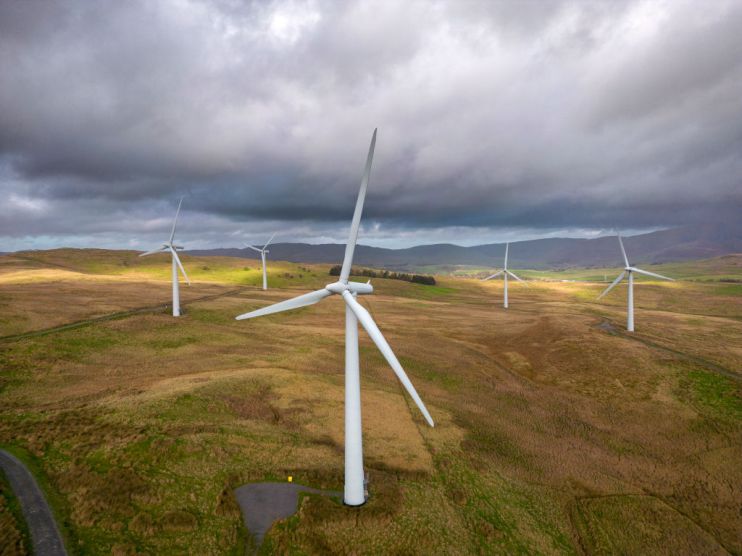
The biggest challenge for onshore wind developments is the same as for all renewable projects – the slow speed of connections on the grid, the boss of a leading renewables player has argued.
Zoisa North-Bond, chief executive of Octopus Renewables, criticised the grid as the “biggest limiting factor” rather than planning hurdles and nimbyism.
The energy boss noted that with offshore wind projects, it was taking up to a decade to connect turbines to the energy network – this was a challenge that would be replicated onshore with new turbines as well.
She argued that the processes of National Grid – the company that oversees the UK’s energy networks – were obsolete for the challenge of vastly ramping up renewable power in line with energy security and net zero goals.
“When you look at the processes that they are using for all of this distributed, wonderful generation that we’re bringing in – it’s still based on ones from decades ago, where you connect the single coal fired power station and maybe there’ll be two or three applications every few years,” North-Bond explained.
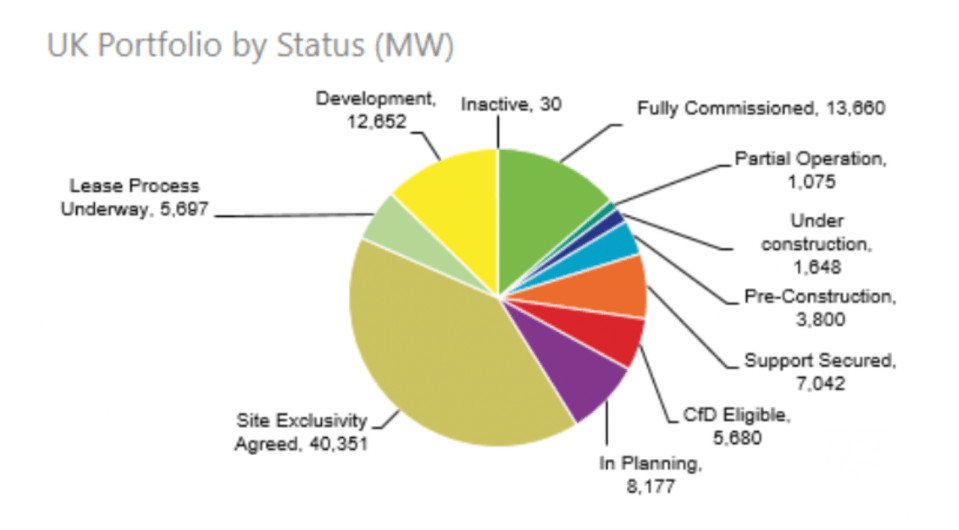
This contrasted sharply with the current situation in the energy sector, where National Grid is having to process thousands of applications every year for new starter projects.
She also argued developments could be helped if National Grid could provide more data to applicants for new projects on which areas of the country had the best capacity to connect new projects.
“When you’re putting your application together, very often it’s a yes or no decision and it can be quite a negative experience,” she explained, “but if the grid could actually get much better at showing areas of the country where you have capacity to connect projects, then you can apply a very ‘can-do’ attitude to the way that you developed into the future.”
When approached for comment, a National Grid spokesperson said: “We’re committed to connecting projects to the grid as fast as possible. A majority of projects in the pipeline have connection dates within 12 months of their requested date, and we’re working with the electricity system operator, Ofgem, and wider industry to introduce new ways to speed up the process for others.
“As well as refining the connections pipeline, we’re collaborating with industry to push for policy and regulatory reform to allow us to make earlier decisions on longer term planning and network investment, supporting faster progress towards a clean and affordable energy system.”
We will speed up the process, says National Grid
National Grid has set up a temporary amnesty to deal with criticisms of its approval pipeline for new projects – providing companies the ability for people to exit the queue if they feel the development is not going to go ahead, without having to suffer financial penalties.
As things stand, proposed new renewable energy projects enter the Transmissions Entry Capacity queue, which are approved on a first come first serve basis, rather than whether they are fully funded and ready to go.
It also faces a vast infrastructure challenge, with National Grid pledging £40bn investment in critical infrastructure over the next four years, raising its commitments from previous expectations of £30-35bn.
This includes £29bn targeted towards decarbonising energy networks across the country.
Chief executive John Pettigrew confirmed to the BBC last year that National Grid will have to build around seven times as much infrastructure over the current decade as it has constructed in the past 32 years to meet the country’s renewable energy goals.
However, North Bond’s perspective was shared by the National Infrastructure Commission, which urged for a bolder approach in building projects to reach net zero.
The commission’s chair, Sir John Armitt, said: “The last 18 months has underlined the many reasons to unleash the full benefits of renewable generated electricity. The operators who literally have the power to help us achieve the green transition need an efficient system for getting connections and a grid behind it that is ready for them.
“We must go further, faster to break up the logjams standing in the way of getting them connected, and getting the UK onto cheaper, more secure power supply for the long term.”
Meanwhile, Adam Berman, deputy director of trade association Energy UK, was also concerned about developing infrastructure in line with demand – but argued Ofgem and the government would need to reform the rules National Grid enforces.
He said: “Achieving a decarbonised power system will require that we rapidly expand the UK’s grid. It’s important to be realistic that – were the ban on onshore wind to be lifted – it would take some time for projects to move through the permitting and construction stages.
“This would allow new network infrastructure to be built. This will be significantly quickened if the government and Ofgem think seriously at how to make it easier to build grid, for example through allowing networks to put in place anticipatory investment that can bring down the overall project timeline.”
When approached for comment, an Ofgem spokesperson said:“Ofgem is working at pace to deliver the regulatory framework needed to achieve the government’s net zero ambitions, which will require a far more flexible and dynamic energy system.
“We’re also working with government and the industry on ways to speed up new connections including reviewing the way networks manage connection queues. This should help improve the connection times for those wanting to connect to the electricity network.”
The government has been approached for comment.
Communities deserve a say in wind projects
While North-Bond was highly critical of the National Grid’s approach, she was more sympathetic to the government’s National Policy Planning Framework, which will define the planning rules for new developments nationwide including onshore wind.
It has recently included a consultation for onshore wind, where industry body Renewable UK warned it was “highly concerned” that the government is not doing enough to remove “the barriers preventing onshore wind from being rapidly deployed”.
Renewable UK has called for planning footnotes for onshore wind around local consent to be scrapped, bringing the energy source in line with other building projects.
However, North-Bond argued this was only a viable approach “ if we were wanting wind everywhere”.
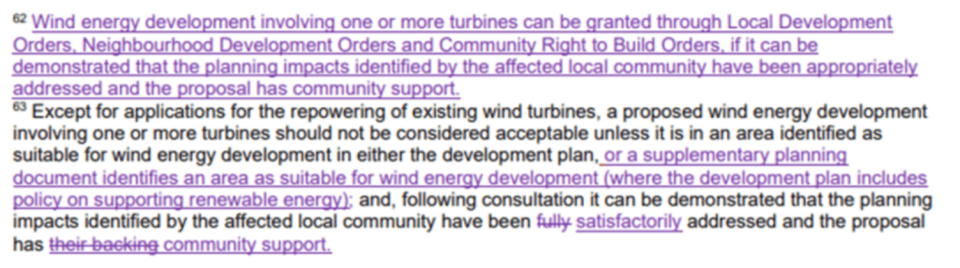

She said: “We’ve seen that not all communities would accept wind turbines, and we have to actually focus on where people want these building. What the government has actually proposed is allowing the decision around developing wind turbines to remain at local level with local people.
“It’s actually going back to neighbourhood plans, local development plans, local authority plans, which we think is absolutely right. It should remain the community’s decision.”
Octopus Renewables has 300MW of onshore assets in the UK alongside offshore wind projects off the coast of Lincolnshire.
Renewable UK reported last month that just two onshore wind turbines were installed in England last year, as the industry awaits pledged planning reforms for new projects.