Skip to content
City PM
  • Germany
  • France
  • Europe
  • Markets
  • Business
  • Opinion
  • Germany
  • France
  • Europe
  • Markets
  • Business
  • Opinion
Monday 06 February 2023 7:00 am  |  Updated:  Sunday 05 February 2023 4:05 pm

Only two new onshore wind turbines were built in England last year, reigniting calls for planning reform

By: Nicholas Earl

Add as a preferred source on Google
The site will be the fifth largest onshore wind power producer in the UK, with the top four all currently based in Scotland.

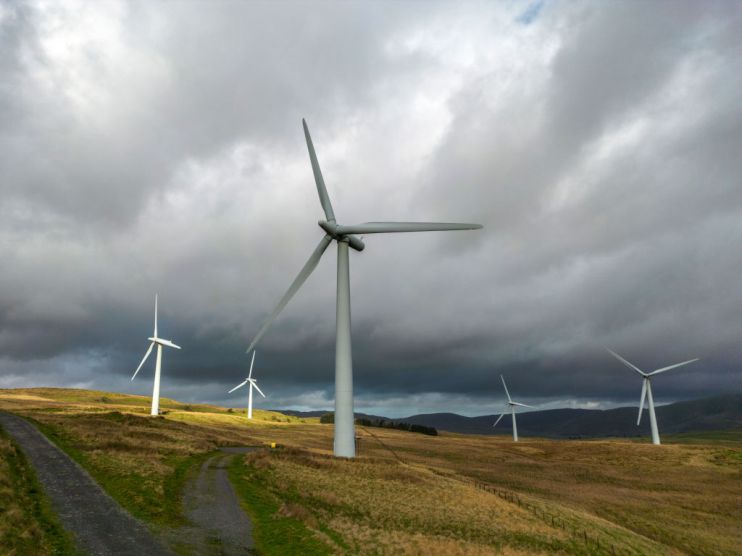
Just two onshore wind turbines were installed in England last year, as the industry awaits pledged planning reforms for new projects.

Overall, just ten new onshore wind projects were installed in 2022 across the UK, according to new research published by trade body Renewable UK.

This boosted onshore wind generation by 318MW, powering a further 209,000 homes.

Six of the new projects were built in Scotland, providing nearly all the new capacity (314MW). One went operational in Wales (2.5MW), one project in England (two turbines, 1MW in total) and two in Northern Ireland (0.5MW).

By contrast, more than ten times as much UK offshore wind capacity was installed in 2022.

Renewable UK calculated that a total of 3.51GW of new wind capacity was added last year – enough to power more than 3.4m UK homes a year.

Three major offshore wind projects went fully operational in 2022, adding 3.19GW of new capacity, powering more than 3.2m homes.

This is a record annual high, smashing the previous record of 2.1GW set in 2018, and a significant increase on 2021, when just one offshore project (48MW) went fully operational.

It also brings offshore wind generation to over 14GW – overtaking onshore wind – with the government targeting 50GW of generation on Britain’s coastlines and in the North Sea over the current decade.

However, Renewable UK warned that the planning system remains a major barrier to speeding up the UK’s shift away from imported fossil fuels in line with its climate and energy security goals.

The group has pushed for planning rules involving wind turbines to be brought in line with other clean energy projects, which could enable more new capacity to be developed in areas where there is public support.

Read more

Upgrading the grid risks ending up like HS2

Electricity grid infrastructure with high-voltage power lines and pylons under a clear sky, representing energy distribution.

Dan McGrail, chief executive of Renewable UK, said: “In all parts of the UK, including Scotland, investors are highlighting the planning system as a major block on developing onshore new wind farms.

“Onshore wind is one of our cheapest sources of new power and the government’s own polling shows that four-fifths of the public support it. But outdated planning rules and lack of resources in planning authorities mean progress and investment are being held back.”

Government under pressure to meet onshore wind pledges after backbench amendment

The government announced a consultation in December on proposed changes to planning rules for onshore wind developments in England.

The amendment was tabled by former housing secretary Simon Clarke, and had the support of former Prime Ministers Boris Johnson and Liz Truss.

Since 2015, however, onshore wind development has faced a series of planning hurdles which has vastly reduced developments across the UK.

This was part of Prime Minister David Cameron’s push against so-called “green crap” to appease the right of his party ahead of the 2015 election.

Since then, wind farms have required consent for developments to go ahead – with sites needing to be approved in conjunction with residents with local authorities across England.

Developers also have to show that the proposed project is located in an area designated for renewable energy in a local plan.

These requirements have empowered local authorities to make decisions over what gets built in their own communities, but at the cost of onshore wind generation, which has since stagnated.

Currently, only 11 per cent of local authorities across England have designated areas for renewable developments in their plans, according to Dr Rebecca Windemer at the University of the West of England.

Her research revealed the maximum installed capacity of wind farms granted planning permission between 2016-2021 is just 2.6 per cent of those granted permission between 2009-2014.

Read more

Vattenfall energy portfolio poised to be snapped up by private equity firm

Brent Cross Town aerial view showcasing urban development and green spaces from the official website

Share this article

  • Facebook
  • X
  • LinkedIn
  • WhatsApp
  • Email

Similarly tagged content:

Sections

  • News

Categories

  • Business

Related Topics

  • Energy
  • Green energy
  • renewable energy

Trending Articles

  • Top Burnham adviser calls for capital gains and inheritance tax hikes

  • Housebuilding giants hit with £4.5bn lawsuit for allegedly overcharging buyers

  • A meeting with the breakfast king of Mayfair

  • As it happened: Stocks jump on defence and metals boost; Oil on track to shed a fifth on US-Iran peace hopes

  • BT tops FTSE 100 after finding new home for international business with Verizon joint venture

More from City PM

  • Upgrading the grid risks ending up like HS2

    Opinion
    Electricity grid infrastructure with high-voltage power lines and pylons under a clear sky, representing energy distribution.
  • Vattenfall energy portfolio poised to be snapped up by private equity firm

    Merger/Acquisition
    Brent Cross Town aerial view showcasing urban development and green spaces from the official website
  • Reeves to protect energy and infrastructure projects from court challenges

    Legal
    Rachel Reeves speaking at an IOD event.
  • ‘Enough to keep investors interested’: SSE charges up UK investment

    Markets
    A general view shows pylons and Ferrybridge C power station, owned by energy company SSE, which is set to stop generating and close in March 2016, near Knottingley, northern England, on May 24, 2015. The coal-fired powerstation went online in 1966. AFP PHOTO / OLI SCARFF (Photo credit should read OLI SCARFF/AFP/Getty Images)
  • I was defence secretary, here’s how we fund our armed forces

    Opinion
    Business professionals in a modern office discussing a strategic plan with charts and graphs displayed on a large screen
  • The City is paying the price for Britain’s energy failure

    Opinion
    UK energy power lines spanning a rural landscape, highlighting infrastructure and sustainability efforts in the energy sec...
  • Ohmium and Hynfra Sign Master Cooperation Agreement to Advance Large-Scale Green Hydrogen Projects in the Middle East and Africa

    Business Wire
  • Charging up: National Grid to invest a further £70bn into energy networks

    Business
    Overhead power lines being refurbished by National Grid as part of £70bn investment in UK and US energy networks

City PM — European politics, business and analysis.

Europe

  • Germany
  • France
  • Europe
  • UK & Ireland

Topics

  • Business
  • Markets
  • AI
  • Technology
  • Opinion
  • Energy

More

  • Politics
  • Economics
  • Fintech
  • Legal
  • Sport
  • Life

Company

  • About City PM
  • Editorial Policy
  • Corrections
  • Contact
  • Terms of Use
  • Privacy Policy
  • Cookie Policy
© 2026 City PM · Published by CityPM Media, Bahnhofstrasse 65, 8001 Zürich, Switzerland
About · Editorial Policy · Corrections · Contact · Privacy