
Microgravity as a service: Commercial space sector gets NASA green light


Microgravity is increasingly widening the benefits of space, allowing scientists to manipulate materials and elements in ways that are impossible on Earth.
However, there is limited investment in microgravity as a commercial sector. Used frequently by astronauts within the International Space Station (ISS), what it could mean for the UK’s pharmaceutical industry is yet to be fully realised.
There are many barriers to accessing the microgravity opportunities that lie on the ISS, not least the number of countries queuing for their time in orbit, which affords wait times of several years, but that the station is not free of contaminants which have almost created its own atmosphere, Space Forge CEO Josh Western explained.
Microgravity as a service grants access to a vacuum space, which is close to absolute zero in temperature.
While it can enable new types of semiconductors, crucial chips used in most of today’s tech that are currently in short supply on Earth, microgravity can also supply pharmaceutical researchers a space free of contaminants and consistent low temperature – where materials can be uniquely controlled.
Scientists in China have even used microgravity conditions to grow giant ‘space pumpkins’ which weigh over 100kg, and were opened up to visitors in July last year.
However, there are “a lot of obstacles to overcome before it becomes a commercial service,” space applications project manager at the UK Space Agency (UKSA), Chris Hall said.
Speaking at UKSA’s Space to Connect event yesterday, Hall added that it is a “tricky” part of space to get into for businesses, which is why raising awareness of the opportunity’s microgravity presents is crucial.
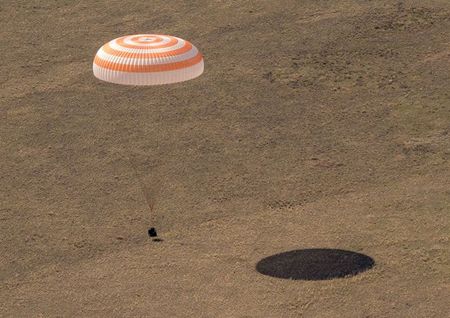
One of the key obstacles in the industry currently is soft landing.
Being able to return potentially precious cargo will be critical in selling microgravity as a service. Something that Space Forge has quietly developed.
While Western refused to give too much detail on his company’s landmark discovery, he described Space Forge’s technique as: “Like Mary Poppins but from space”.
It’s easy to imagine a rocket breaking through Earth’s atmosphere before ballooning to a slower, more controlled stop.
But these are no cheap solutions.
Gravitilab CEO Rob Adlard noted that microgravity services are “not a low-cost solution but are technically feasible”.
Access to one of Gravitilab’s microgravity rockets known as Louis, which can be ready at a month’s notice, could help businesses bypass other routes such as the European Space Agency, through which firms must again battle with long wait periods.
UK and US prospects
It follows London-based Space Entertainment Enterprise revealing ambitious plans to film the first-ever movie in space late last month – which could come to fruition before the end of the decade.
SEE, which is currently co-producing Tom Cruise’s upcoming space movie with Hollywood veteran Doug Liman, is set to launch a microgravity film and TV production and broadcast module, known as SEE-1, which would be fitted onto a new commercial space station made by Axiom Space in late 2024.
The commercialisation of space is even starting to be championed by NASA, as a way to help fund its Artemis missions to the Moon and Mars.
The US’ space agency updated Congress yesterday on the transition of the ISS into a commercial operation.
The deal between NASA and Axiom will see the commercial Axiom Station dock onto the ISS for four years, before orbiting Earth on its own in 2028.
“US industry is developing these commercial destinations to begin operations in the late 2020s for both government and private-sector customers, concurrent with space station operations,” NASA said in the International Space Station Transition Report published Tuesday.
The report added that NASA is focused on inspiring humankind through microgravity research and development, orbital activities, STEM student participation, partnering with minority institutions, and exploring “ways to engage a diverse group of students, educators and the general public through inspirational opportunities.”