
LNG risks UK’s environmental goals and hydrogen strategy, warn experts


The UK risks both higher emissions and undermining its energy security strategy, if it becomes over-reliant on liquefied natural gas (LNG) to meets its energy needs, warned analysts.
Downing Street is targeting net zero carbon emissions by 2050, and is aiming to reduce its significantly reliance on fossil fuels and ramp up domestic renewable generations over the coming decades to boost its supply security.
However, it has been relying on LNG supplies to meet its energy needs this winter, while also shipping supplies to the continent to stave off blackouts amid a Russian supply squeeze.
Patrick King, analyst at Rystad Energy, told City A.M. that overseas LNG supplies had a significantly higher carbon footprint than the UK’s domestic fossil fuel supplies.
He said: “When compared to piped natural gas, LNG shipments have a far higher emissions intensity, this is due to the energy intensive processes required throughout the products lifecycle.”
Rystad Energy has calculated that LNG deliveries into Europe from the US typically have an upstream imported emissions intensity greater than 70 kg of CO2 per barrel of oil (boe) equivalent.
In comparison piped gas flows into Europe and the UK from Norway have a CO2 intensity of just over 10 kg CO2 per boe, while Russian piped gas flows have intensities of around 30 kg CO2 per boe.

LNG requires natural gas, once extracted from a reservoir, to undergo a liquefaction process where is cooled to below -150 degrees celsius, before being shipped overseas and re-gasified.
Imports of the energy source from North America and Qatar have soared following Russia’s invasion of Ukraine, as Europe scrambles to reduce its reliance on the Kremlin-backed gas supplies.
The Government is currently chasing a long-term LNG deal with the US, and has opted against reviving the fracking sector and has imposed heavy windfall taxes on North Sea oil and gas production.
King said: “Domestic UK production, of which fracking would fall into this category, would not require the LNG processes (such as liquefaction, shipping and regasification) as gas produced would be directed straight into the national grid. Therefore emissions intensity of domestic production is far less than that from a shipment of LNG.”
LNG boost: Hydrogen strategy under threat?
There are also concerns over whether LNG gas could be repurposed as part of the UK’s energy security strategy.
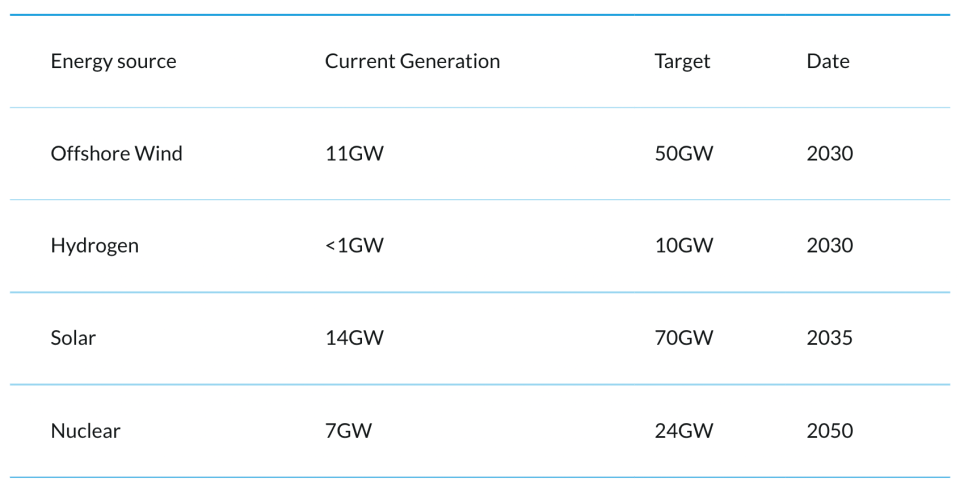
The UK has committed to boosting domestic energy production of hydrogen to 10GW by the end of the decade, and is taking a twin-track approach to green hydrogen – which is produced through splitting water into hydrogen and oxygen with renewable power – and blue hydrogen, which is produced from lower carbon natural gas.
However, for hydrogen production to be considered ‘blue’ it has to have a maximum carbon intensity of 72g of CO2 per kwh.
While domestic pipelined gas has a carbon intensity of 10.4g and shale gas (fracking) has a carbon intensity of 13.8g, LNG has a carbon intensity of 57g of CO2 per kwh – with Qatari LNG producing around 62g of CO2 per kwh, according to Government data.
This makes LNG at risk of crossing the 72g maximum threshold, with further emissions expected in the reforming, transport and sequestration processes expect to bump its overall carbon footprint
Minh Khoi Le, analyst at Rystad Energy, argued it was highly unlikely LNG would be suitable for hydrogen when taking into account post-production transmissions.
He said: “It certainly will be a challenge to meet the UK clean hydrogen standard for blue hydrogen from LNG.”
LNG carbon emissions ignites fracking fury
The high carbon intensity of LNG has also reignited criticisms of the UK’s fracking ban from the onshore energy industry
Charles McAllister, policy head for UK Onshore Oil and Gas told City PM this raised further questions about the Government’s decision to reimpose a moratorium on fracking – in favour of more carbon intensive LNG that would be less compatible with future energy projects.
He said: “Given the recognised role of blue hydrogen in the UK’s net zero goals, over-reliance on LNG could reduce the scope for that industry’s development, based on the Government’s blue hydrogen standards and the conclusions of the Climate Change Committee.”
The policy head confirmed the shale gas industry would be open to sell natural gas at contracted prices for large industrial users – including chemicals, steel and hydrogen production.
He concluded: “We feel that this offers the optimal lifecycle approach to economic development, levelling up and meeting Net Zero.”
Andy Mayer, energy analyst at free-market think tank the Institute of Economic Affairs (IEA), highlighted that it made little sense to restrict fracking, when the US LNG industry is dependent on fracked US shale gas supplies.
He said: “It is self-evident that imported gas, whether used for power, heat, or hydrogen production, will have more impact on emissions than domestic production. Banning UK fracking while importing US fracked gas is an irrational act of economic self-harm that does nothing good for the planet.
The Government did not comment on the specific issues with LNG, but reaffirmed its backing for hydrogen production and remained confident in meeting future generation targets.
A spokesperson said: “The UK has a world leading ambition for 10GW of low carbon hydrogen production capacity by 2030, with at least half from electrolytic hydrogen, which could unlock 12,000 jobs and £9 billion in private investment across the country this decade.”