
| Updated:
How to stop climate change: Drop the hamburger

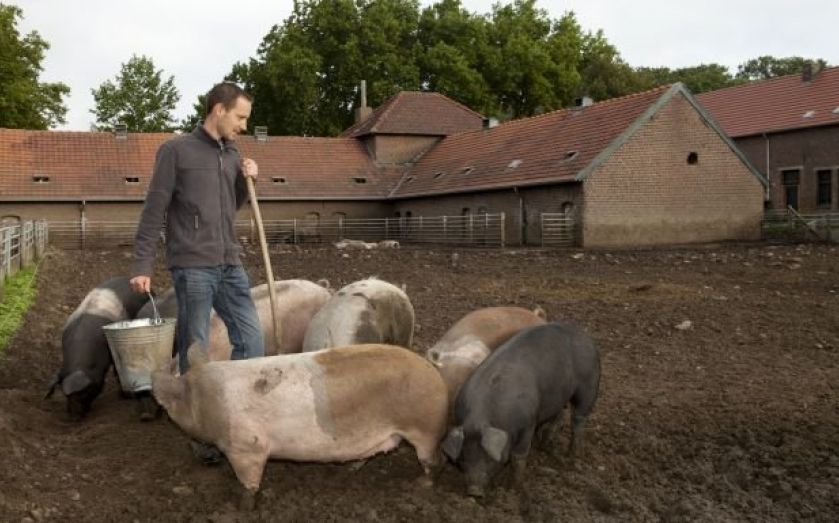
Bad news, hamburger fans. New research shows that if we are going to have any chance of slowing down climate change, we must eat less meat.
We tend to concentrate on practices such as fracking and emissions from coal-based power stations when we consider the prevention of climate change, but a paper published today in Nature Climate Change suggests that the impact of eating habits is no trivial matter.
Every type of food we consume affects the environment, but some more than others. “Inefficient” foods are the worst for contributing to climate change, and meat is a food source that has been demonstrated again and again to be highly inefficient.
This is because a lot more corn or other feed is required to sustain a cow than is needed to sustain a human directly, without the livestock in between. You could get, for example, 900 calories from a hamburger, but many more calories would be required to get to that meat end product.
"The losses at each stage are large, and as humans globally eat more and more meat, conversion from plants to food becomes less and less efficient, driving agricultural expansion and land cover conversion, and releasing more greenhouse gases,” the paper's lead researcher Bojana Bajzelj said in a statement.
The way things are going, food production alone is predicted to reach or exceed the targets for total global greenhouse gas emissions by 2050. Therefore, we have no choice but to cut down on the inefficient foods like meat if we are to have any chance of keeping climate change under control.
This is partly because the speed with which the population is growing means it will require an approximate doubling of global crop production by 2050.
"Unless we make some serious changes in food consumption trends, we would have to completely de-carbonise the energy and industry sectors to stay within emissions budgets that avoid dangerous climate change," said researcher Pete Smith. "That is practically impossible."
People in the US consume the most meat
According to data from the Meat Union of Russia in 2009, the average person in the US consumed considerably more meat than people in any other country did, and their consumption of chicken was particularly high. The average US citizen consumed 119kg of meat during that year – that's over three times more than the world average of 34kg.
The EU came some way behind the US, with the average person consuming 80kg of meat during the year, but it is still up there among the world's biggest meat eaters. In Europe, people seem to have a penchant for pork; each of us consumed on average nearly twice as much of it in a year as people from the US did.
By no means do we need to cut meat out completely in order to make a significant change, however. The paper says that to eat reasonably, we can still have two portions of red meat and five eggs every week, and a portion of poultry every day.
But if we choose to ignore the growing risk and do nothing about our eating habits, the researchers say that we will lose a tenth of the world's tropical forests by 2050. They also predict a 42 per cent increase in use of land for crops. The result? More carbon and methane emissions and less biodiversity.