
There’s a hidden carbon cost to the government’s housing targets

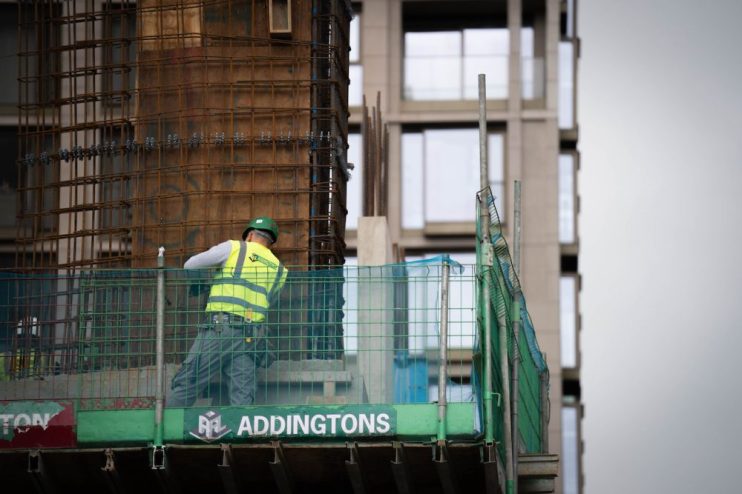
But an innovative use of cement could help reduce the construction sector’s unseemly emissions, writes Dalraj Nijjar
It’s undeniable that we need more homes, and so it’s welcome news that the government has announced plans to build 1.5m new homes by 2029. It’s an impressive and ambitious target, but it also raises significant questions about the environmental impact of the required large-scale construction.
Not many talk about it, but the built environment is a major contributor to carbon emissions, with the construction sector accounting for approximately 14 per cent of the UK’s total emissions. Labour has a commitment to achieve net zero emissions by 2050 – so its challenge now lies in balancing the urgent need for new homes with its green agenda.
Concrete manufacture is currently responsible for fully eight per cent of global carbon emissions and this figure is continuing to rise. Yet there is little change going on in the cement and concrete industries – which continue to be regarded as the safest building materials in the world (despite the ultimate impact of their usage).
While it is encouraging that many developers are eager to decarbonise, there is a noticeable disconnect between the need for urgency and the actual pace of change. The previous government introduced new regulations aimed at reducing carbon emissions from new homes by approximately 30 per cent, but we need far more comprehensive measures to align housing goals with climate targets.
As with many industries, the answer lies in innovation. Fortunately there are many promising technologies being developed, yet we are decades away from scaling many of these solutions as they often demand a real overhaul of infrastructure. Changing materials, let alone mindsets, is no easy feat.
A good place to start, though, is cement. The cement industry has a big problem – it produces 3bn tonnes of CO2 per year, which it does not know what to do with. As a result, many cement manufacturers have started to look at carbon capture and storage (CCS) technologies. However, CCS doesn’t eliminate emissions entirely – it merely captures a portion of the CO2 produced, serving as a temporary mitigation strategy while more sustainable solutions are developed. It is also prohibitively expensive.
A lesser-known fact is that concrete can absorb CO2 naturally, albeit in minimal quantities. Mineralisation of CO2 into concrete is a decarbonisation pathway that takes the emission problem of the cement industry and uses concrete as the emission solution, permanently locking away the CO2 into the cement in concrete and it is starting to gain increasing attention. The process captures carbon emissions from cement production and mixes the CO2 into new concrete, enhancing its strength and reducing the amount of cement needed. The result? A cheaper, greener and stronger concrete that requires no change to production lines. When done correctly, this process can improve the mechanical properties of concrete, making it stronger and less porous, while also permanently removing CO2 from the environment.
Emerging solutions targeting the built environment represent important steps towards decarbonising the industry. But to fully realise their potential, we need to see both private investment and supportive government policy.
Policies that incentivise the use of low-carbon materials and technologies are crucial. For example, a government subsidy could temporarily lower the cost of using low-carbon technologies for early adopters in the first one to three years of its use. As new technology is adopted, typically the production cost comes down, making it more affordable for the majority. The government’s housing targets are commendable – but solving one societal problem should not come at the cost of exacerbating another.
Dalraj Nijjar, co-founder and CCO of Concrete4Change