Skip to content
Thursday 30 July 2026London --:--Frankfurt --:--Zurich --:--
NewslettersSearchEN · DE
City PM

European business, markets and politics

FTSE 100
10,908.41
+0.34%
DAX
25,460.48
0.00%
CAC 40
8,408.27
0.00%
STOXX 50
6,248.84
0.00%
  • Europe
  • Markets
  • Business
  • Economy
  • Technology
  • Politics
  • Opinion
More
GermanyFranceBankingAIEnergyFintechPropertyCapital Markets
  • Germany
  • France
  • Europe
  • Markets
  • Business
  • Economy
  • Technology
  • Politics
  • Opinion
  • DE
Monday 20 August 2018 6:30 pm  |  Updated:  Friday 24 May 2019 7:47 pm

Greece’s bailout may have finished, but the economic pain still has a long way to run

By: Jasper Jolly

Add as a preferred source on Google

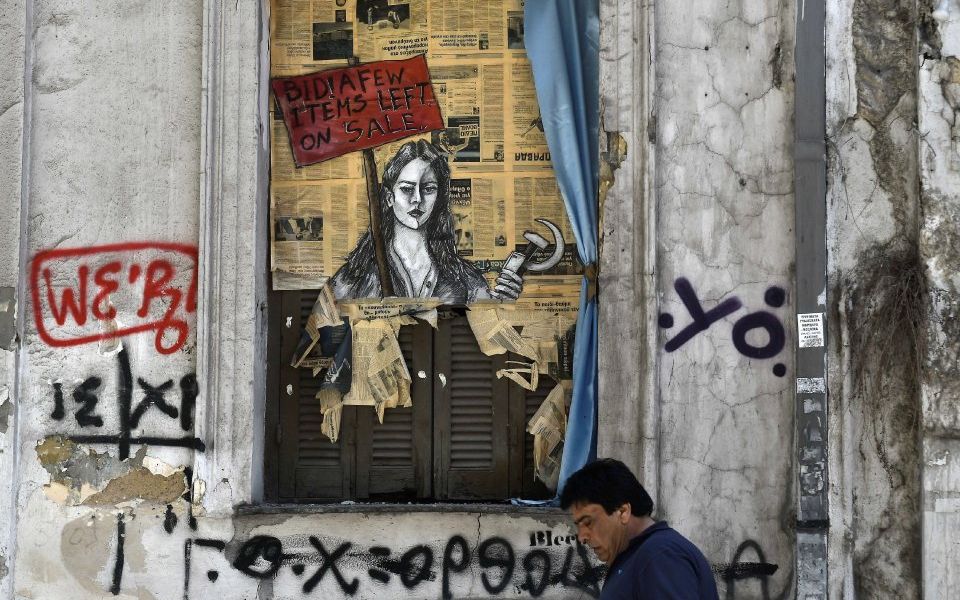
It is a landmark moment: Greece has finally received its last payment from the European Stability Mechanism, with an unprecedented €204bn (£183bn) in bailout loans delivered since 2012 as Europe grappled with a sovereign debt crisis.

European Council president Donald Tusk was fulsome in his praise today. “You did it!” he said. “Congratulations to Greece and its people on ending the programme of financial assistance. With huge efforts and European solidarity you seized the day.”

“Did what?” the Greek people would be forgiven for asking. For all the triumphant talk of “emerging” from the bailouts, Greece’s economy has not staged anything which might be termed a recovery. GDP grew last year but output remains a quarter below its 2007 zenith, according to the World Bank.

The sorry tale of Greece’s last decade has left scars which will take years to fade. Symbolically, the nation was forced to bend to its creditors’ will, while in economic terms the damage may be greater still, with the crisis leaving permanently lower output. It’s easy to see why, with youth unemployment still at almost 40 per cent in May. A generation of young people (or at least those left after a wave of emigration) have few foundations on which to build future growth.

The need for reforms of the Greek economy was clear, with a pre-crisis clientelist state securing support with a glut of well paid jobs, a massively generous pensions system, and a large tax gap – all compounded with black holes on the government’s fantasy balance sheet.

Yet the Greek crisis should not be reduced to a fiscal morality tale: wherever someone has borrowed recklessly, somebody else has lent irresponsibly. When the financial crisis struck and the scale of Greece’s over-extension became clear the lenders should have been on the hook for losses.

Instead, creditors in the Eurozone’s bigger economies used their political clout to enforce eye-watering levels of austerity. Even the International Monetary Fund – nobody’s idea of fiscal doves – has made it clear that debt relief should be part of the solution.

Meanwhile, even with no more bailout payments, Greece – in theory – still has to pay back the loans, and has pledged to continue to run large primary budget surpluses funded by high taxes. If the end of the bailout programme represents a success, it is a Pyrrhic victory.

Share this article

  • Facebook
  • X
  • LinkedIn
  • WhatsApp
  • Email

Similarly tagged content:

Sections

  • Markets & Economics
  • News

Categories

  • Business
  • Economics

Trending Articles

  • PwC thought leadership reports ‘100 per cent AI generated’

  • EY and London managing partner fined over £1.3m for audit failure

  • Lloyd’s of London allows staff to work from home as heatwave hits the capital

  • Big Four’s AIM exodus accelerates as mid-tier firms seize mandates

  • As it happened: Stocks jump as oil drops; Unilever shares soar on decade-best sales

More from City PM

  • Greek wine perfectly suits summer. These 5 bottles are the best

    Life&Style
    Two women smiling, one in blue holding white Greek wine, another in white holding red wine, under grapevines.
  • Could an England World Cup win boost the markets?

    Opinion
    Getty Images logo on a smartphone screen, representing a focus on digital media and stock photography industry trends
  • Alpaca Completes EEA Passporting to 29 Countries, Expanding Access to Regulated Investment Services Across Europe

    Business Wire
  • Nottingham Forest owner Marinakis announces £210m stadium plans

    Sport Business
    Breaking news anchor reporting live from bustling city street with pedestrians and traffic in the background
  • Maureen Mahr von Staszewski Joins Heitman European Leadership Team

    Business Wire
  • Has The Odyssey made the classics cool now?

    Life&Style
    Christopher Nolan directing a scene from his film The Odyssey, highlighting the modern revival of ancient Greek classics.
  • Fastmail Launches EU-Hosted Email Infrastructure, Giving Customers Control Over Where Their Data Lives

    Business Wire
  • Fernie Cultural Universe: Where Eastern Myths Meet European Animation Soul Within a Medieval Castle

    Business Wire
CityPM

Independent European business, markets and political news for decision-makers.

Morning Briefing

Europe

  • Germany
  • France
  • Europe
  • UK & Ireland

Business

  • Markets
  • Banking
  • Technology
  • Energy
  • Property
  • Fintech

Editorial

  • Opinion
  • Editorial Policy
  • Corrections
  • Contact

Company

  • About City PM
  • Privacy Policy
  • Terms of Use
  • Cookie Policy
© 2026 City PM Ltd · Published by CityPM Media, Bahnhofstrasse 65, 8001 Zürich, Switzerland
Privacy · Terms · Cookies · Facebook