Skip to content
Sunday 26 July 2026London --:--Frankfurt --:--Zurich --:--
NewslettersSearchEN · DE
City PM

European business, markets and politics

FTSE 100
10,736.23
+0.91%
DAX
25,099.00
+1.36%
CAC 40
8,372.28
+0.88%
STOXX 50
6,280.94
+1.14%
  • Europe
  • Markets
  • Business
  • Economy
  • Technology
  • Politics
  • Opinion
More
GermanyFranceBankingAIEnergyFintechPropertyCapital Markets
  • Germany
  • France
  • Europe
  • Markets
  • Business
  • Economy
  • Technology
  • Politics
  • Opinion
  • DE
Monday 17 September 2018 12:33 am

Government tests new robot fleet to battle chemical attacks

By: Louis Ashworth

Add as a preferred source on Google

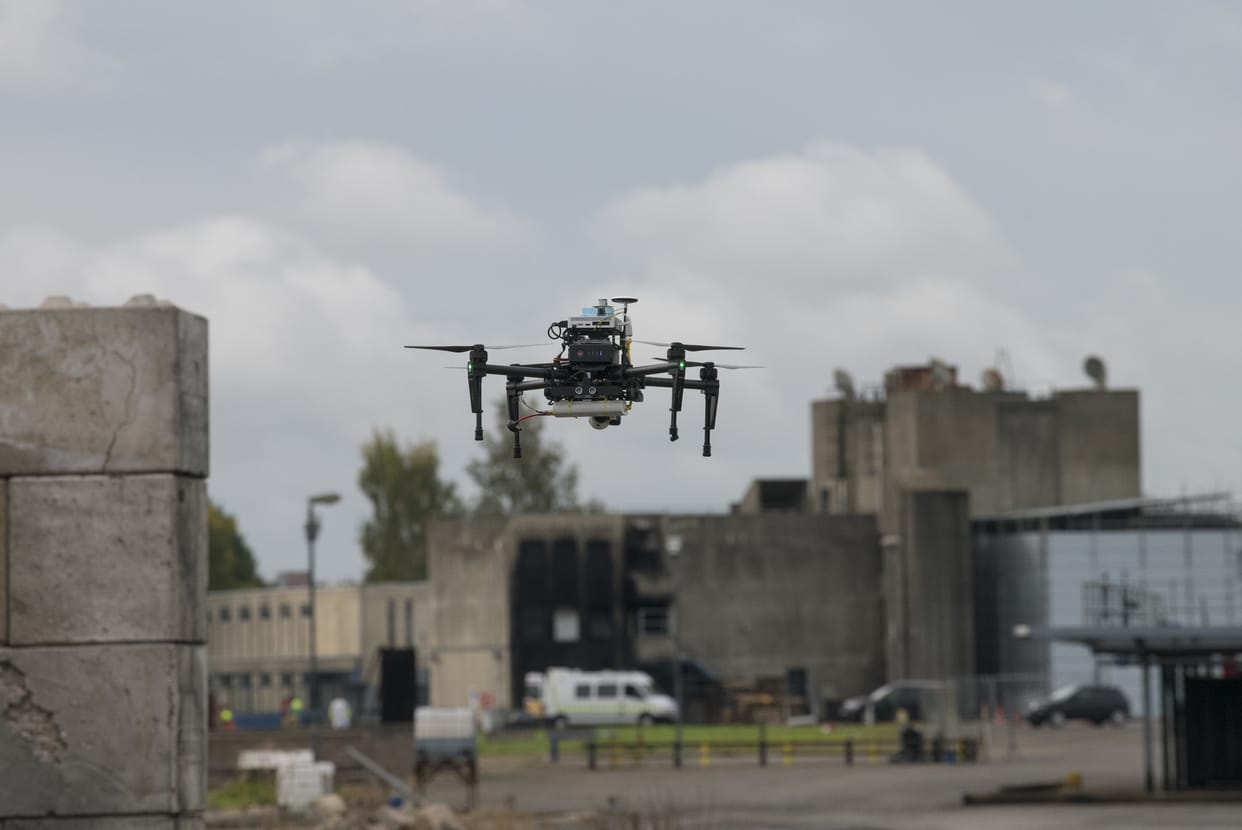
The government is testing a new fleet of robots and drones, designed for use in hazardous environments in the UK and on foreign battlefields.

A £3m research effort, named Project Minerva, includes producing drones designed to climb stairs and robots weighing less than a bar of soap, which are designed to reduce the risk to troops or emergency services when they have to operate in environments involving hazardous chemical or biological materials.

Announcing the tests, Defence Secretary Gavin Williamson said: “Following the reckless nerve agent attack in Salisbury this year, we have seen the bravery and professionalism of our Armed Forces, emergency services and MOD scientists.”

Read more: Russia may allow UK to interview Novichok suspects

“This project will ensure we stay at the forefront of dealing with such heinous attacks, whether on our streets or on foreign battlefields,” he added.

Project Minerva, funded jointly by the Home Office and Ministry of Defence, was launched in 2016. Its first phase, which closed in 2017, awarded over £1.6 to various businesses and academic institutions to develop proposed defence projects. These included several small robots designed for tackling dangerous chemicals and biological threats.

Troops, police officers and scientists trialled some of Minerva’s first concepts over the past two weeks, trialling the robots’ speed against current processes in simulated environments.

Peter Stockel, head of Autonomy at the Defence Science and Technology Laboratory, which is leading the project, said: “These two weeks of trials see the culmination of over 18 months of work to realise an exciting vision, which could see robots and humans working together in demanding situations and potentially save lives when dealing with incidents involving hazardous substances.”

“With continued involvement across Government, and demonstration with the user community, we aim to mature this emergent capability to test the 'art of the possible' and accelerate this into the hands of the prospective users for further operational evaluation, both for MOD and the Home Office,” he added.

Share this article

  • Facebook
  • X
  • LinkedIn
  • WhatsApp
  • Email

Similarly tagged content:

Sections

  • News

Categories

  • Tech

Trending Articles

  • BT braces for loss of 800,000 customers as it banks on fibre to keep turnaround ‘on track’

  • Wise denied US banking licence in blow to expansion plans

  • Regulator flags BDO’s ‘unacceptable’ audit issues for fifth year in a row 

  • Housebuilder hits a wall: How did Vistry become the UK’s most shorted stock?

  • Greek wine perfectly suits summer. These 5 bottles are the best

More from City PM

  • UMA Unveils Its Vision for the Next Generation of Humanoid Robots

    Business Wire
  • Babcock and Rolls-Royce stocks rally after Healey appointment

    Industrials
    Defence secretary John Healey is leading calls for further investment in the sector.
  • 50 years of hairdos: Meet the Dedicated Barber of Fleet Street

    Life&Style
    Leonard Michael on Fleet Street discussing business strategies amidst bustling cityscape
  • Mobix Labs Signs Definitive Agreement to Acquire Vision Aerial, Accelerating Global Drone Platform for National Security and Aerial Intelligence

    Business Wire
  • Echodyne Opens New Manufacturing Facility to Meet Surging Global Demand for Advanced MESA® Radar

    Business Wire
  • Orca Security Report: 99.9% of Fixable AI Vulnerabilities Remain Unpatched as AI Moves Into Production

    Business Wire
  • Top investors managing $3tn to gain access to UK infrastructure projects via AI platform

    Investing
    INPP have invested in four new infrastructure firms in the first half of this year
  • Comsysto Reply Supports Audi in Evolving Its B2B Used Car Platform With an AI-Based Multi-Agent System

    Business Wire
CityPM

Independent European business, markets and political news for decision-makers.

Morning Briefing

Europe

  • Germany
  • France
  • Europe
  • UK & Ireland

Business

  • Markets
  • Banking
  • Technology
  • Energy
  • Property
  • Fintech

Editorial

  • Opinion
  • Editorial Policy
  • Corrections
  • Contact

Company

  • About City PM
  • Privacy Policy
  • Terms of Use
  • Cookie Policy
© 2026 City PM Ltd · Published by CityPM Media, Bahnhofstrasse 65, 8001 Zürich, Switzerland
Privacy · Terms · Cookies · Facebook