Skip to content
City PM
  • Germany
  • France
  • Europe
  • Markets
  • Business
  • Opinion
  • Germany
  • France
  • Europe
  • Markets
  • Business
  • Opinion
Thursday 07 May 2015 10:10 am

Global carbon dioxide level is at its highest in over three million years

By: Sarah Spickernell

Add as a preferred source on Google

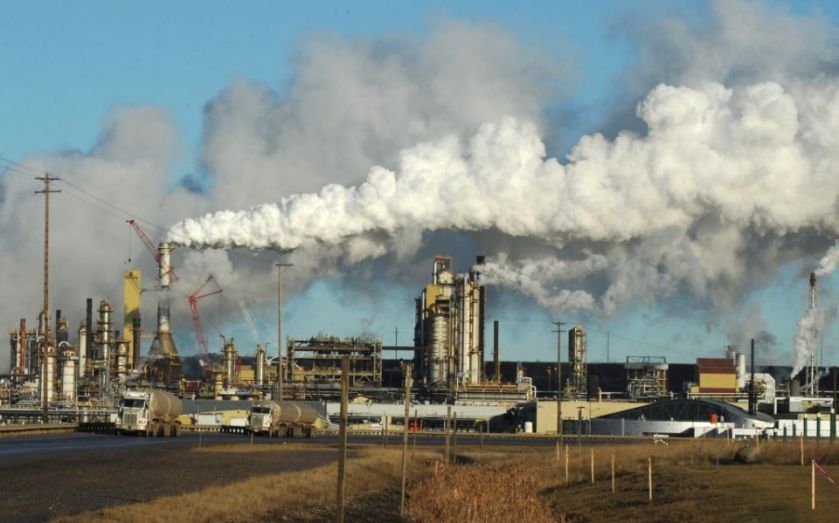
The amount of carbon dioxide in the world's atmosphere has reached its highest point since humans came into existence, and there's little chance of reversing the damage. 

In March 2015, the US National Atmosphere Administration (Noaa) measured the global concentration of the gas as 400 parts per million (ppm), adding that the last time it was this high was between three and five million years ago. 
 
It had already reached this level at individual locations on the planet – in 2012 the Arctic passed the 400ppm level, followed by Mauna Loa in Hawaii in 2013, but never in recent history has the whole world's average been so high. 
 
The graph below shows how steadily the level has been rising since 2010, with seasonal fluctuations reflecting the presence and absence of plants to absorb the carbon dioxide from their surroundings. 

 
"It was only a matter of time that we would average 400 parts per million globally," said Mr Tans, lead scientist at Noaa's Global Greenhouse Gas Reference Network. Nooa collects the data using air samples from 40 sites around the world. 
 
But it seems to have become more of an issue recently, with the increase accelerating – the average growth rate of carbon dioxide concentration in the atmosphere from 2012 to 2014 was 2.25 ppm per year, the highest ever recorded over three consecutive years. 
 
“This marks the fact that humans burning fossil fuels have caused global carbon dioxide concentrations to rise more than 120 parts per million since pre-industrial times,” added Tans. “Half of that rise has occurred since 1980.”
 
James Butler, another senior figure at Noaa, warned that once the damage is done, it's done – you can't easily take the carbon dioxide back out of the atmosphere. 
 
“Elimination of about 80 percent of fossil fuel emissions would essentially stop the rise in carbon dioxide in the atmosphere, but concentrations of carbon dioxide would not start decreasing until even further reductions are made and then it would only do so slowly,” he said. "It was only a matter of time that we would average 400 parts per million globally," said Mr Tans, lead scientist at Noaa's Global Greenhouse Gas Reference Network. Nooa collects the data using air samples from 40 sites around the world. 
 

Share this article

  • Facebook
  • X
  • LinkedIn
  • WhatsApp
  • Email

Similarly tagged content:

Sections

  • News

Categories

  • Tech

Related Topics

  • Green energy

Trending Articles

  • Top Burnham adviser calls for capital gains and inheritance tax hikes

  • Housebuilding giants hit with £4.5bn lawsuit for allegedly overcharging buyers

  • A meeting with the breakfast king of Mayfair

  • As it happened: Stocks jump on defence and metals boost; Oil on track to shed a fifth on US-Iran peace hopes

  • BT tops FTSE 100 after finding new home for international business with Verizon joint venture

More from City PM

  • UK carbon markets stand to get an AI boost

    Opinion
    AWS data centre exterior with modern architecture and advanced infrastructure in a business news context
  • CoStar Data Shows Birmingham Posted Highest Retail Investment Volumes Since 2016

    Business Wire
  • Carbon Announces Signing of Significant Growth Equity Investment from FTV Capital

    Business Wire
  • Carbon markets must industrialise or the net zero transition stalls

    Partner
    Close-up of a sapling at Aranya Reforestation site in India, showcasing efforts in sustainable forestry and ecological res...
  • ReNew Announces Results for the Fourth Quarter and Full Fiscal Year: Reports Highest Ever Net Profit

    Business Wire
  • The Premier Jumping League (PJL) & McCarthy Jumping Team Announce Landmark Purchase

    Business Wire
  • The companies leading on climate aren’t waiting for 2050

    Partner
    Large-scale reforestation project in India by Climate Impact Partners, showcasing vast tree plantation efforts.
  • ustwo and University of Bristol Launch PRISM, a New Open-Source Tool That Helps Developers Understand the Carbon Impact of AI Usage During Development

    Business Wire

City PM — European politics, business and analysis.

Europe

  • Germany
  • France
  • Europe
  • UK & Ireland

Topics

  • Business
  • Markets
  • AI
  • Technology
  • Opinion
  • Energy

More

  • Politics
  • Economics
  • Fintech
  • Legal
  • Sport
  • Life

Company

  • About City PM
  • Editorial Policy
  • Corrections
  • Contact
  • Terms of Use
  • Privacy Policy
  • Cookie Policy
© 2026 City PM · Published by CityPM Media, Bahnhofstrasse 65, 8001 Zürich, Switzerland
About · Editorial Policy · Corrections · Contact · Privacy