
It has been a major year for Germany's national rail service. For the first time since 2019, the company has posted a profit: €179 million in the first half of the year.
"I am delighted about this important milestone," Evelyn Palla, Chair of the DB Executive Board, said in a statement announcing the figures. "But I will only be satisfied once the quality of day-to-day rail services is also up to scratch!"
Palla was, of course, talking about the company's dire punctuality record - an ongoing thorn in Deutsche Bahn's side. In 2025, just 60.1 percent of long-distance trains arrived at their destination on time.
For the first six months of this year, the punctuality figures dropped slightly. Just 59 percent of long-distance trains arrived on time.
Deutsche Bahn regards a train as punctual when it arrives within six minutes of the scheduled arrival time.
More than three quarters (76 percent) arrived within 15 minutes of the time stated on the schedule.
In regional traffic, the figures were much more encouraging. Here, 88.2 percent arrived punctually, meaning local commuters have had a better year than long-distance travellers.
Earlier in July, the company announced it would invest tens of millions new AI-powered tools in improve communication with passengers - especially in the event of delays.
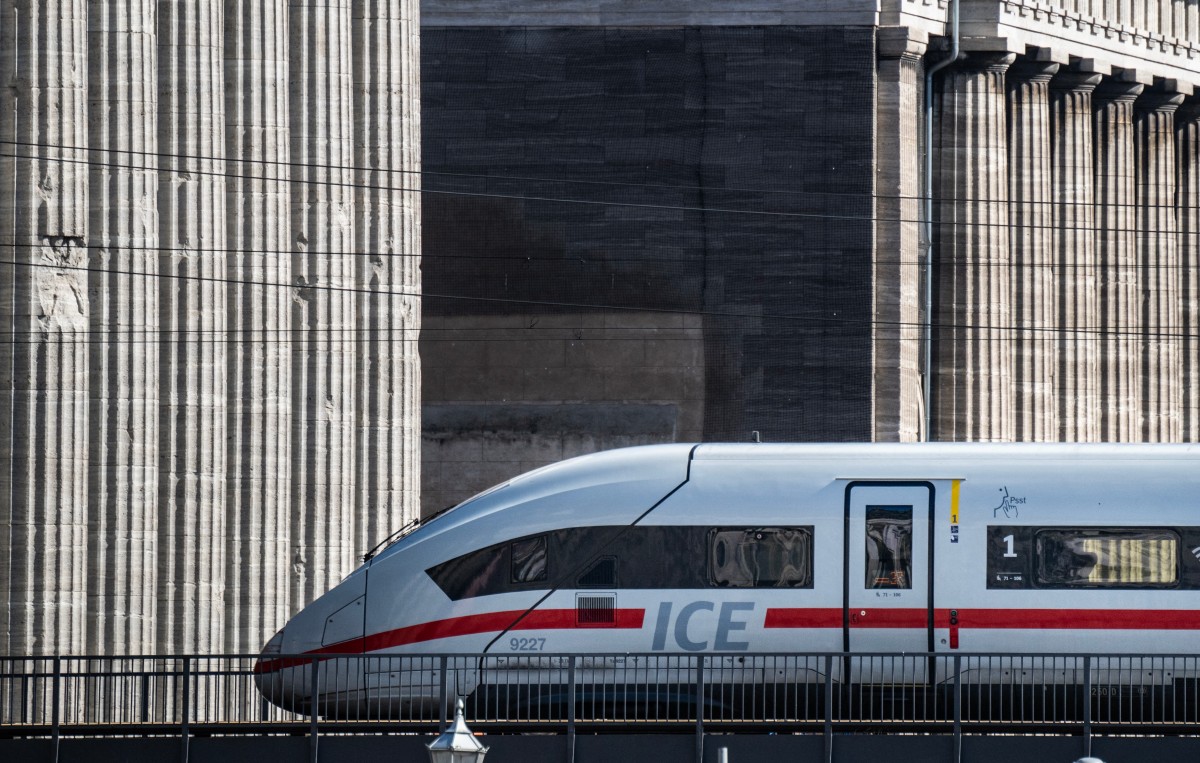
DB's 'year of construction'
Deutsche Bahn blames its lacklustre punctuality record partly on spells of icy winter weather in January and February, as well as a record-breaking heatwave in June.
It also cites the numerous construction sites around the country as it tries to upgrade its aging rail network. So far in 2026, the company has poured €8.7 billion into refurbishments, with a total of €23 billion budgeted for the year as a whole.
"Never before have the federal government and Deutsche Bahn invested so much money in rail infrastructure in a single half-year," said Palla. "If we continue to invest at this level, we will lay the foundations for a sustainably stable rail network."
Fuelled by major investments from the federal government, DB says 2026 is set to be "Super-Baujahr" (major year of construction), with around 28,000 construction sites across the country.
While this may have long-term benefits, it has caused delays and disruption for passengers in the short-term, DB admitted. However, the company said that around half of its planned construction for this year has already been completed.
As a key example, the company mentioned the renovation of the Berlin to Hamburg line. This busy corridor reopened in mid-June - albeit six weeks later than originally planned and with significant teething problems.
Over the next ten years, around 40 heavily used rail corridors are set to be gradually upgraded across Germany. This will lead to months-long closures of key parts of the transport network, with a knock-on impact on rail passengers.
Useful vocabulary
punctuality - (die) Pünktlichkeit
refurbishment - (die) Sanierung
sustainable - nachhaltig
construction site - (die) Baustelle