
The family-owned engineering firms that make up Germany's Mittelstand built their reputation on precision manufacturing, not software. Facing cheaper competition from Asia, many are now retooling around AI-driven automation to stay ahead.
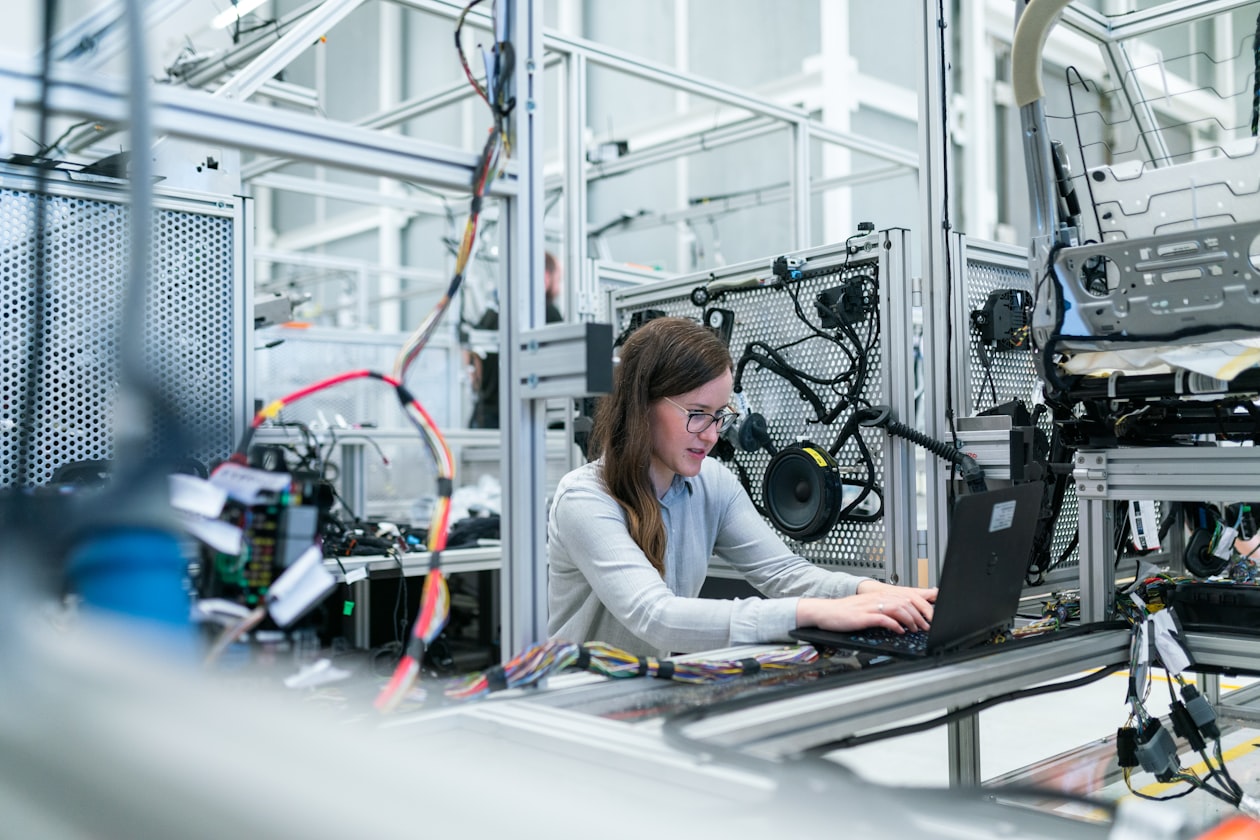
The Mittelstand — Germany's dense network of small and medium-sized, often family-owned manufacturers — has never been an easy business model to copy. It rests on decades of accumulated precision engineering knowledge, deep customer relationships in narrow industrial niches, and a willingness to reinvest profits rather than distribute them. That model built Germany's export economy. It is now facing its most serious test in a generation.
Chinese manufacturers have moved up the value chain far faster than most Mittelstand leaders expected a decade ago, competing not just on price but increasingly on precision and delivery speed as well. Energy costs in Germany rose sharply following the disruption to Russian gas supplies, eroding a cost advantage that German industry had taken for granted for a generation. The response, increasingly, is not to compete on labour cost — a battle German manufacturers cannot win — but to compete on how much of the factory floor can run with less direct human intervention.
The Mittelstand cannot out-cheap Chinese manufacturing. It is betting it can out-precision it, with AI doing the work that used to require a bigger headcount.
The popular image of industrial AI is still, for many executives, a humanoid robot on an assembly line. The reality inside Mittelstand firms is less cinematic and more consequential: machine-vision systems that catch manufacturing defects human inspectors miss, predictive-maintenance software that flags a failing component before it halts a production line, and AI-assisted design tools that cut prototyping cycles from weeks to days.
Germany's engineering trade association, the VDMA, has for several years pushed member companies toward what it calls Industrie 4.0 — networked, data-driven manufacturing. What has changed recently is less the ambition than the tooling: AI models capable of learning a specific factory's defect patterns, rather than relying on generic rule-based inspection systems, have made automation viable for smaller production runs that previously could not justify the investment.
The harder constraint is not the AI itself but the people needed to deploy it. Mittelstand firms are, almost by definition, not large enough to run in-house AI research teams the way a Siemens or a Bosch can. Many are working through a growing ecosystem of specialist integrators and university spin-outs – Germany's Fraunhofer Institutes have become a particularly important bridge between academic AI research and shop-floor deployment – rather than building capability from scratch.
The Mittelstand's advantage was always depth of engineering knowledge. The bet now is that AI can be trained on that knowledge faster than competitors can build it themselves.
This is not a story about robots replacing German factory workers at scale — the demographic reality is closer to the opposite, with many Mittelstand firms struggling to fill skilled positions as the workforce ages. The more accurate framing is that AI-driven automation is being adopted to preserve output and quality with a workforce that is not growing, in the face of competitors who can now match German manufacturing quality at a lower cost base.
Whether this succeeds will not be visible in headline national statistics for years. It will show up, if it works, in whether German precision manufacturers can still command a price premium a decade from now, or whether that premium finally erodes the way it did in consumer electronics a generation ago. The Mittelstand has weathered structural threats before. This is the first one where the answer depends as much on software as on steel.


