
Generation ‘locked out of home ownership’ in UK housing crisis


The ‘stark’ affordability crisis facing Britain’s would-be homeowners is locking a generation out of the market, according to a new report.
The research – created by Skipton Building Society in partnership with Oxford Economics – finds 98 per cent of adults living with their parents cannot afford to buy a house in their local area.
The five million people in this position, around a quarter of the UK’s young adults, have been “trapped” by a faulty system, says Skipton’s boss Stuart Haire.
“[Looking at the index] was one of these stark moments where you realize that a generation has been locked out of home ownership and are being trapped at home,” Haire says. “It’s very jarring.”
“The social and economic consequences of this are quite material,” he adds.
Britain’s housing affordability crisis has been a growing problem for the last two decades, with a huge spike in house prices in the 2000s – without an accompanying rise in wages – creating long-term unaffordability in the market.
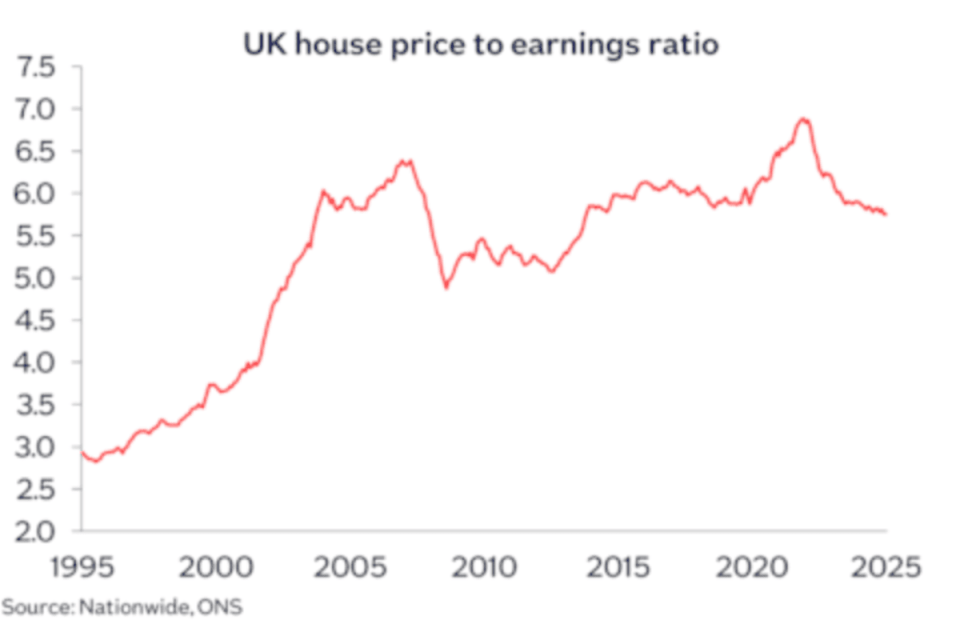
But house prices are still rising due to a combination of gifts and loans from the Bank of Mum and Dad – which totalled £9.4bn in 2023 and has nearly doubled in the last five years – as well as lower interest rates and longer-term mortgages.
“All of the economic activity that could be associated with [housebuying] is not flowing through the economy, which means the economy isn’t growing, which means the tax take isn’t growing,” Haire adds.
Crisis ‘more complicated’ than just building
While the current government has pledged to build 1.5m more homes in the UK by 2025, solving the crisis is “more complicated” than just building, Haire says.
“This is complicated… We want to build in new areas. We need to make sure the utilities, the gas, the electricity, the water supplies, are in those areas. We need to make sure that the buildings will be robust and fire safe,” he says.
“There’s a period of time between intention leading to regulatory and legislatory change, which then leads to the conditions that allow the builders to get on and do what they do.”
And, despite looser planning regulations and an injection of cash, construction numbers have yet to reflect Labour’s changes.
Demand for concrete has fallen to its lowest level since 1963, while the Minerals Product Association (MPA) has warned that demand for mortar and sand has fallen to “historically low levels.”
Just 904 new homes were registered in the second quarter of 2025, down from 2,191 in the second quarter of 2024, according to the National House Building Council (NHBC).
But Haire is optimistic: “It’s easy to criticise a government in power, but in fairness to them, they’ve always said that they have this ambition, and they’ve put in some of the necessary steps to enable more flexibility in the housing market.”
The importance of property tax reform
A number of property tax reforms have been proposed, with varying reactions from analysts.
The possible introduction of capital gains tax on the sale of homes at the upper end of the market has been described as a disaster for downsizing, with no incentive to move into smaller homes and free up space in the market.
But there is support for some change to property taxes: Reports from thinktanks have long called for the reform of Stamp Duty and Council tax, arguing that they stymie the property market and disproportionately affect first-time buyers and owners at the lower end of the property market.
Skipton, too, has advocated for the reform of property taxes – particularly stamp duty – to make it easier for first-time buyers.
Higher stamp duty costs now impact 83 per cent of homeowners and 41 per cent of first-time buyers, up from 19 per cent last year, according to Zoopla.
“Taking away the friction from buying and selling is only going to be a good thing here, and ultimately it just reduces that additional barrier for people looking to move either into or flow through the housing market.,” Haire says.
Ultimately, he says, reforming the housing market will create a better economy for everyone – and maybe even boost Britain’s long-stagnant productivity levels.
“If [housing] starts to become unattainable, then actually the whole aspirational culture that drives economies [is under threat],” he says.
“People wanting to do better than their parents, people wanting to live their [own] version of their lives… starts to be drawn into question. That’s why this is so important.”