
Reasons to be optimistic about the UK’s construction sector

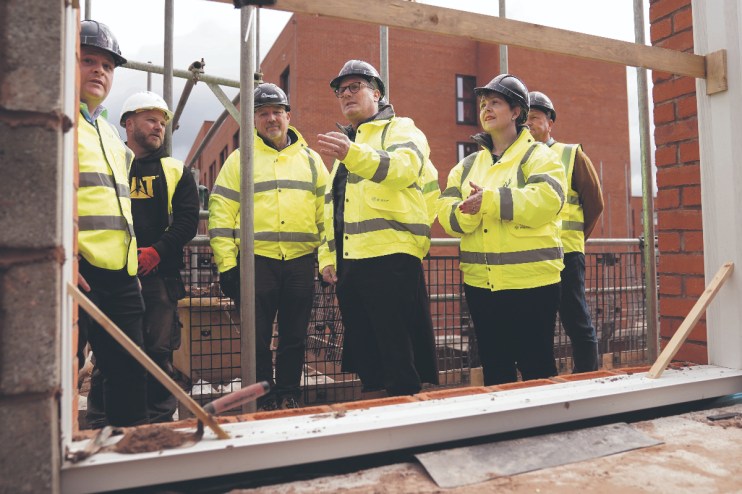
There are some early signs the UK’s beleaguered construction industry is turning a corner as higher demand, higher government investment and lower interest rates set shovels in the ground.
Judging by the numbers so far this year, the UK’s construction industry is in a bad place: The sector contracted at the fastest pace since 2020 in July, with payroll numbers dropping for the seventh consecutive month.
Demand for concrete has fallen to its lowest level since 1963, while the Minerals Product Association (MPA) has warned that demand for mortar and sand has fallen to “historically low levels.”
Just 904 new homes were registered in the second quarter of 2025, down from 2,191 in the second quarter of 2024, according to the National House Building Council (NHBC).
The short-term picture looks undeniably bleak, fuelled by a hangover from high inflation, plus planning delays and labour shortages.
But early trading updates from housebuilder Bellway and brick-maker Ibstock, plus a new report from construction firm McBains, suggest the industry is entering a period of recovery.
In fact, medium-term confidence is “buoyant”, according to director at McBains, Colin McCaffrey, with growth to be found in private housing, infrastructure and industrial work.
‘Gradual recovery after a challenging period’
Industrial and infrastructure output is set to rise by around one per cent next year and in the low single digits in 2026, while private housing output is expected to rebound with four per cent growth in 2025 and seven per cent in 2026, according to McBain’s report.
Housing activity will be driven by a “continued increase in build-to-rent developments and large-scale mixed-use developments”, the report said, with a focus on substantial affordable housing and town centre regeneration.
The government has announced billions in financial support for affordable housebuilders, and has loosened the red tape hemming the sector (although councils have so far found it difficult to adapt).
Ibstock, which manufactures and supplies building products, has recently reported an improvement in trading conditions, with demand in new-build residential improving notably.
In a trading update on August 12, housebuilder Bellway said Labour’s plans will help the industry “in the years ahead”, and reported a higher-than-expected number of completed houses.
Analysts at Berenberg said they expect 2024 to “mark the trough” of the UK housebuilding cycle and expect a “steady volume recovery in the coming years.”
Even July’s job figures suggest some green shoots: Construction has seen a rise in temp vacancies, an “early sign of confidence returning”, according to Kate Shoesmith, REC deputy chief executive.
“Demand for blue-collar temp roles and permanent engineering jobs across the country also remains steady, offering another glimmer of optimism.”
Interest rates have fallen to four per cent and are almost certain to fall at least one more time this year, while technological advances have started to bring down costs.
Challenges remain for construction
Signs of a recovery, however, don’t mean that all is suddenly well in the industry.
“Factors such as planning logjams, skills shortages and wage costs… still represent key challenges over [the next few years],” McCaffrey said.
The construction industry will also continue to face the challenge of an ageing workforce, with more workers reaching retirement than those entering the workplace. The UK will need 225,000 more skilled workers by 2027, according to McBain.
If demand starts to spike and the capacity of businesses doesn’t ramp up, there’s the risk of “overtrading”, according to Kelly Boorman, National Head of Construction at RSM UK.
“Although pipelines are strong and margins are improving, the supply chain is struggling to keep pace, with labour constraints, rising employment costs and future supply shortages anticipated for materials, which will drive prices up adding further tension,” she added.
But she said there are “reasons for cautious optimism”, despite the challenges.
Firstly, construction is somewhat more insulated from AI than other manual industries, which could lead to new employment opportunities.
Then there’s the government investment: The launch of the National Housing Bank will “provide more stability and access to working capital for SME housebuilders”, Boorman said, which “should help accelerate project delivery and mitigate the risk of overtrading.”