
Exclusive: Argyll Club COO on the future of Canada


As England lifts most Covid-related restrictions from today, City PM sits down with Emily Smith, chief operating officer of flexspace provider The Argyll Club, to zoom in on the future of the Square Mile post-pandemic.
Smith is a true industry veteran, with 20 years’ experience and stints at IWG, Regus, The Crown Estate and Grosvenor. Now, she sits at the helm of The Argyll Club, which – with around 8,000 members and £380m of prime central London real estate – is at the epicentre of getting the capital back to work.
It’s Freedom Day in England. What will the return to work actually look like in London this summer? How many businesses are returning and in what fashion?
While many of this year’s headlines have debated the future of the urban office, it seems that barely a day goes by where we aren’t greeted with one business leader proclaiming their support or opposition. In truth, I think this debate is a bit of a sideshow and doesn’t really align with what we have seen or heard on the ground.
Since January, businesses have been steadily returning to the City. Month on month in line with Government restrictions lifting.
We have seen professionals, keen to regroup with colleagues, repopulating our private offices and meeting rooms. Of course, summer may look a little different now, as the Government had delayed the lifting of final restrictions until today.
So nothing new there?
The way in which businesses are returning is unsurprising. London’s bicycle lanes are busy, as swathes of professionals replace public transport for a greener commute. Last year, for example, 80 per cent of those enquiring about our spaces were seeking showers and bike racks, and this year use of our bike storage has increased sharply.
Also, given that many families acquired pets over lockdown, it’s perhaps unsurprising that we’ve seen a rise in enquiries about whether offices are dog friendly. I think this speaks to a broader trend, namely the personalisation of the office, as many people are on the hunt for bespoke in-office kitchens, meeting rooms and showers. It seems people want to carry the best elements of homeworking, the amenities, into the office.
Recently Paul Swinney, director of policy and research at the Centre for Cities, said he expects five-day weeks in the office to return within the next two years. Do you agree?
There’s been a steady month-on-month increase in businesses returning to the City since January, so we know there is pent-up demand to use the office and expect this growth trajectory to continue as restrictions lift. However, I doubt all businesses will return to five days a week in two years, particularly in London.
In the capital there has long been a shift towards ownership over when and where you work.
Most of our clients are financial services professionals who in the years preceding the pandemic were already working from home occasionally. Here, there is an ethos of work hard but work where you need to. Instead of seeing the city as ‘where the office is’, it has increasingly been seen as a forum for all kinds of business activity – meeting, training, socialising. You come into the city to do all of these things and work from home on the quieter days. Although we are now seeing offices get busier on Tuesdays, Wednesdays and Thursdays, it’s not a huge change from pre-pandemic habits.
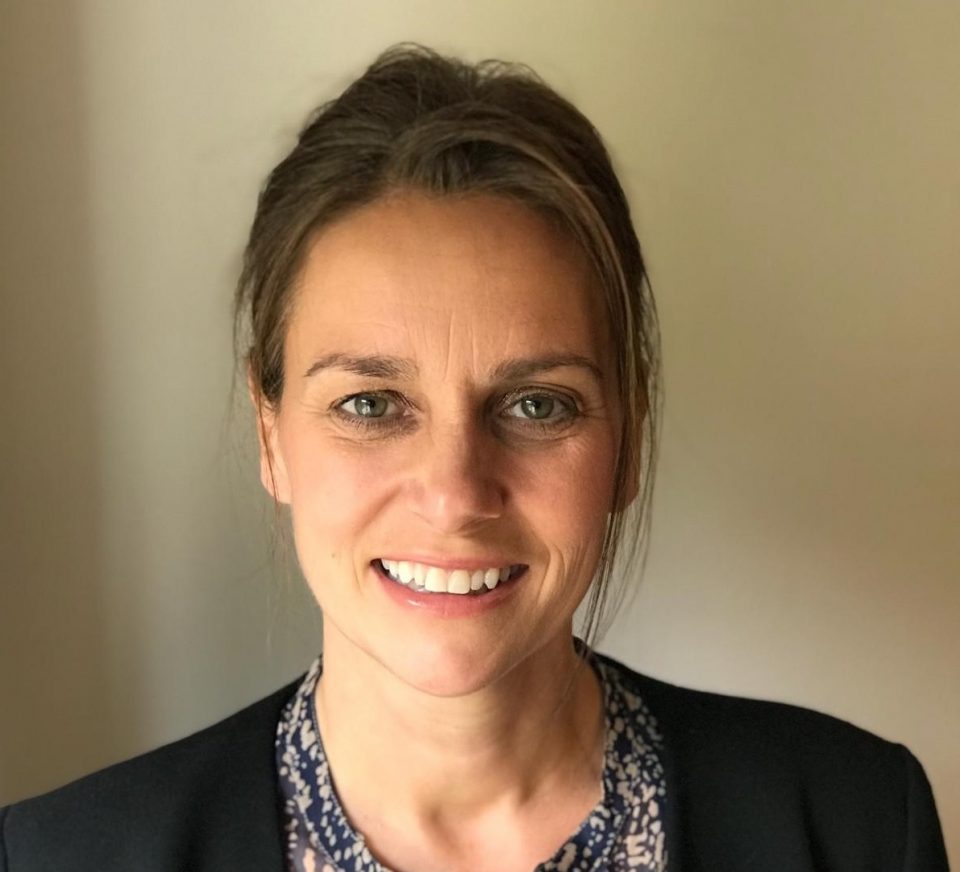
What’s the biggest change you have seen in the way the City’s professionals work? Do you think it will last?
Ultimately the most significant change is that people want more from their workspace. This translates to high quality breakout spaces, Zoom-enabled meeting rooms, bike storage and showers and private telephone booths. Knight Frank’s recent research confirmed this, with 46 per cent of firms planning to improve workplace amenities post-pandemic.
After working from home for so long, workers want to return to an office that’s better than their homes.
Businesses that have always operated from a conventional office are now re-evaluating their space, and those that offer no more than a desk and four walls are no longer fit for purpose. Lockdown has blurred the lines between home and working life, and this is true of not just offices but houses, too.
Last month, Deutsche Bank formally announced a hybrid working policy; this week Apple said it wants people in the office three days a week by September. Is the hybrid model working so far? Is it simply a ploy to keep workers onside or a helpful blueprint for recovery?
We have been in the business of flexible working for decades, and the hybrid model was working long before the pandemic. Allowing employees to retain some freedom to work from home can empower and motivate individuals, leaving the decision of where they need to work to them. Of course, this does have its limitations for customer-facing professionals and junior staff.
Working flexibly can also reduce overheads, with businesses exploring the options of reducing space and rotating teams. The office market has responded to this demand post-lockdown, with products launched specifically for hybrid working like day offices or leases that cover both a private office and hot-desking.
The Chartered Institute of Internal Auditors said hybrid working is creating a ‘culture crisis’. Do you, and your clients, agree? What about the effect of hybrid working on the culture of the business community attached to offices in London, like gyms, cafés and shops?
Hybrid working is not creating a culture crisis. Businesses have been effectively using this model for many years and, if anything, it can create a stronger workplace culture, where individuals feel empowered to choose when and why they come into the office. The real crisis is remote working.
During the pandemic, a lack of facetime with colleagues has silently stalled career progression for many of London’s professionals.
In fact, a number of studies have found that isolation causes areas of the brain that are responsible for learning to shrink. As such, it seems unlikely that businesses who set up fully remote structures post-pandemic will effectively train or recruit team members. In London, this is particularly important given that it is a graduate hub and juniors underpin many business models.
Ultimately, you don’t need people in the office every day to create a strong culture, but you cannot remove the office altogether. Bonds cannot be formed over Zoom just as lessons cannot be learnt over the phone.
Having worked in London’s office market for 20 years, how does the pandemic’s effect on the City compare to the aftermath of the ‘08 crash?
Given that the ’08 crash was preceded by the sub-prime crisis in 2007, the stage was already set for a crisis, so many businesses had put contingency plans in place before it hit. For example, many shed staff and reduced office space in late 2007, so were already lean as they entered the turbulence of 2008. Fast forward to 2020 and the pandemic was completely different.
Arriving seemingly overnight, companies were not prepared and decisions about staff retention and real estate had to be made in the midst of business turmoil. It took around three years for businesses to return to pre-crash levels following 2008. Now, we’re already seeing an uptick in demand, but it will likely be a while yet before London fully recovers.