
Election 2024: How does our first past the post voting system work?

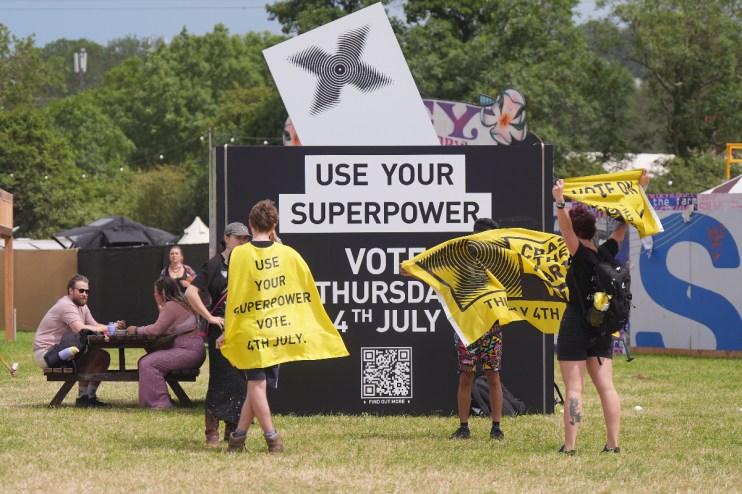
With the general election fast approaching on Thursday, July 4, here’s everything you need to know about the UK’s first past the post (FPTP) voting system.
Though backed by both Labour and the Tories, smaller parties claim that they are unfairly treated by the system, and debates over alternatives have been rumbling for years.
What is first past the post?
When voters go to the polls, they select one candidate for MP in their constituency by drawing a cross in the box next to their name.
Each party nominates one candidate to compete on their behalf in each seat. There are 650 seats in the House of Commons.
The candidate with the most votes, that is, the ‘first past the post’, wins the election and becomes the MP in that constituency.
The winner only needs to gain more votes than any other candidate, not a majority of the votes. This is known as a plurality.
Second-place candidates get nothing, even if they are only a few votes behind the winner.
How does a party win overall?
If one party is elected in more than half—326—of constituencies, it is elected by majority and allowed to form the government. If no party reaches this number of MPs, it results in a hung parliament.
The party with the most MPs must then try to form a coalition with smaller parties to take its overall share of Commons seats to a majority.
Coalitions are formed by parties with largely similar political interests, and the smaller parties often make demands of the ruling party in return for joining a coalition.
FPTP usually results in a majority government, but it did not in 2010, for example, when the Conservatives formed a coalition with the Liberal Democrats.
It is unlikely that next week’s election will result in a coalition as polls suggest Labour will take a healthy majority, with some even predicting a 280-seat margin.
What are the advantages and disadvantages?
Supporters of the FPTP system argue it is easy to understand and familiar to voters. The high probability of majority governments is also said to be a benefit.
Because FPTP usually results in governments with control of the House of Commons, supporters say this system ensures a strong government with the power to implement policies.
The system also allows voters to select their MPs directly, which can enable a strong relationship between them and their constituency. It also gives a constituency the power to remove its MP.
However, FPTP means that MPs are rarely elected with a majority vote, and some say that this puts people off voting, as it can lead to voters feeling their vote has been wasted on a rival candidate.
Under FPTP, voters often vote tactically, as they feel their preferred candidate is unlikely to win. Instead, they focus on voting for the person who is most likely to beat their least favourite candidate.
Which parties are in favour of first past the post?
Both Labour and the Conservatives back first-past-the-post. In their manifesto, the Tories asserted that they “remain committed” to the system.
Smaller parties argue that FPTP disadvantages them, as second—and third-place candidates may be backed by a large number of people but still fail to win their seats.
For example, the Green Party won 2.7 per cent of the popular vote in 2019 but only had one MP, while the Liberal Democrats won 11.5 per cent of votes, and had less than two per cent of seats in the Commons.
The Lib Dems oppose FPTP and support the introduction of proportional representation (PR).
The Green Party has also committed to replacing first past the post with a “fair and proportional” voting system. Nigel Farage, leader of Reform UK, also backs PR, describing the existing system this week as “absolutely bankrupt”.
What are the alternatives?
Proportional representation, the system favoured by many smaller parties, would see the distribution of seats correspond more closely with the proportion of votes cast for each party.
If a party won 30 per cent of votes, for example, they would then gain 30 per cent of seats in the House of Commons.
PR makes single-party majorities less common. Some people say this results in weaker government, while others are opposed to the two-party system that prevails in UK politics.
In 2011, the UK public voted overwhelmingly in support of first-past-the-post.
The referendum, held as a condition of the Liberal Democrats’ coalition with the Tories, saw 67.9 per cent of the public vote against alternative vote (AV), the system which was proposed as a change to FPTP.
What other voting rules are in place?
Voters will need to bring a valid ID to the polling station in order to vote.
This policy, introduced by Boris Johnson, was criticised by the Electoral Commission, which said hundreds of thousands of people could be prevented from voting in the general election as a result.
Ahead of this year’s local elections, mayors, including Sadiq Khan, called it a “cynical” attempt to suppress the vote of young people, who they said have less access to eligible forms of ID.
The Conservatives’ manifesto has pledged to keep the ID requirement in order to tackle voter fraud, while Labour has pledged to “address inconsistencies in voter ID rules that prevent legitimate voters from voting”.
What other voting reform is on the cards?
Labour has committed to giving 16 and 17 year olds the right to vote, in a bid to “increase the engagement of young people in our vibrant democracy”. Labour are also planning to implement automatic voter registration, in another bid to increase youth turnout.
The Conservatives have ruled out lowering the voting age. Earlier this month, Prime Minister Rishi Sunak lashed out at Sir Keir Starmer’s attempts to “entrench his power,” saying the Labour leader favours lowering the voting age because it is “electorally helpful to him”.