
Does the NHS have a communications crisis?

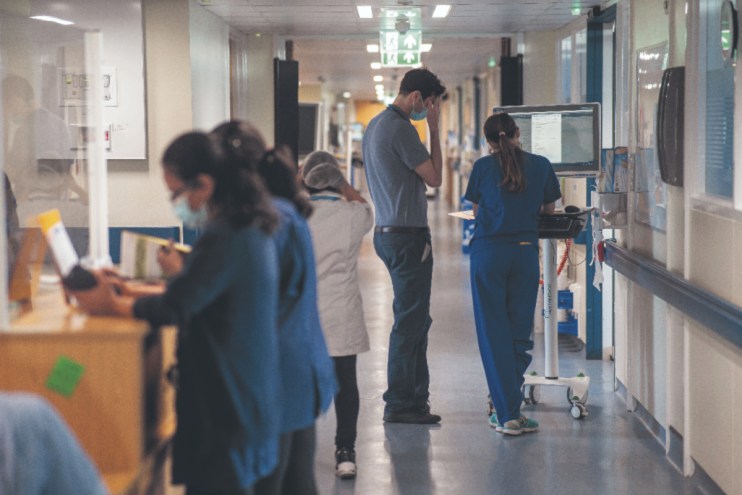
The NHS has a backlog crisis a staff vacancy crisis and a mental health crisis. Public satisfaction is at an all-time low, and Lord Darzi’s landmark report of the state of the health found that it was in “serious trouble”.
But does it boil down to a comms crisis? Jacob Haddad, CEO and co-founder of health-tech firm Accurx, certainly thinks so.
“There are massive challenges in the health system… we see the root of a lot of those as communication problems,” Haddad says. “When we speak to staff on the front line and say ‘what did you do today?’ It is always I had to make this referral’ or ‘get this second opinion’ or ‘chase something’.”
Accurx was originally set up to prescribe antibiotics, but shifted to the comms space after spending time with staff working in the NHS and seeing “phone tennis” eat into productivity and stretch staff overly thin, Haddad says.
Now, 98 per cent of GPs used the tech to communicate with patients, and Accurx wants to take the product to other parts of the health system like hospitals, community and mental health trusts, and pharmacies.
The shift to healthtech is ‘going to happen’
Talking to Haddad, it’s easy to feel (perhaps overly) optimistic about the state of the NHS. He describes the tech as “game-changing” and “a huge opportunity to really shift productivity”, which has languished – along with investment – in the last fifteen years.
“[Tech is] changing the model of how we deliver healthcare… the way a lot of healthcare is delivered hasn’t changed for 70 years [but] what is inevitable is that more and more care is going to happen asynchronously (i.e. messaging rather than calling),” Haddad says.
“That’s happened in every other sector. That is happening in the most advanced GP practises… It will take time,” he says, adding that shifting a ten-minute appointment to two minutes on a messaging system could have huge impacts across the system.
He bats away suggestions that this would make healthcare more detached: “The practises that have implemented [tech] really well can get a request from a patient they know is quite complex and can then make sure their usual GP sees them.”
With simpler cases handled faster with a messaging service, “they’ve got that flexibility to do that… They’re able to give appointments to patients who need it”.
Haddad adds that with more time freed up, innovation will improve. “[People] are lacking that headspace to think differently or to explore [new options].”
“The more capacity we can free and – we see this in practises – [the more] they’re able to go and innovate in how they manage patients,” Haddad says.
The Labour government backs tech
While Keir Starmer has promised to reform the NHS, he has warned that changes will take upward of a decade. He has pledged “long-term reform – major surgery, not sticking plaster solutions”.
The move from analogue digital is one of his three key reforms (the others are moving from hospital care to community care and from sickness to prevention).
Earlier this week, health secretary Wes Streeting has announced plans for digital patient records, which will make health data available to all NHS hospitals, GPs and ambulance services in England.
At the same time, he launched a major consultation on the government’s plans to transform how the NHS works with tech.
Dr Ben Maruthappu, founder and CEO of healthtech company Cera, said that the shift to digital was “vital”.
“As the population ages and demand for care grows, it’s vital that every healthcare worker has the maximum impact during each working day,” he said. “All of this helps to prevent hospitalisations, saving lives and saving the NHS millions of pounds a day.”
Haddad adds that the rhetoric used by the government so far has been encouraging – as is their stability compared to that last few – but that “it’s still early days”.
“[It’s] really positive when we hear the government talk about how we’re not just going to put more money into the current system, we actually need to see reform. We need to see better ways of delivering care.”
“That’s exactly what we’re talking about [at Accurx]… using technology to modernise how care is delivered, because otherwise there’s a massive risk of just rearranging deck chairs and delaying the problem six months without materially changing position,” he says.