
The coronavirus could cause flexible working to go viral

With each day that passes, it becomes clearer that the world is facing a once-in-a-generation crisis of public health.
With Italy now locked down and governments around the world scrambling to contain Covid-19, there is no doubt that the impact on daily life across the globe will exceed anything seen before in most of our lifetimes.
The most urgent priority for governments, businesses and individuals is containment. Short-term disruption to life and work will be both significant and inevitable. Longer term, most of us will expect life to return to normal — but by the time it does, could we have reappraised what “normal” means?
An unintended consequence of change during a crisis is that what feels like a temporary response can become permanent. Research suggests that it takes an average of 66 days for a new behaviour to become a habit.
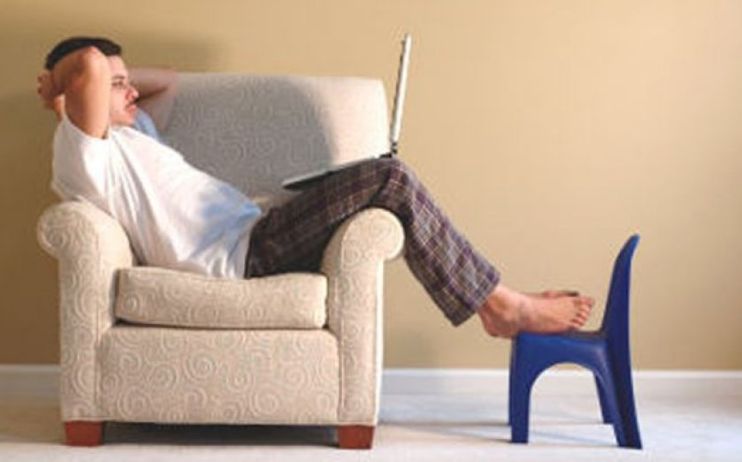
One change that millions of us are likely to experience in the near future is working from home. With large numbers of people now not just being asked to self-isolate but having isolation enforced by their government, the momentum for us to change our usual routine and mindset is growing fast.
In the past few years, the experience of flexible working has changed dramatically thanks to the development of new platforms and collaboration tools, new networks and bandwidth.
We now understand that we can in fact be very productive in an environment that’s not a traditional workplace. ONS statistics show that the number of people working from home rose from 884,000 to 1.54m between 2008 and 2018, while the number who work across various sites but use their home as a base increased from 200,000 to 2.66m — both significant shifts, but still fractions of the overall office-based workforce.
That shift is set to accelerate rapidly, with a large proportion of the workforce potentially being forced into what was previously a flexible benefit. The residual effect is that, by the time Covid-19 is a distant and unfortunate memory, we will have fundamentally changed the way we live and work.
This wholesale transformation will be enabled by the essential backbone of new technology, capabilities and digital services, aided by the government’s priority of getting broadband and 5G to every server in the country.
As an industry, we have been talking about tech-driven transformation for some years. Now is the time to make this a reality.
The shift to home-working must inform the chancellor’s plans for Britain’s digital future, including investment in addressing regional inequalities, increasing levels of knowledge, and providing financial relief to help businesses grow. With a new Budget to be announced today, this health crisis could help turbocharge us into the “Digital 2020s”.
Of course, the traditional workplace won’t disappear. In our own experience, as flexible working and working from home have increased at Atos, so too has the importance that people attach to opportunities to get together in person — that’s why we have introduced more conference-style events for our employees across the country.
In the future, people will still hold meetings, gather at conferences, and even shake hands as we have always done. However, even if the House of Commons is run via Skype, politics will still happen via those conversations in the corridors of power, and having a coffee and chat with a work colleague will remain integral to building trusting relationships.
We will still crave that essential human quality of meeting, greeting and face-to-face talking. But we will have much more virtual collaboration, as well as visible data about the world, the places, and the people around us.
Main image credit: Getty