
| Updated:
The business of Champagne: Which Prestige Cuvées should be part of your investment portfolio?

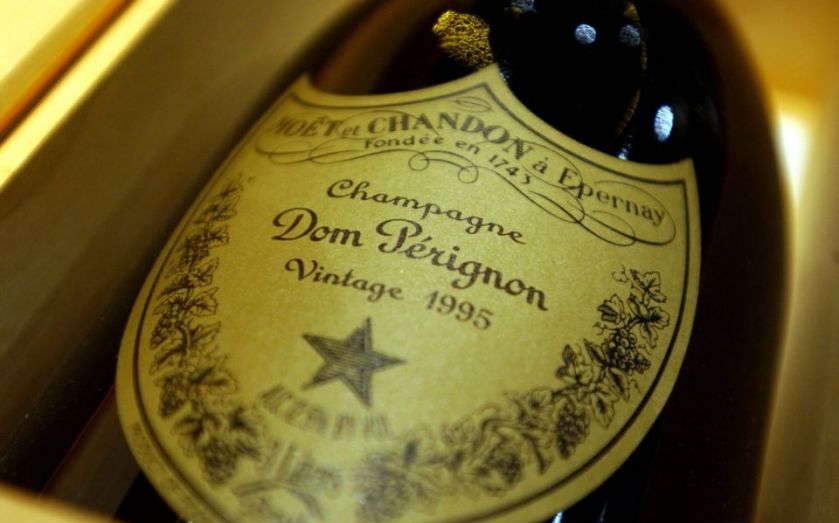
Champagne is famed for giving us the world’s finest sparkling wines. With around 15,000 growers and 290 Champagne Houses producing 300 million bottles a year, Champagne is big business and this illustrious wine is quickly consumed throughout the world.
‘Come quickly, I am tasting stars’ is the famed expression of a 17th century monk, named Dom Perignon, after his first taste of Champagne. Common legend dictates that this famous Benedictine Monk pioneered the ‘meethode champenoise’ of fermenting the wine in bottle, whereas it actually occurred naturally due to Champagne’s cool winters and warm spring months. This caused the wines to undergo a secondary fermentation and is the reason these monks started to find that their wines contained bubbles, had they not gone so far as to explode. Wine makers have continued to develop these techniques ever since, in order to produce exquisite wines delighting consumers and being capable of ageing for many decades.
There are three main vineyard areas in Champagne; Cote des Blancs, Montagne de Reims and Vallée de la Marne, which produce the region’s three grapes – Chardonnay, Pinot Noir and Pinot Meunier. Champagne is produced by adding a solution of sugar and yeast (Liqueur de Tirage) to a white wine in order to start a secondary fermentation in bottle, which results in the bubbles caused by the release of trapped carbon dioxide. The yeast then collects as a sediment which is known as the ‘lees’ which importantly gives Champagne its famous biscuit, brioche and nutty character, as well as protecting it for long term ageing. All non-vintage Champagnes rest on the lees for at least 15 months, however most leading estates age on the lees for much longer in order to add to the complexity of flavour. Vintage Champagnes require a minimum of 36 months, although they too often receive longer contact with the lees.
The leading Champagne houses produce many different styles, both non-vintage and vintage. Non-vintage Champagnes are made to produce a determinedly consistent and familiar house style which is achieved by blending different vintages. Vintage Champagnes come from a single harvest and are only produced in years deemed worthy of production by each individual Champagne house. Furthermore, the Champagne houses are even more selective about producing their Prestige Cuvée and only produce it in the very finest vintages, such as 1996, 1999, 2002 & 2004. Production of these Prestige Cuvées is very small; Louis Roederer produce under 25,000 cases of Cristal, and Delamotte produce fewer than 3,000 bottles of Salon.
Premium Champagne is extremely investable due to its lower production and long term ageing potential, which is matched with extraordinarily high global demand. Once a vintage Champagne is made it can never be reproduced and as soon as it is released to market the majority will be quickly consumed in restaurants, bars and nightclubs throughout the world. As such, Champagne shows a remarkable vintage premium; this means that by the time these Champagnes have reached their true potential there will be very little left so those who have held on to it will see trading prices soar. Equally, rapid global wealth creation has further pushed up demand as many more people want to own the world’s leading Champagnes. As such, prices are set to keep rising over the next 5-10 years.
In recent years the Liv-ex Champagne Index has steadily outperformed other wine investment regions around it. This index is made up of the leading Prestige Cuvées – Krug, Cristal, Dom Perignon, Taittinger Comtes & Salon Le Mesnil, although we also include Bollinger’s Grand Année due to its recent superb performance. Champagne should be a part of every investment portfolio and the aforementioned wines are those which should be primarily considered.