Skip to content
Friday 24 July 2026London --:--Frankfurt --:--Zurich --:--
NewslettersSearchEN · DE
City PM

European business, markets and politics

FTSE 100
10,671.97
+0.31%
DAX
24,908.24
+0.59%
CAC 40
8,311.99
+0.16%
STOXX 50
6,244.42
+0.55%
  • Europe
  • Markets
  • Business
  • Economy
  • Technology
  • Politics
  • Opinion
More
GermanyFranceBankingAIEnergyFintechPropertyCapital Markets
  • Germany
  • France
  • Europe
  • Markets
  • Business
  • Economy
  • Technology
  • Politics
  • Opinion
  • DE
Friday 08 January 2016 9:17 am

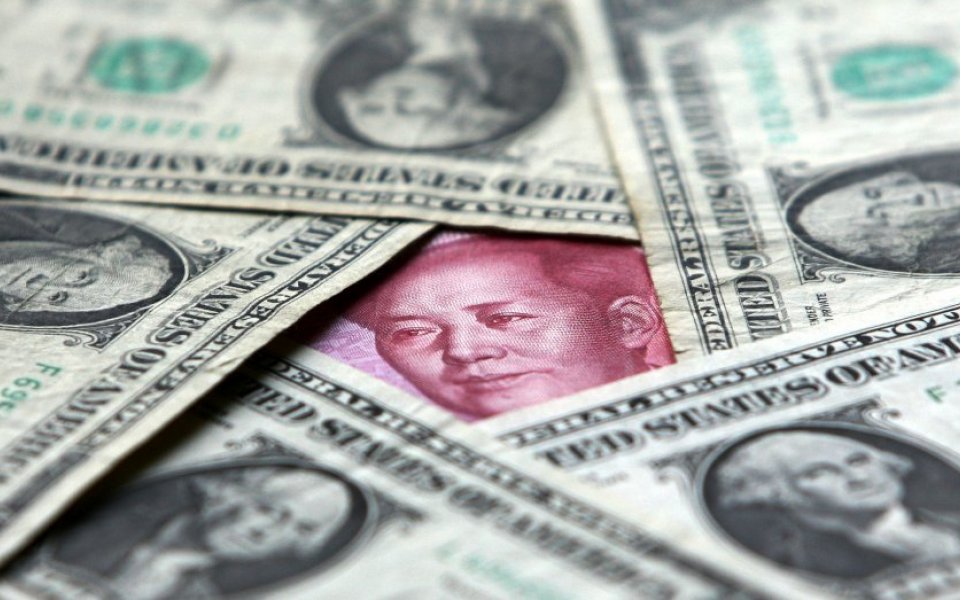
The yuan and dollar currency cross must devalue significantly

By: Michael Howell

Add as a preferred source on Google

At least two large and previously successful hedge funds have recently closed, citing as reasons the breakdown of their crystal balls and interestingly blamed on the growth of algorithmic trading.  We argue differently.

What is making investing hard is that global flows are increasingly dominated by the two major economies: the US and China.

The US accounts for 25.1 per cent of the US$110 trillion (£75 trillion) pool of Global Liquidity by US dollar value and roughly 40 per cent of overall Developed Market Liquidity, which itself makes up 64 per cent of the global total.

Within emerging markets, China comprises a whopping 67 per cent of total EM liquidity and India only 3.6 per cent.

Put another way, Chimerica – the addition of China and the US – comprise almost exactly half of global liquidity in absolute terms and, in practice, far more because several other economies fix to or shadow these two currencies.

Although many investors treat the global economy as highly integrated, it is more correctly regionalised. China and the emerging world are increasingly self-contained, since around three-quarters of their output is sold internally and only 10 per cent goes to the west.

What should really matter to investors are liquidity conditions in each ‘big’ economy.  In recent years the most important source of US liquidity has not been the Fed, but the US private sector, including both shadow bank lending and corporate cash flow.

The pre-2008 US financial boom was fuelled by shadow banks and the post-2011 boom has been primarily driven by bumper corporate cash flows. Chinese liquidity, in turn, depends greatly on the PBoC (People’s Bank), but it has lately been tightening because of large capital outflows from China, which have largely headed into the US dollar.

Think in terms of two currency blocs, the US dollar and the Chinese yuan. The surge in the US dollar has encouraged other major currencies to float down against it. The yen, euro, sterling, Canadian and Australian dollars have all fallen heavily.

Similarly, the trade-related currencies in the notional ‘yuan bloc’ – Thai bhat, Indonesian rupiah, Brazilian real – have also collapsed.

We conclude that the yuan/US dollar – arguably the most important currency-cross worldwide – now also needs to devalue significantly to acknowledge (and help stem) the exodus of capital from China.

In short, the yuan is likely to test CNY7.5/ US$ (i.e. a 20 per cent fall from early 2015).

And, if 2016 ultimately marks a new peak in the general value of the US dollar, expect the yuan to subsequently float down alongside the weakening US unit, say, against a reviving euro and yen.

The currency war should continue apace through 2016.

Share this article

  • Facebook
  • X
  • LinkedIn
  • WhatsApp
  • Email

Similarly tagged content:

Sections

  • Markets & Economics

Categories

  • Markets

Trending Articles

  • BT braces for loss of 800,000 customers as it banks on fibre to keep turnaround ‘on track’

  • Regulator flags BDO’s ‘unacceptable’ audit issues for fifth year in a row 

  • Tax rises ‘guaranteed’ as Healey faces £22bn black hole from Burnham spending plans

  • ‘We are going to run out’: Mitie marks eleventh mega takeover of 2026

  • Greek wine perfectly suits summer. These 5 bottles are the best

More from City PM

  • London Stock Exchange unveils ‘LSE24’ round-the-clock trading venue

    Markets
    Given no article content, categories, or tags, and a generic filename, I cannot generate a specific alt text. I need more ...
  • Moneybox boosts London’s Pisces market in ‘milestone’ £45m sale 

    Markets
    Modern city bus driving through urban streets, showcasing public transportation advancements in 2023
  • Deloitte warns of ‘challenges ahead’ for European football despite €40bn milestone

    Sport Business
    Getty Images logo on office building exterior under clear blue sky, representing global media and stock photography company
  • Thames Water to run out of money by end of the year

    Water
    Thames Water creditors have made a last-ditch offer for a rescue deal.
  • Tale of two cities: London leaps ahead in global finance but domestic growth stalls

    Economics
    Getty Images number 2154617464 depicts a relevant scene for the articles unidentified content, suitable for business context.
  • Nscale taps lenders for $900m to fuel AI data centre splurge

    Tech
    AI data center with rows of servers and cooling systems, showcasing advanced technology and infrastructure innovation
  • From Mongolian camels to Tibetan verbs: the absurdity Ed Miliband’s aid spending plans

    Opinion
    Ed Miliband speaking at a podium during a press conference, addressing energy policy reforms and climate change initiatives.
  • South Korea is the canary in the coalmine of the AI boom

    Opinion
    Skyline of Seoul, South Korea featuring modern skyscrapers and traditional architecture under a clear blue sky
CityPM

Independent European business, markets and political news for decision-makers.

Morning Briefing

Europe

  • Germany
  • France
  • Europe
  • UK & Ireland

Business

  • Markets
  • Banking
  • Technology
  • Energy
  • Property
  • Fintech

Editorial

  • Opinion
  • Editorial Policy
  • Corrections
  • Contact

Company

  • About City PM
  • Privacy Policy
  • Terms of Use
  • Cookie Policy
© 2026 City PM Ltd · Published by CityPM Media, Bahnhofstrasse 65, 8001 Zürich, Switzerland
Privacy · Terms · Cookies · Facebook