Skip to content
City PM
  • Germany
  • France
  • Europe
  • Markets
  • Business
  • Opinion
  • Germany
  • France
  • Europe
  • Markets
  • Business
  • Opinion
Wednesday 03 June 2015 5:02 am

Could the humble password about to become a thing of the past? Here’s how brainwaves are being used in the battle for cyber security

By: Sarah Spickernell

Add as a preferred source on Google

A new system allowing accounts to be unlocked using brainwaves could spell the end for passwords as we know them. 

Named “brainprints”, the system is the creation of a research team at Binghamton University in New York, and involves an application that can identify a person based on nothing more than their mental reactions to different acronyms, like DVD or FBI. 
 
The researchers first realised its promise when they analysed the brain signals of volunteers reacting to a list of different words, and found no two people gave the same response. The results are published in the journal Neurocomputing.
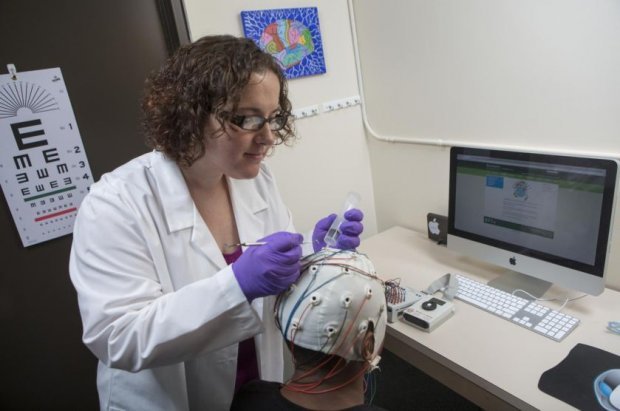


Each person reacts differently to a group of letters (Source: Jonathan Cohen)

 
The best part of this, besides allowing us to be lazy, is that it's much more secure than any normal password – it would be very hard for anyone to replicate someone's brain signals, and if they did manage it the system could be cancelled immediately. 
 
Sarah Laszlo, one of the lead researchers involved in the study, said: 
 
If someone's fingerprint is stolen, that person can't just grow a new finger to replace the compromised fingerprint – the fingerprint for that person is compromised forever. Fingerprints are 'non-cancellable'. Brainprints, on the other hand, are potentially cancellable. So, in the unlikely attackers were actually able to steal a brainprint from an authorised user, they could then 'reset' their brainprint.
 
Unfortunately, though, it's unlikely the system will be widely used for a long time – in fact, the defence sector is likely to be one of the first users. Zhanpeng Jin, another researcher involved, said: 
 
We tend to see the applications of this system as being more along the lines of high-security physical locations, like the Pentagon or Air Force Labs, where there aren't that many users that are authorised to enter, and those users don't need to constantly be authorising the way that a consumer might need to authorise into their phone or computer.

Share this article

  • Facebook
  • X
  • LinkedIn
  • WhatsApp
  • Email

Similarly tagged content:

Sections

  • News

Categories

  • Tech

Related Topics

  • Artificial intelligence (AI) and robots
  • Cybercrime

Trending Articles

  • Revealed: Secret Treasury plan to tax State Pension before it is paid out

  • Burnham’s new chief of staff ran City firm advising Thames Water and rival Heathrow bidder

  • Two solicitors linked to Post Office scandal charged with misconduct

  • Barclays and Lloyds join banking sector plan for digital ID

  • Reeves’ new tax charge on cash ISAs faces fierce industry backlash

More from City PM

  • How do you teach a robotaxi London? Waymo explains

    Tech
    Getty Images logo on a building facade, symbolizing brand presence in the media and photography industry.
  • AI is transforming job references

    Opinion
    Prominent hiring sign displayed in front of a business, indicating job vacancies and employment opportunities
  • The Debate: Should the resignation of the Prime Minister trigger a general election?

    Opinion
    Keir Starmer announces resignation at podium, addressing media with serious expression against a backdrop of political ban...
  • Emily Thornberry has insulted Carnival-goers and Gooners alike

    Opinion
    Emily Thornberry addressing media at press conference, wearing a navy blazer, standing at a podium with microphones
  • Britain has turned its back on liberalism

    Opinion
    Victorian Express train journey showcasing historic locomotive and passengers in period attire for a scenic countryside ride
  • TG Jones backs down from clash with landlords in bid to save stores

    Retail
    TG Jones discussing key business strategies in a formal setting, highlighting his expertise in the industry.
  • Why Richard Harpin sold half of homeServe for half a million pounds — and what he’d do differently

    Business
  • Burnham rows back on £10bn Waspi women offer

    Politics
    Andy Burnham discusses support for Waspi women, addressing pension injustice in a public speech.

City PM — European politics, business and analysis.

Europe

  • Germany
  • France
  • Europe
  • UK & Ireland

Topics

  • Business
  • Markets
  • AI
  • Technology
  • Opinion
  • Energy

More

  • Politics
  • Economics
  • Fintech
  • Legal
  • Sport
  • Life

Company

  • About City PM
  • Contact
  • Terms of Use
  • Privacy Policy
  • Cookie Policy
© 2026 City PM. All rights reserved.
About · Contact · Terms · Privacy