
World’s first: Met Police develops new forensics technology that can detect blood specks within seconds

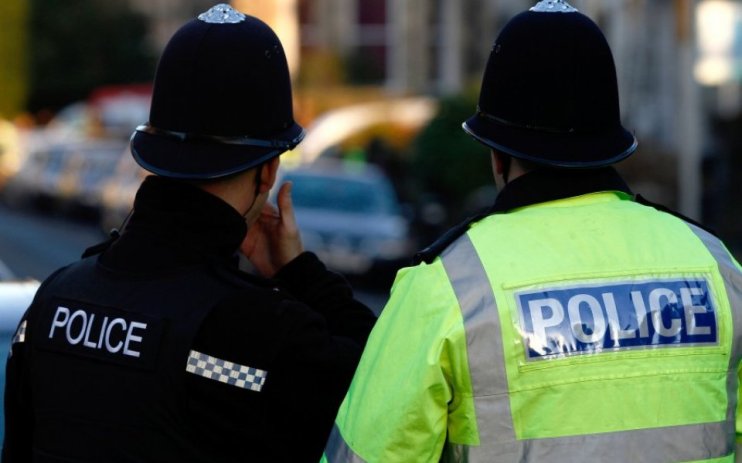
Tiny specks of blood on dark clothing can now be detected by forensic scientists in a matter of seconds, sometimes resulting in crucial evidence.
Traditional methods, which have been used for 100 years, involve hours of painstaking examination but the new technology means suspects can be quickly identified or eliminated in a murder investigation, for example.
An increasing number of violent crimes in London are being committed by people wearing dark clothing and blood needs to be found rapidly for DNA testing.
Developed by the Metropolitan Police, the new infrared (IR) technology speeds up the process, spotting blood almost immediately in some circumstances, even if it is less than a millimetre in diameter.
These tiny spots of blood can often be crucial evidence.
Dark clothing
Alan Tribe, the Met’s director of forensic operations, said forensic scientists have been looking for bloodstains since around 1813, and since then identifying blood on dark clothing has been a challenge.
He told the PA news agency: “It is a challenge that we have encountered over several decades but it’s been an increasing issue as we look to tackle violence – tackling violence is the Met’s highest priority.
“We know that the dynamics of some violent offences in London are that we see stabbings in the street and we would look for the transfer of bloodstains between items of clothing.
“Increasingly as we look around the streets of London, we’ll see that dark clothing is favoured.”
“It’s pretty routine for us to see black t-shirts, dark vests, dark puffer jackets, dark hoodies appearing as items that we need to search for blood.”
Alan Tribe
He added that there is an imperative from an investigative point of view to tackle violence and bring offenders to justice.
Mr Tribe explained: “We know that in those offences we see the transfer of bloodstains and we know that sometimes extremely small bloodstains on which these cases can hinge.
“We know it is extremely difficult to look for them on certain fabrics in certain ways.
“So, we have developed this technology in response to that to try and find a better way to move on from those decades old techniques looking for blood stains.”
The previous method of using a microscope to search for blood on dark clothing could take days, and sometimes weeks.
The new technology revolutionises the ability to search dark clothing for blood stains through a purpose-built, super high-resolution camera and hands-free computer system.
No glow
Unlike the scenes many will be used to seeing on TV, blood does not glow under IR light and instead appears black while the dye in many items of clothing make them appear fluorescent – a negative image.
Dr Andrew Hart, a senior forensic scientist in forensic services in the Met, said: “Infrared light is on the borders of the sort of white light spectrum – it’s towards the higher end so we can see some infrared but then it becomes invisible later.
“It basically is almost akin to night vision cameras – night vision cameras work using infrared – or CCTV.
“At night time when you look at your CCTV camera, you see the grey image and their clothing can reflect navy and white.
“The dye is reflecting infrared and turning it white, and blood has a certain absorbance property so it absorbs infrared and appears dark.”
Using the camera, forensics examiners are able to view a large area of material at one time – the equivalent to an A4 sheet of paper, rather than poring over small sections with a light.
Two years to develop
Developed by the police force over two years, it also uses hands-free technology to control the camera and on-screen menus to minimise contamination.
Mr Tribe said: “In 1867, there was a young girl who was murdered in Hampshire, where in one of the first cases of forensic science we saw a professor at Guy’s hospital asked to examine clothing of the perpetrator for bloodstains.
“He took several weeks to look across the number of garments – I’ve no doubt if he had the equipment that we’ve got today, we would have seen that done in a very different way.”
Since June last year IR has been used for around 40 submissions of evidence, which has speeded up investigations. These cases have not yet come to court.
The Met is the first organisation to be accredited for IR’s routine use in casework in the UK.
Dr Hart said the Met realised a number of years ago that infrared was used in other industries, and set about examining what techniques were available to visualise that blood staining on dark items.
“We explored alternative light sources and infrared was the obvious one for us to use. And that’s the kind of the thought process around it – when you’re faced with a black puffer jacket, is there a way to make it easier?”
“We realised that the dyes in that fabric reflect infrared, and it just introduces that contrast.”
Dr Hart
However, the traditional method of using a microscope is not completely defunct, as some fabric dyes will not reflect the infrared light.
The Met is now working towards creating a more portable version of the technology so it can easily be used on crime scenes.