
Why hiring chief executives externally is better for struggling businesses

It's an age-old argument: when a leader steps down, do you promote from within or bring in fresh blood? Each brings their own benefits – one has a fresh view on business and new ways of working, while the other already has a deep understanding of a company's strengths and weaknesses.
Now we might have the definitive answer: a six-decade-long study of almost 3,000 chief executives across a range of businesses suggests it should all come down to whether a company is struggling or already on the right path.
If a business is doing badly, taking on someone from outside leads to the best outcome, according to the researchers, at the University of Missouri. This because they are more likely to spend large sums on research and development, leading to more transformation and the discovery of new ways of doing things.
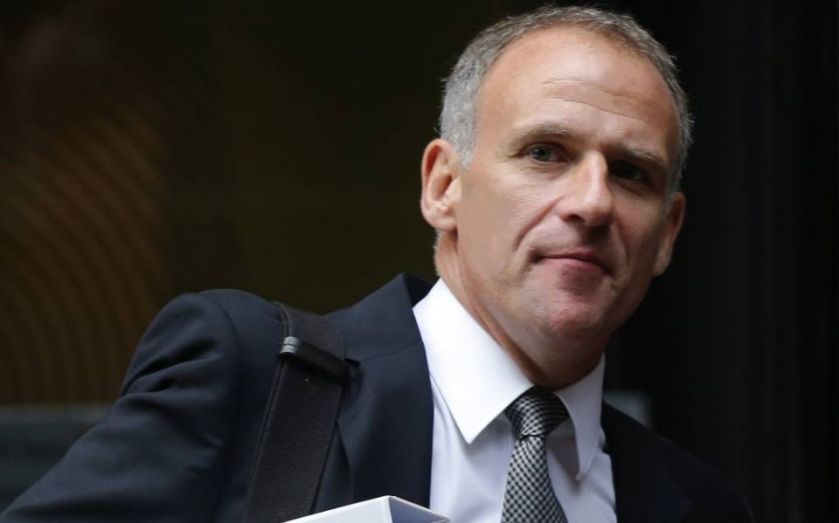
Tesco is a case in point – last July the beleaguered supermarket appointed Unilever's Dave Lewis as chief executive, hoping he could save the business following a string of profit warnings and a scandal of a black hole in its accounts. The move has paid off so far, with share price rising steadily since the start of the year. Morrisons is the latest supermarket giant to follow suit, appointing former Tesco chief executive David Potts as its leader.
"If a company currently is either mired in mediocrity or performing poorly and it announces the hiring of an external CEO, it could be a signal that the board is serious about fixing problems," said Stephen Ferris, one of the lead researchers.
Yet the figures show 78 per cent of new executives are selected from within companies – a fact Ferris suggests is related to the unpredictability of an external hire.
"Although we cannot foretell the outcome of hiring an external CEO, or any new CEO, it could give investors reason to think about investing a little more confidently in that company within the context of their portfolios. The hiring of an internal candidate, on the other hand, may indicate that a company is stable and likely to continue an already successful business approach,” he said.
Hiring from inside can be better than bringing in an external candidate, however, if the circumstances are right. This is because large, strategic acquisitions tend to be the result. By comparison, outside chief executives were found to make a larger number of smaller acquisitions.
"If a firm is doing well, the internal process frequently will be sufficient to identify, nurture and promote the people who ultimately will be able to lead the company and continue to generate value," Ferris said.
Apple's Tim Cook is a prime example of how a boss with experience can bring strength to a company that is already growing. Succeeding from Steve Jobs as chief executive in 2011, he has since managed to take the company's market cap beyond $700bn.
There are exceptions to the rule, however – when internal candidate Satya Nadella took over from Steve Ballmer as chief executive of Microsoft in February last year, some believed his appointment would be a bad move for the software company, which was struggling to compete with its more agile rivals.
But his appointment was widely regarded as good for the company – since he took the reins, Microsoft's shares have increased in value steadily.