
Why is the pharmaceutical industry turning its back on the UK?

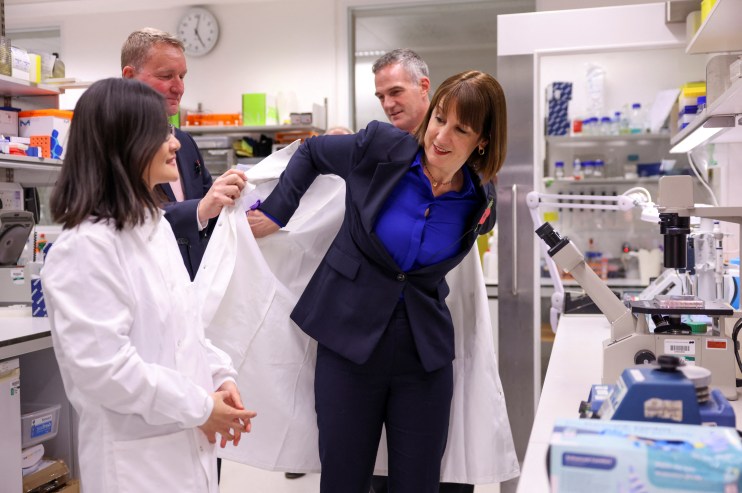
Since coming into power last year, Rachel Reeves and Keir Starmer have consistently stressed the importance of the life science sector to the UK economy, viewing it as critical for growth.
In its aim to boost the industry’s standing, Labour pledged to make the UK an attractive place for investment and innovation, and to increase the sector’s research and development capabilities.
However, pharmaceutical industry leaders do not share this sentiment, slamming the UK as uncompetitive and sparking a wave of investment receding from UK shores in recent weeks.
US pharmaceutical giant Merck scrapped its planned £1bn UK expansion, deciding to no longer occupy its research site in London King’s Cross, despite construction set to be completed in 2027.
A spokesperson for the drug company said: [the decision] reflects the challenges of the UK not making meaningful progress towards addressing the lack of investment in the life science industry…by successive UK governments.”
FTSE darling Astrazeneca also paused its £200m Cambridge research site investment, further damaging the UK’s reputation, following its decision to abandon plans for a new vaccine plant in Liverpool earlier this year.
Richard Torbett, chief executive of Association of the British Pharmaceutical Industry (ABPI) said: “There are many warning lights flashing red for the UK’s life sciences sector right now.”
“The government must take urgent action to address these issues which have been growing worse for well over a decade.”
Lack of incentives and pricing woes
Dan Coatsworth, investment analyst at AJ Bell, said companies feel they do not receive “enough financial support” from the UK government for them to boost research and manufacturing operations.
The UK invests just 9 per cent of its healthcare spend in medicines, compared with 20 per cent in Japan and 14 per cent in Germany.
Industry leaders have also blamed the fraught negotiations between them and the government over medicine pricing for their growing unwillingness to invest in the UK.
Companies have previously warned that investment in UK research and development was at risk due to what they saw as a refusal to pay enough for innovative drugs.
Under the voluntary pricing and access scheme, companies agree to pay back to the NHS a certain amount of their UK revenue made from branded drugs, which stands between 23.5 per cent and 36.5 per cent of total revenue.
The unpredictable clawback rates have dampened investor confidence and emphasised the staggering difference with competing European markets, with rates of 5.7 per cent in France and 7 per cent in Germany, according to the ABPI.
Coatsworth noted that “different pricing is needed” on individual medicines to lure companies back, as well as offering overall more attractive rates and long term benefits for having a UK presence.
However, health secretary Wes Streeting walked away from drug pricing negotiations in August after pharmaceutical companies refused a new government offer.
Torbett said returning to the table and finding “a way to reduce clawback rates to internationally competitive levels” was crucial to mending the sector’s attractiveness, as well as “charting a clear path to increase investment in medicines” by 2030.
European investment and tariff promises
Away from offering more favourable medicine rates, other developed markets are enticing pharmaceutical companies through increasing overall economic investment.
In particular, executives’ eyes are turning towards Germany, as the government continues its efforts to boost investor confidence in the economy.
Chancellor Freidrich Merz triggered a significant shift in fiscal policy earlier this year, easing the country’s debt brake, while increasing defence spending and investment in infrastructure.
The increased injection of capital has increased the country’s skilled workforce and lifted government support for the life science sector, with leading companies, including Roche and Sanofi now capitalising on the enticing environment.
The looming threat of tariffs has also caused many companies to pledge increased investment in the US, after Trump vowed to reduce import tariffs for companies who scale up their US manufacturing footprint.
Most recently, FTSE-listed GSK plans to invest $30bn (£21bn) in the US over the next five years, while competitor Astrazeneca promised a “landmark investment” of $50bn by 2030 in July.
This included operating manufacturing sites in Maryland, Massachusetts and Indiana.
Opportunity for smaller start ups
While the withdrawal is damaging the sector and wider economy, Coatsworth noted that there are now growing possibilities for start-ups to take advantage of the gaps in the UK market.
The withdrawal grants upcoming and smaller companies greater access to the talent pool displaced by large companies who discontinued roles as well as providing more opportunities for focus on niche, innovative products, instead of being forced to compete with larger players on manufacturing basic drugs.
It also opens the door to partnerships with remaining corporations to gain more funding and scale operations.
But, the government must work on luring companies back in order for the UK to maintain its standing as a leading global hub and effectively help economic growth.
Coatsworth said: “We have a great reputation, but that reputation is fading.”