
Why is the Bar Standards Board politicising our profession?

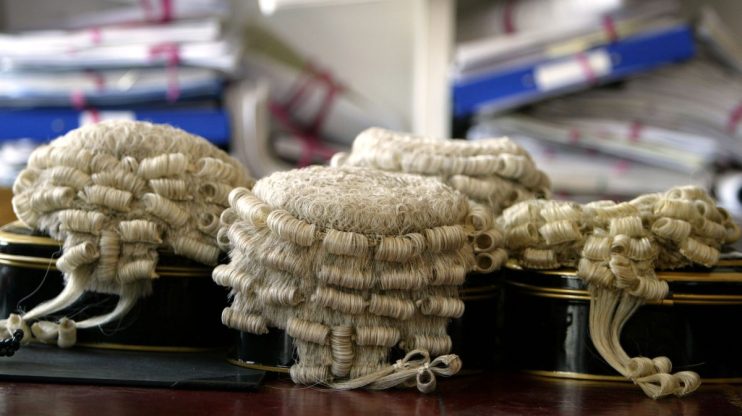
The Bar Standards Board’s plans to introduce a professional duty to advance DEI will turn chambers meetings into maoist struggle sessions, says Andrew Lomas
The Bar Standards Board (BSB) – the body that regulates barristers in England and Wales – has recently proposed to replace a barrister’s core duty to not unlawfully discriminate with a positive duty to “act in a way that advances equality, diversity and inclusion.” There are a number of problems with this.
The first is a practical one. The core duties “set the mandatory standards” that barristers are required to meet. Critically, the BSB “may take disciplinary proceedings” if it believes there has been a breach of the core duties. The proposal is therefore seeking to amend a barrister’s foundational professional obligations to the court, their peers, and their clients in the most nebulous terms. This raises an obvious question: what does compliance with the new duty look like? How is it breached? Professional conduct rules (and potentially career-ending decisions) should be concrete and of determinate scope – such as the current duty not to unlawfully discriminate – and not based on vibes or (supposed) good intentions.
Which leads to the second problem. The proposed new duty pre-supposes – without any enquiry or further thought – that advancing equality, diversity, and inclusion is, in and of itself, an unambiguously good thing. This proposition is not uncontentious. Research published this year, focusing on S&P 500 companies, failed to repeat McKinsey’s original (but anonymised) 2015 study that purported to show that diversity improves organisational performance. Specifically, the researchers couldn’t even find a correlation between employee diversity and a range of profitability metrics, let alone a causal link.
Diversity is a zero-sum game
Further, such a simplistic approach risks overlooking the point that advancing diversity is necessarily a zero-sum game (as amply demonstrated by the RAF when it illegally stopped recruiting “useless” white men as pilots to hit diversity targets). It expressly requires preferencing certain groups and characteristics over others. The BSB itself uses the inelegant neologism “minoritised” to describe under-represented groups, which implies not only that someone is doing the “minoritising”, but also that this act is pervasive, ongoing, and needs to be counteracted by the new duty (this is the language of structural or systemic racism, the existence of which is hotly contested). All of this is before one considers that any attempt towards greater diversity is shooting at a rapidly moving target given the explosion in net migration to the UK in the last few years.
Third, even if it can be assumed that advancing equality, diversity, and inclusion is a desirable policy objective, what is the principled basis for press-ganging barristers into being agents of social change as part of their professional duties (rather than simply proscribing, as at present, unlawful discrimination)? That is not to say that barristers can’t or shouldn’t pursue whatever political aims they want in their spare time, but working at the bar is stressful and demanding enough without each chambers meeting taking on the character of a Maoist struggle session (if you think this is over the top, barristers are already under a duty to report the misconduct of others, with it being serious misconduct – and itself reportable – if that initial misconduct is not reported. It is through this prism that the new core duty should be viewed).
In short, a supposedly neutral regulator should stay above the fray and focus on its core duty of ensuring that barristers have a clear, predictable and consistent professional framework within which to operate. That is the best way to safeguard the rule of law and ensure access to justice. It should not be seeking to politicise an entire profession or promoting a drab uniformity where every organisation has to end up looking, sounding, and speaking the same way.
Andrew Lomas is a barrister at One Essex Court