Why include education in your corporate social impact strategy?
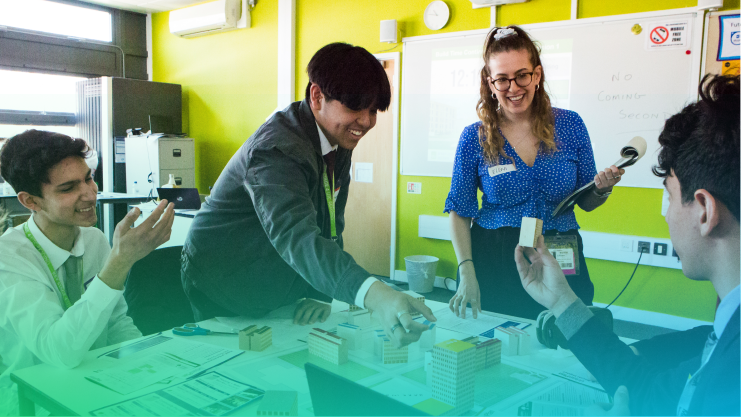
In my years of helping businesses shape and evaluate community education programmes, I’ve noticed more and more organisations starting to see education not only as a means to create social impact but as a multi-faceted benefit to their business. Education programmes for the community are now seen as a means to engage employees in company culture, an extra leverage in business growth strategy, a way to connect with local communities, and an opportunity to demonstrate CSR or ESG commitment.
We recently surveyed UK businesses to understand how they perceive the value of supporting educational initiatives as part of a social impact strategy and contrasted this with schoolteachers’ views on the same topic to understand whether such efforts were welcomed by the community.
Here are three insights from the survey that demonstrate why education programmes are now a vital part of business strategy:
- Education delivers proof of meaningful impact aligned with CSR and ESG goals
Historically, businesses have found it difficult to show they’ve made a difference with the Social aspect of ESG, but education initiatives make it easy to measure and see your impact. Teachers are experienced in measuring changes in young people’s knowledge, skills, confidence, and behaviours, so schools are a perfect location for your ESG and CSR investment as working with them allows you to easily measure, understand, and communicate the impact you’re having.
Take careers education as an example: teachers see a big impact on students when businesses deliver initiatives on this topic; nearly 3 in 5 teachers who responded to our survey confirmed this.
Education can be part of the solution to helping you deliver the tangible, quantifiable measures of impact needed for your CSR and ESG reporting. On top of that, it can also make your impact clearer to your stakeholders through emotive, individual stories that illustrate the difference you’ve made. Taking careers education again as an example: when we speak with young people about business interventions, we often hear stories of how they’ve felt inspired to look into new career pathways or gained a confidence boost to speak in public or go for that job interview they were worried about. Businesses can offer unique insights for students on career pathways and the world of work, but also on specialist topic areas, to enhance how schools cover these topics with real-world examples. Through this partnership with schools, businesses can deliver a significant impact that is easy to see.
- Education is a solution to recruitment and lack of skilled workers
Businesses are struggling to recruit the right staff, often because the potential workforce doesn’t have the right skills. Educational programmes provide a great opportunity to develop these skills in young people, ensuring they are equipped and motivated to address businesses’ skills shortages.
Organisations can see the value of these initiatives: 75% agree they should be supporting the development of wider skills that young people will need when they join the workforce. Yet, many businesses might only be offering work experience – which is a step in the right direction but only solves part of the problem. To address the skills gap directly, organisations can invest in education initiatives that provide schools with resources to support the development of all the skills young people need to be successful in the world of work: from interpersonal skills and numeracy to data science and sustainability skills, for example. By supporting schools, businesses help to ensure a diverse group of young people have the skills and the confidence to apply for the jobs and the work experience places on offer.
- Education connects the dots of social impact work
Of the surveyed organisations that have social impact programmes, only 40% have a clear strategy behind it. This means that valuable initiatives such as charity giving, employee volunteering, sustainability actions, and activities designed to engage employees with corporate values might feel somewhat disconnected. When that is the case, companies often struggle to communicate their holistic social impact and tell a cohesive story of what matters to them.
Educational programmes can bring everything together: they might focus on topics and causes the company is already supporting, complementing giving and volunteering efforts, and provide further volunteering opportunities for employees to engage with the community and share their skills and experiences. By putting education at the centre of their social impact strategy, businesses can share a clear vision of the impact they want to make in the world and connect employees with that vision.
It’s great to see businesses recognising the critical importance of education for social impact. In 2024 and beyond, I hope even more organisations will incorporate it in their strategy so that more young people – particularly those least advantaged – can access tools and knowledge to support them in their futures.