

Why the Federal Reserve’s ‘quantitative tightening’ will be held back

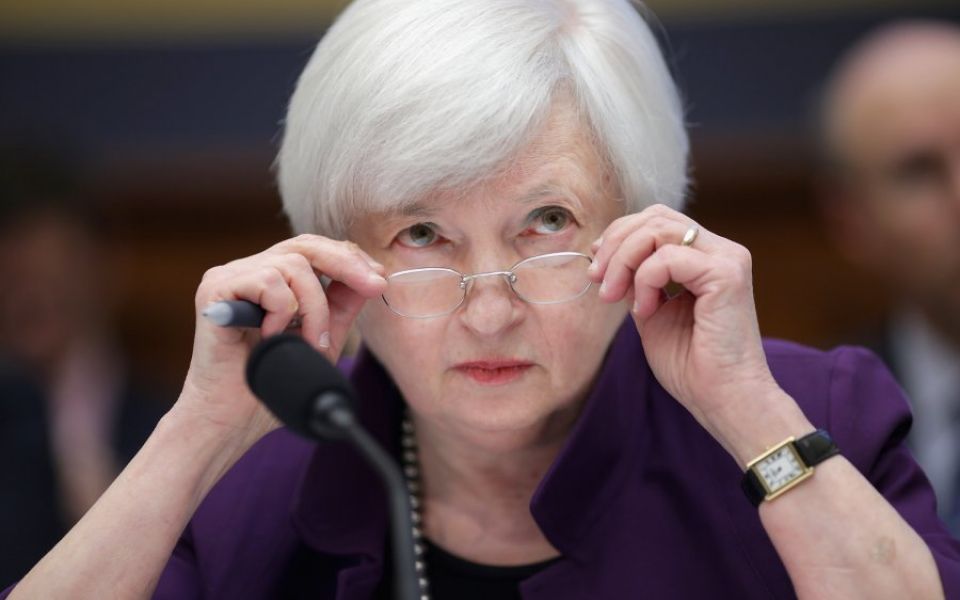
Janet Yellen, the chair of the Federal Reserve (Fed), says she hopes that the reversal of QE will be as dull as “watching paint dry”. John Williams, San Francisco Fed President, said he hoped it is “boring”.
Will they get their wish?
Between 2009 and 2014 the QE programme saw the Fed create $3.5 trillion, with which it bought the equivalent amount of financial assets and helped propel markets steadily upwards.
The reversal of this programme – a process otherwise known as balance sheet normalisation or quantitative tightening (QT) – will mean the Fed slowly stops reinvesting the proceeds it receives from maturing bonds.
Starting with a reduction of just $10 billion a month, the Fed’s plan is to reduce its reinvestments until such a time it considers its balance sheet to have “normalised”. How long this will take remains to be seen, but the initial schedule looks 15 months ahead, by which time the monthly balance sheet reduction will be $50 billion a month. From there on it will remain at the $50 billion level until it is normalised.
Underpinning this plan to unwind QE, are three basic Fed objectives.
1. Don't crash the bond market
Keeping bond yields from moving sharply higher is critical to the success of QT. After all, higher yields equal higher borrowing costs and lower bond prices.
In theory, by passively unwinding its balance sheet by just allowing the bonds it owns to mature, the Fed circumnavigates the fear of what might happen to yields if it was to ever try and sell such a large amount of bonds directly. In practice however, there is next to no difference.
With a significant increase in supply hitting the market in coming years and the largest uneconomic buyer exiting stage left, pressure should build for yields of both government and corporate bonds to move higher.
2. Don’t crash the stockmarket
The equivalent outcome for the equity market would manifest itself in a falling P/E multiple. Generally speaking, the US stockmarket today is richly priced on pretty much every meaningful measure one cares to analyse.
In practice this means that:
- Future returns for the balance of this cycle will likely be dismal. Regrettably this is at a time when past returns appear most impressive and has inspired a wave of passive investment in stockmarkets.
- Stocks are rather vulnerable to a negative shift in fundamentals and/or a bearish swing in investor sentiment.
Although this has been the case for some time now, it has been overcome by the liquidity support central bankers have provided by remaining spectacularly dovish nine years into this recovery. Investors have been conditioned to buy every dip. We would merely ask for how long that will remain the correct response going forward as liquidity is withdrawn.
An additional consequence of QE has been the collapse in volatility to historically very depressed levels. We think it’s complacent to expect volatility to remain so low.
3. Don't crash the economy
Boiling it down for the economy, the crucial question for the US (and globally) is what happens to the cost of credit. Governments, households and the corporate sector are all more leveraged today than they were when the world economy began falling to bits a decade ago as a result of too much debt.
Essentially, since interest rates peaked and began falling in the early 80s, credit has replaced savings as the driver of economic growth. When credit growth was strong, economic growth was strong. When credit growth was weak, as has been the case this cycle, economic growth has been weak.
All else being equal, we think it’s reasonable to assume that if interest rates move higher as a result of QT, private sector credit growth, which is already slowing, will slow further. This may be compounded by a negative wealth effect if asset prices move lower too. All of which places even more emphasis on resolving the absolute disarray in Washington. Suffice to say that the combination of a gridlocked government and a sluggish consumer is not great for the overall economy.
For all of these vulnerabilities, it is easy to see why many believe the Fed won’t make much progress with unwinding QE. The economy and the markets simply won’t permit it.
Six questions to be answered
Performing such a task without disturbing the economy or markets looks extremely challenging. It’s never had to be done before. Moreover, there are a number of questions that remain unanswered. Here are six:
- What is the Fed’s tolerance for rising bond yields?
- How will the Fed respond if the S&P falls 20%?
- How indebted is the consumer, and what is their sensitivity to higher interest rates?
- If credit spreads rise, will companies continue to issue debt to buy back shares?
- If all goes well, how long will it be before other central banks begin reversing their unconventional policies?
- What policies will President Trump put in place? Will they be inflationary? Will they push up interest rates?
Any of these have the potential to change the Fed’s view on QT.
Investment implications
Now, does all of this uncertainty mean you shouldn’t invest? No. Does it suggest you ought to be investing conservatively? In our view, yes. Does it mean that you should ensure your portfolio and risk tolerance are properly aligned? Absolutely.
According to FactSet, over the past five years, trailing earnings per share for the S&P 500 have risen by 12% in total – roughly in line with the rate of inflation. Over the same five years, the S&P index has risen by about 72%. Put simply, quantitative easing has inflated asset prices.
In hindsight, you would have hoped QT would be taking place at a time when the economic cycle was less mature than it appears today.
To the extent that watching paint dry really is rather boring, we’re going to have to disagree with Janet Yellen on this one. We expect the next few years to be rather more interesting.
Important Information: The views and opinions contained herein are those Robin Mcdonald and Marcus Brookes, fund managers, and may not necessarily represent views expressed or reflected in other Schroders communications, strategies or funds. The sectors and securities shown above are for illustrative purposes only and are not to be considered a recommendation to buy or sell. This material is intended to be for information purposes only and is not intended as promotional material in any respect. The material is not intended as an offer or solicitation for the purchase or sale of any financial instrument. The material is not intended to provide and should not be relied on for accounting, legal or tax advice, or investment recommendations. Reliance should not be placed on the views and information in this document when taking individual investment and/or strategic decisions. Past performance is not a guide to future performance and may not be repeated. The value of investments and the income from them may go down as well as up and investors may not get back the amounts originally invested. All investments involve risks including the risk of possible loss of principal. Information herein is believed to be reliable but Schroders does not warrant its completeness or accuracy. Reliance should not be placed on the views and information in this document when taking individual investment and/or strategic decisions. The opinions in this document include some forecasted views. We believe we are basing our expectations and beliefs on reasonable assumptions within the bounds of what we currently know. However, there is no guarantee than any forecasts or opinions will be realised. These views and opinions may change. Issued by Schroder Investment Management Limited, 31 Gresham Street, London EC2V 7QA. Registration No. 1893220 England. Authorised and regulated by the Financial Conduct Authority.