
Are dividends under threat at Vodafone, BT and peers?

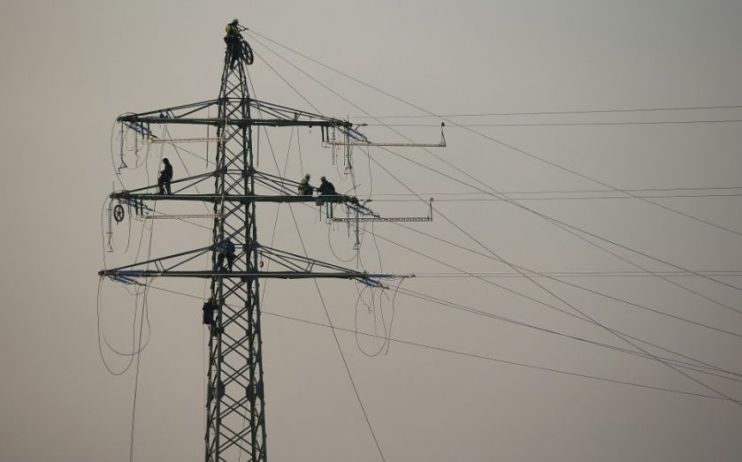
Telecom giants are having a tough time paying out steady dividends due to cash flow issues.
A saturated market, vast piles of debt and climbing interest rates pushing up the cost of borrowing are stripping coffers bare and leaving them with little spare for shareholders.
On top of this, the price of things like paying employees, keeping the lights on and building infrastructure has gone up a lot for these companies.
To cope, they have passed along these inflationary costs to customers through price hikes. Ofcom has faced calls to step in after companies have increased rates by up to 17 per cent this year.
In some places like the UK and Germany, it is working out okay for now, but there are fierce price wars in markets like Italy, Spain, and France, meaning customers are shifting to smaller, more affordable operators.
And there are only so many price rises the customer will put up with before looking elsewhere, especially during a cost of living crisis.
So why, at a time when connectivity is more important than ever, is it all looking rather unsustainable for the heavyweights?
Piling debt
To start with, debt levels are sky high.
BT is sitting on just shy of £20bn net debt, Vodafone on over €36bn (£31bn), and Virgin Media O2 is still battling more than £20bn of debt following its merger two years ago.
And the cost of debt is only increasing, with UK interest rates at 5.25 per cent, a 15 year high. The Bank of England is expected to hold them here for a third time in a row on Thursday.
At the same time, telecom companies are spending huge sums of money rolling out 5G – an investment that analyst Kester Mann said is failing to showing returns so far.
He told City PM: “We’ve seen the networks be deployed, but we’re still scratching our heads as an industry in terms of what are the use cases and where’s the monetisation – and I think in fibre as well.”
“Telecoms is a sector that has a lot of debt as a part of it,” he continued, “and we’re seeing operators look to reduce that through a number of means.”
One is by selling off certain assets, like towers, which Mann said is a popular strategy at the moment. Another is to consolidate, which is exactly what Vodafone and Three UK are currently trying to do.
“One of the big rationales around that is to cut costs,” Mann said.
Cutting costs and improving cash flow
Part of cutting costs is about strengthening free cash flow (FCF) – also a struggle for telecoms companies at the moment.
A recent Enders Analysis report said Vodafone has been stretching in order to meet its financial targets over the past few years.
“It is an uncomfortable position for the board and shareholders to be paying out a dividend that is not regularly fully covered by FCF, unless there is the quite firm expectation that it is just a temporary phenomenon,” Enders analysts wrote.
Vodafone’s adjusted FCF is forecasted to drop 32 per cent from last year to consensus estimates of €3.2bn (£2.7bn), which itself was down by 11 per cent on the year before that.
According to Enders, it currently has a dividend bill of €2.4bn (£2.1bn), restructuring charges of around half a billion, and some spectrum fees on top.
Senior telecoms analyst at Enders, Karen Egan, said the Vodafone dividend is “certainly the one most at risk” but more due to recent operational pressures than rising rates yet.
“The sector as a whole has really been struggling over the past few years with revenues usually in decline, and where there is any revenue growth, it is way below inflation,” Egan told City PM
“Add to that the cost of 5G and fibre roll-out, it is hardly surprising that dividends are under pressure, even before accounting for the headwind of rising rates,” she explained.
The threat to dividends
On the bright side, telcos are currently offering pretty high dividends, around 6.7 per cent on average, according to Morningstar, and sometimes even higher.
But if a company is paying out too much of its profit as dividends, such as more than 80 per cent, they might have to cut down on those payments.
Vodafone managed to maintain its full-year dividend at 9c (8p) a share. But earlier this year, co-manager of the JOHCM UK equity income fund, Clive Beagles, told Investors’ Chronicle: “We expect it to cut its dividend… this is what it should do: companies should only pay dividends that are affordable.”
BT’s current dividend is 5.7 per cent, but it has suffered three large cuts since the late 1990s, in 2000, 2008 and 2019 all with zero dividend paid out following a high of above 10p a share.
Analyst at PP Foresight, Paolo Pescatore, also said falling revenues are an issue for “most if not all telcos”.
Companies are facing tighter profit margins and there is “razor sharp focus” on cutting costs, especially by driving efficiencies, he told City PM
And because money is tight, telecom companies are moving toward Open RAN, which lets them pick and choose different network suppliers to avoid getting stuck with just one supplier and save money.
“Expect further cost cutting measures in 2024 as well consolidation and assets disposal to appease key stakeholders,” Pescatore added.
A BT Group spokesperson said: “We are confident that we can support our progressive dividend and that we will see a material uplift in our cash flow once our peak full fibre build is completed in December 2026.”
Vodafone declined to comment.
This story was updated to add BT’s comment.