
Who will pay to phase out petrol cars?

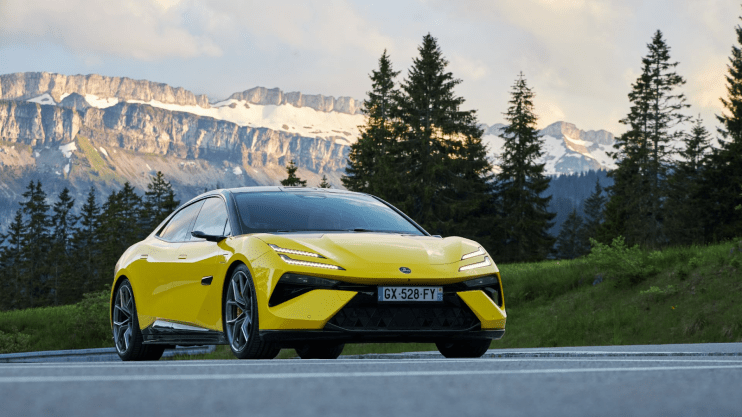
Is the elimination of petrol cars the inevitable march of progress or an area ripe for government intervention? Labour must decide, says Eliot Wilson
Last week the Society of Motor Manufacturers and Traders (SMMT) set out seven measures it wanted the government to implement in order to make “automotive sustainability” a competitive advantage for the United Kingdom in the global marketplace. One of them was “a package of fiscal, tax and regulatory support measures that attract new investment and ensures domestic vehicle producers are globally competitive”.
You don’t need me to translate for you. “Fiscal, tax and regulatory support measures”, one way or the other, mean taxpayers’ money, something the new government is deeply reluctant to spend. But the car manufacturers are, to an extent, only following orders: in 2020, the previous government announced that the sale of petrol and diesel cars would end in 2030, though this was pushed back to 2035 last autumn. However, the Labour opposition at the time made it clear that it was committed to the 2030 date and would reinstate it.
The contribution of road vehicles to achieving net zero carbon emissions has, like so many aspects of government policy over the past five years, been subsumed into a broader and much less clear-cut war of gut instincts, individual measures standing as proxies for a clash of worldviews. To say that petrol and diesel vehicles should be phased out in 2030 now sees you painted as a doctrinal globalist who hates everywhere outside London and a good section of the capital’s population too: part of the “war on motorists”.
We need to try to examine what is happening rationally and evidentially. But here the government has a choice to make, a “tough decision”, to coin a phrase. Is the elimination of petrol and diesel vehicles – essentially, the death knell for the internal combustion engine – a matter of policy fulfilling (absolutely laudable) environmental ambitions and designed to contribute to cleaner air? If so, then, like any instrument of government policy, it is likely to come with a price tag attached. It is not unreasonable for Whitehall to give money to motor manufacturers if they are acting against their natural competitive interests in pursuit of a wider societal goal.
Alternatively, you may prefer to frame the elimination of petrol and diesel as a recognition of the inevitable march of progress. Electric vehicles possess some enormous advantages over their fossil-fuelled competitors: much greater mechanical simplicity, often better performance and, depending on the metrics, lower emissions. It is also worth remembering that when we put EVs alongside the internal combustion engine, we are comparing a still-evolving technology with something which was invented more than 160 years ago. EVs are by no means the final state of personal transport.
If this is just a matter of matching developing technology in regulatory and taxation terms, then the SMMT is surely right to ask for a degree of flexibility. Its chief executive, Mike Hawes, argued that it would be “wrong to get hung up” on restoring the 2030 deadline, and warned that “the devil is in the detail… is there a degree of flexibility that would allow different technologies such as plug-in hybrid?”
The government needs to be clear in its own mind what it is trying to achieve, and why. If the overriding priority is meeting a specific chronological target, whether 2030 or 2035, then that is a policy decision and it is reasonable for the automotive industry to ask for direct help in terms of subsidies or allowances. On the other hand, if the thrust of Whitehall’s intention is to supervise an inevitable technology transition and attempt to create the circumstances for the UK to be highly competitive in the new era, then forcing the industry into a straitjacket of deadlines is unhelpful and unnecessary. Other issues, like a regulatory framework and the creation of secure and sustainable supply chains, are more important.
The dilemma facing Sir Keir Starmer and his ministers is that they have interventionist instincts and see government as an active participant in the direction of the economy, but they have the white knuckle-tight purse strings of the most laissez-faire economic liberal. Phasing out the internal combustion engine is the latest area of friction between these two factors, but it will not be the last. Which way will Labour jump?
Eliot Wilson is co-founder of Pivot Point Group