
Whisper it: British manufacturing has been a quiet Brexit success story

It’s time Brexit Britain created a trade policy that focuses on its competitive advantages, says Daniel Dieppe
Brexit was never meant to be an economic success. At least, according to the Treasury estimates, which predicted a year-long recession, a 500,000 increase in unemployment and a reduction in growth between three and six per cent.
Yet in complex manufacturing, as the new Civitas report, The Quiet Triumph of British Engineering highlights, Brexit Britain has found some major success stories. Despite all the dislocation of the pandemic, supply chain problems and Brexit-related change, some home-produced technologies are in high global demand, and jobs, exports and production are set to grow quickly.
The primary reason for this success is its complexity. There are many headwinds blowing against manufacturing in the UK – including tariffs, high taxes and cyber attacks – but technological innovation and craftsmanship are not among them. It is a hard-won national competitive advantage. We dominate in top-end design, customisation, niche engineering and technological integration.
A whole raft of new investments in this field confirms this thesis. Earlier this year, Cornish Lithium announced the UK’s first geothermal lithium-production plant, utilising the green-lit lithium mining in County Durham; £2.4bn has been invested by Australia over ten years to produce nuclear submarine reactors in the East Midlands.
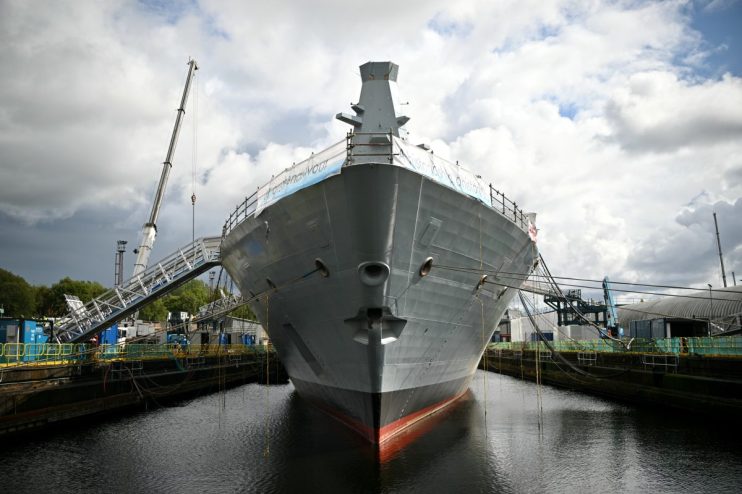
But top of them all is BAE Systems’ £10bn deal to export five Type 26 frigates to Norway. British naval engineering has not won an overseas victory like this for almost 50 years. It looks set to trigger a wave of export orders for UK naval designs, engineering, hulls, weaponry, sensors and propulsion systems. And the companies involved are confidently expanding their skills base, with BAE Systems’ £12m academy on the Clyde, and Babcock’s 400-strong apprenticeship programme at Rosyth.
In car manufacturing, producers are scrambling to transform their plants to electric vehicles and carbon-neutral facilities. In 2023, over £20bn was invested in car manufacturing. This includes £3bn from Nissan on battery and electric vehicle production, and a £15bn splash by Jaguar Land Rover to convert an engine plant to electric drive and upgrade its premium lineup. There is reason for caution, however: over-reliance on electric vehicle sales could be catastrophic if government subsidies end or Chinese electric vehicles maintain their competitive edge.
EU protectionism
As with many industries in the pre-Brexit era, the injurious combination of EU protectionism and generous subsidies on the continent saw car production slowly relocate to mainland Europe. Despite this, Britain has successfully carved out a new competitive edge as a leading premium car manufacturer. This sector is far less vulnerable to Chinese competition than Europe’s mass-market auto industry, and it also enjoys a far bigger global appeal.
As a result, the UK can now look to a more global market: in 2000, the EU accounted for 70 per cent of vehicle exports; today, it has halved to 35 per cent. This is largely due to the extraordinary growth of the non-EU market – eight per cent per year between 2000 and 2019. By leaving the customs union in 2020, Britain has also been able to negotiate the lowest global tariff with America, and avoid the EU’s ongoing trade war with China.
The biggest manufacturing success is, however, aerospace engineering. It is estimated that British aerospace has a guaranteed business backlog of £241bn – or a staggering 12 years of constant work. The new Rolls-Royce Ultrafan engine is expected to create 40,000 jobs by the 2030s, and the company expects an eight per cent growth in manufacturing per year for a decade.
Northern Ireland remains a world leader in airline seat manufacturing, and a new multi-million pound facility opened two years ago to ensure passengers could survive brief exposure to 16 g-force. Recent premium-seating start-ups Unum and Alice Blu Aero showcase the industry’s confidence to create innovative ideas.
The British contribution to the Airbus A350, the world’s best-selling wide-body airliner, is extensive: the wings, wing box, engines, main landing gear, fuel system, cabin windows, communication, galley equipment and multiple avionics and electrical systems are all British-made. The production of this aircraft is set to triple over the next four years as Airbus grapples with an order backlog of 8,530 aircraft.
With a 17 per cent global market share, the United Kingdom is an undeniable global aerospace leader, second only to the United States. Aerospace, a ‘naturally global industry’, has been notable in that two-thirds of the exports of this fast-growing industry have come from outside the European Union over the past 25 years, and it has been as high as 75 per cent.
Membership of the Customs Union prevented the UK from crafting a trade policy that suits its most competitive industries
In fact, as our report concludes, membership of the Customs Union prevented the UK from crafting a trade policy that suits its most competitive industries. A sound trade policy focuses on what goods or services attract the most demand; membership of the EU prevented such an exercise.
And yet, incredibly, such a task has not been sufficiently undertaken in five years of Brexit Britain. If the government is serious about prioritising growth, this is an absolute no-brainer. In many respects, trade policy has been handed on a plate to the government through the AUKUS agreement and the US trade deal. It’s time Britain specialised its trade policy and prioritised its competitive advantages. These industries are a proven British success story – it’s only logical to expand what we are doing so well.
Daniel Dieppe is a researcher for Civitas