Skip to content
City PM
  • Germany
  • France
  • Europe
  • Markets
  • Business
  • Opinion
  • Germany
  • France
  • Europe
  • Markets
  • Business
  • Opinion
Tuesday 19 January 2021 6:00 am  |  Updated:  Monday 18 January 2021 4:19 pm

What next for social media regulation in the post-Trump world?

By: Jessica Lovell

Add as a preferred source on Google
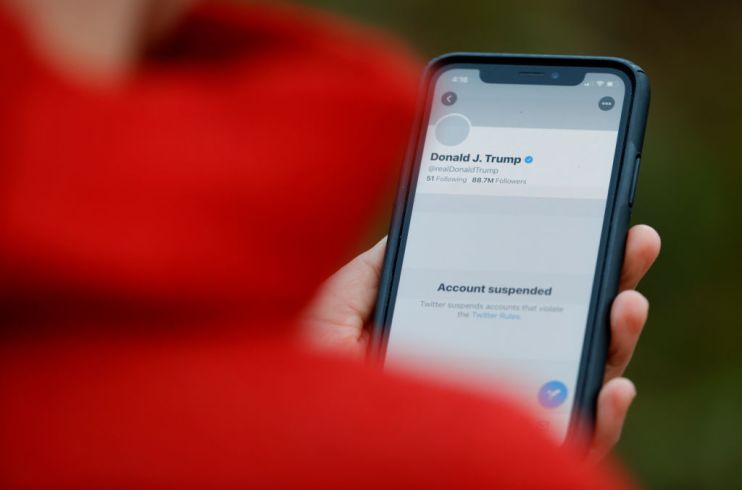
Twitter Permanently Suspends President Donald Trump's Twitter Account
Citing the risk of further incitement of violence following an attempted insurrection on Wednesday, Twitter permanently suspended President Donald Trump’s account. (Photo Illustration by Justin Sullivan/Getty Images)

Two weeks on from the storming of the US Capitol the social media excision of the 45th US President is so extensive, the holder of the most powerful office in the world is presently unable to log in to Pinterest to create a mood board for his impending house move.

His exclusion has drawn condemnation from advocates as unlikely as Angela Merkel and French finance minister Bruno Le Maire, hardly MAGA cap wearers.

These critics hit on the difficult truth that political content on social media is almost impossible to regulate.

Read more: China’s money is coloured – it’s about the regime, not profit

On one hand, as Merkel and others point out, having the limits of political speech decided by policies and judgements of private companies and whoever happens to own them is at least “problematic”.

On the other, the policies the social networks apply cannot be regulated by governments either. If politicians are prepared to say things so outrageous social networks feel they must be deleted, it’s fair to assume those same politicians are likely to be willing to amend regulations in retaliation.

This is the circular lock that will bog down the debate on regulating political speech online for years.

It seems to be no coincidence that the strong actions against Trump and his assault on democracy only came after President Elect Biden was confirmed by the joint session in the US Capitol (you may not need to guess how content has been treated from countries that don’t choose a new leader every four years).

Why? The answer looks to be because the social networks want to avoid that risk of retaliation; most likely change to the beloved 1996 Federal legislation that protects them from liability for any content they host in the US.

Read more

I’m a digital strategist, here’s why I’m worried about social media

Tiktok appeals to overturn US ban in a broader battle for tech regulation

The very sentence highlights the nonsense of how poorly the world has legislated for the rise of social media: the US is judging Snapchat against law designed to protect Geocities from copyright claims at the time Bill Clinton started his second term.

The effect of that protection is what dictates the attitude of social media companies throughout the world: if they are immune at home in the US then why not elsewhere?

For starters because other countries have not dealt with responsibility for content in the same way.  you could just as easily highlight that some of the law we still use to govern the internet in the UK originates from 17th century attempts to stop people killing each other duelling for honour, but the application of data protection law to internet companies in Europe has been a significant and valuable change.  

While contemplating regulation around political speech may be hard the priority for governments now must be to avoid it being cited as a get out of jail card for social networks to avoid being regulated at all. The truth is that the argument around other harmful content is easy.

Social networks are rife with bitcoin scams, hate speech and vile content encouraging self-harm. The multi-billion dollar businesses running the social networks know this: it is reported to them, they know it’s there and they know it keeps being posted again. Yet they still act against it lethargically and reluctantly, if at all.

If you ever need to get a teenager off a device at speed you quickly see how effectively tech companies have innovated to encourage one more click and to keep eyes on screen.

If they approached innovation to protect users from harmful content half as enthusiastically many problems could be avoided.

Read more: Those who profit in Hong Kong should speak up for its freedoms

Read more

Starmer’s social media ban puts emotions above data

Bereaved parents protest outside Downing Street, urging social media regulation for child protection

Share this article

  • Facebook
  • X
  • LinkedIn
  • WhatsApp
  • Email

Similarly tagged content:

Sections

  • Jobs and Money
  • Opinion

Categories

  • Fintech
  • Opinion

Related Topics

  • Social media

Trending Articles

  • Top Burnham adviser calls for capital gains and inheritance tax hikes

  • Housebuilding giants hit with £4.5bn lawsuit for allegedly overcharging buyers

  • Brewdog chief executive quits after only one year

  • A meeting with the breakfast king of Mayfair

  • As it happened: Stocks jump on defence and metals boost; Oil on track to shed a fifth on US-Iran peace hopes

More from City PM

  • I’m a digital strategist, here’s why I’m worried about social media

    Opinion
    Tiktok appeals to overturn US ban in a broader battle for tech regulation
  • Starmer’s social media ban puts emotions above data

    Opinion
    Bereaved parents protest outside Downing Street, urging social media regulation for child protection
  • Starmer prepares child social media curbs as pressure mounts on addictive apps

    Tech
    Keir Starmer stands with a British flag, highlighting political leadership and national pride in a business news context.
  • ‘Nobody’s getting a free pass’: Starmer warns Big Tech as social media ban looms

    Tech
    Prime Minister Keir Starmer addressing media at a press conference podium, discussing current governmental policies and in...
  • Westminster permadrama is sabotaging productivity

    Opinion
    Keir Starmer stands outside 10 Downing Street amid calls for resignation, looking serious and contemplative
  • UK social media ban blow to sports rights holders using TikTok and YouTube

    Sport Business
    A diverse group of business professionals engaged in a dynamic meeting at a modern office, discussing strategic plans.
  • Is it even possible to regulate ‘misinformation’?

    Opinion
    Red bus with Brexit misinformation slogan parked on a street, highlighting controversial political claims and public react...
  • Government to take on big tech in bid to boost British news

    Tech
    Breaking news headline image related to a general news article on a business website with no specific tags or categories

City PM — European politics, business and analysis.

Europe

  • Germany
  • France
  • Europe
  • UK & Ireland

Topics

  • Business
  • Markets
  • AI
  • Technology
  • Opinion
  • Energy

More

  • Politics
  • Economics
  • Fintech
  • Legal
  • Sport
  • Life

Company

  • About City PM
  • Editorial Policy
  • Corrections
  • Contact
  • Terms of Use
  • Privacy Policy
  • Cookie Policy
© 2026 City PM · Published by CityPM Media, Bahnhofstrasse 65, 8001 Zürich, Switzerland
About · Editorial Policy · Corrections · Contact · Privacy