
What is frankincense? And where does it come from?

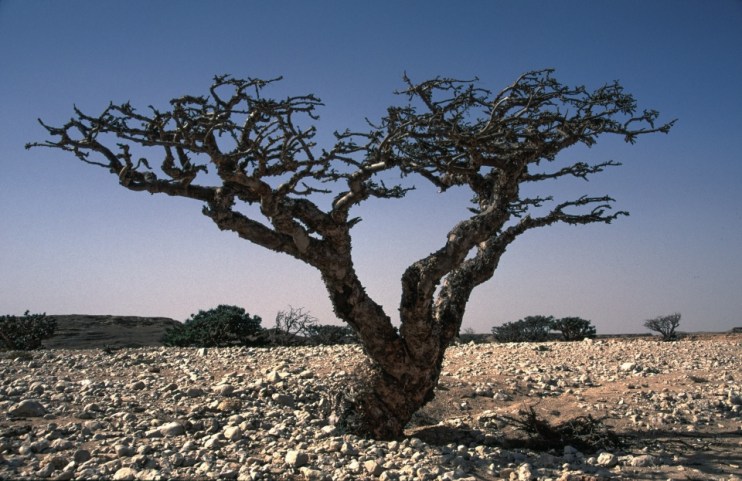
The sun is blazing and the air is hot, dry and dusty. Gazing out over the horizon, there’s nothing but parched, rocky land as far as the eye can see in any direction, except for the strange-looking trees that shoot up from the ground like gnarly, overgrown bushes. You wouldn’t think much could thrive here, in the semi-desert landscape of the Dhofar region in southern Oman, yet these arid conditions produce a precious natural resource – the world’s finest frankincense.
Perhaps best known in the West as one of the gifts, alongside gold and myrrh, given to baby Jesus by the Three Wise Men in the Christian nativity story, for thousands of years the fragrant tree resin was harvested and traded along the Frankincense Trail, which stretched between the kingdoms of southern Arabia and Africa, the Mediterranean and all the way to India and China.
The ancient Egyptians used it to embalm their pharaohs, the Greeks and Romans prescribed it against virtually any illness, and due to its many uses it was once more expensive than gold. Today frankincense is burned ceremonially in churches, temples, mosques and synagogues all over the world, and in Oman it is still a big part of daily life. You’ll spot a burner in every home, office, shop and hotel here – almost everywhere you go, the sweet scent of incense hangs in the air.
Keen to learn more about its origins, I’m being shown around by Hussain Balhaf, a local guide who works for the Al Baleed Resort Salalah by Anantara where I’m staying. We’ve driven 40 kilometres north of Salalah – a coastal town known as the perfume capital of Arabia – to the Wadi Dawkah desert valley, where a few thousand frankincense trees grow in a UNESCO-listed grove spanning five square kilometres. “Some of these trees are up to 200 years old,” he says, but we also spot much younger ones, planted to ensure the regeneration of this important part of Oman’s natural heritage.
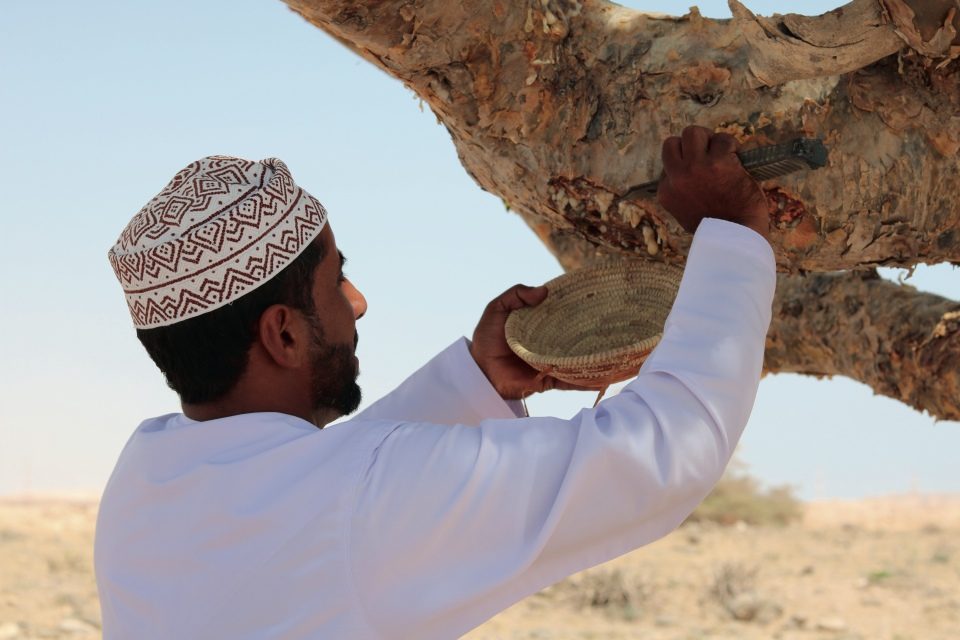
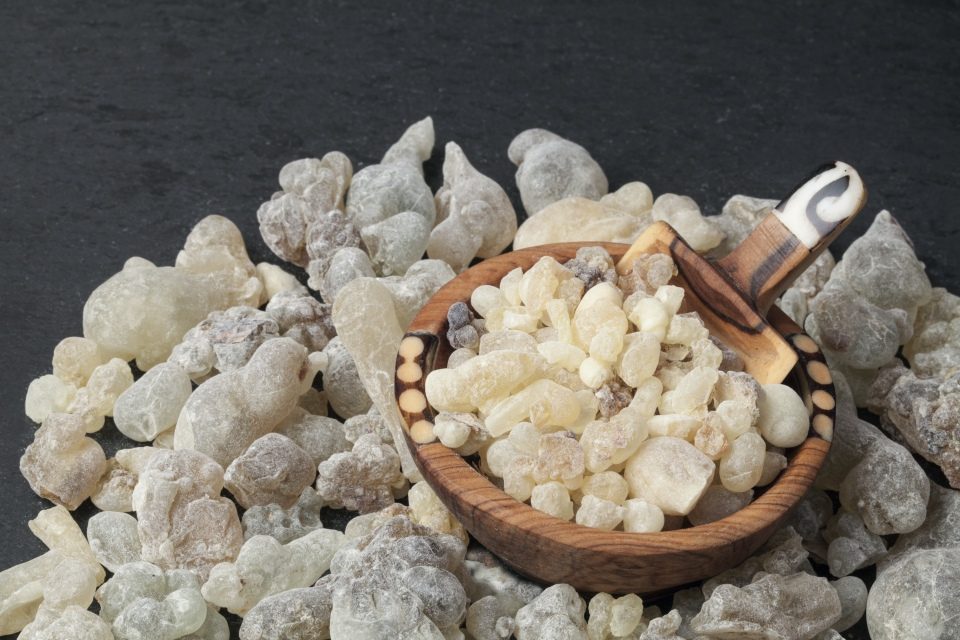
The plantation in Wadi Dawkah isn’t harvested for commercial use, but a bit further along Hussain shows me trees where the bark on some of the branches has been chipped away to allow the white, gum-like sap to seep through. I break off a drop of the gluey tree milk. It smells like pine resin, with a hint of citrus, and is sticky to touch when fresh but will gradually harden until it is ready to harvest after about 20 days. Once dried and bagged up, it’s sold at markets such as Salalah’s Al Hafah souk, the best in the country for frankincense.
Unlike Yemen and Somalia, Oman doesn’t export the dried resin – just the distilled oil – in an effort to prevent over-harvesting.
Among the rows of shops there I find Makka Trading which sells the most exclusive variety, green Hojari frankincense. As I arrive the proprietor is busy negotiating a deal with an official from the Sultan’s court who buys dozens of bags at £110 per kilo, to be gifted to visiting dignitaries. Having seen the raw ingredient, I’m later excited to find the green resin in its liquid form at Alshoala, an organic perfumery in Salalah Gardens Mall, where the friendly sales assistant helps me pick out two exquisitely scented frankincense products, a hair repair serum and a body oil.
Unlike Yemen and Somalia, Oman doesn’t export the dried resin – just the distilled oil – in an effort to prevent over-harvesting. It’s very valuable as it has an anti-inflammatory and rejuvenating effect on the skin, while its aroma can help reduce stress and anxiety. This of course makes it an ideal ingredient in beauty and body treatments, and all the best spas and salons in Oman offer frankincense-based treatments.
Read more: We go on safari with the Serengeti’s canine anti-poaching unit
During my stay at the luxurious beachfront Anantara resort in Salalah I try the signature four-hand full-body massage that’s the epitome of spa decadence. Wafts of incense fill the room and I feel the tension in my muscles dissolve as the therapists skilfully knead my body in perfectly synchronised movements aided by lashings of locally produced frankincense oil. (90 minutes, £348; salalah.anantara.com).
In Muscat, Oman’s capital and a trending holiday destination due to its beautiful coastline, thriving cultural scene and proximity to both the Wahiba Sands desert and lush Al Hajar mountains, I head straight for the Hareer Spa by L’Occitane at the Shangri-La Al Husn hotel. Its frankincense and rose scrub (90 minutes, £162; shangri-la.com) leaves my skin super soft, while next door at the sister resort Shangri-La Barr al-Jissah’s Chi Spa the frankincense and rose oil-infused marine clay body wrap (60 minutes, £104), is a soothing after-sun treatment.
I also visit Ayana Spa in Muscat’s upscale Shatti Al Qurum neighbourhood, where local ladies go to get preened and pampered, as I’m keen to see how its frankincense polish and massage ritual (100 minutes, £91; ayanaspa.com) compares to the hotel treatments. Having been scrubbed vigorously from top to toe with a delicious-smelling sugar, frankincense powder and oil paste in a hammam-style wet room (a practically nude affair, not for prudes), I’m treated to a full-body massage with a blend of frankincense, myrrh, lavender and petitgrain oils – as heavenly as it sounds. I leave feeling relaxed and revived, and can’t resist buying a few frankincense soaps to take home.
The frankincense intense facial rejuvenation at Neal’s Yard is a 90-minute deep-tissue massage using products from its bestselling Omani frankincense range. The result is like a non-invasive mini facelift. Available in Neal’s Yards across London. From £90; nealsyardremedies.com
Getting there: Oman Air (omanair.com) has twice-daily direct flights to Muscat from Heathrow from £499 return, business class from £1,899 return, and multiple daily departures from Muscat to Salalah from £109 return.
Where to stay: Shangri-La Al Husn in Muscat (shangri-la.com), from £234 in low season (from mid-May); Al Baleed Resort Salalah by Anantara (salalah.anantara.com), from £210 in low season.