
What if the OBR is too optimistic about growth?

Chancellors preparing for Budgets fret over their fiscal headroom, but what matters in the long-term is the trend rate of growth. And if the OBR has it’s projections wrong, there will be big consequence for the next government, says Paul Ormerod
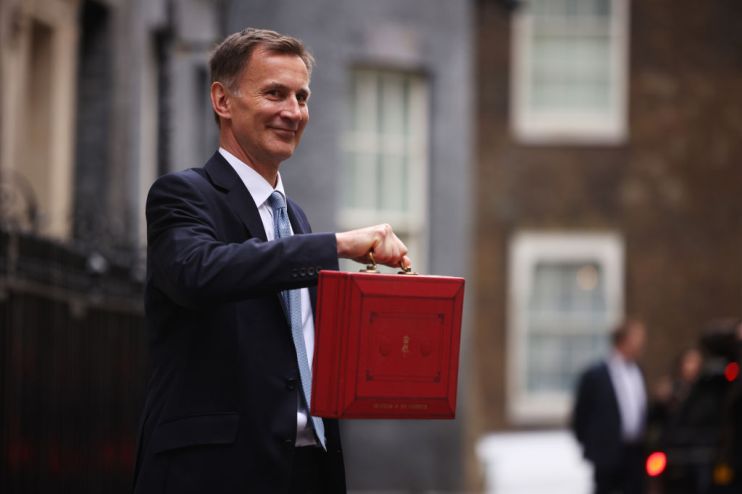
The Office for Budget Responsibility (OBR) published its economic and fiscal outlook document in conjunction with Jeremy Hunt’s budget statement on 6 March.
Close scrutiny is paid to the short-term projections of growth in the economy made by the OBR. Tax receipts received by the government depend strongly on the rate of growth. And higher tax receipts give a government more scope to either increase spending or reduce tax rates.
But perhaps the most important assessment made by the OBR is its view on the trend rate of growth in GDP.
The actual rate of growth varies from year to year depending on a wide variety of factors. The trend rate averages all these fluctuations out. It is the rate of growth which is sustainable over the medium to longer term.
The OBR believes that the trend rate is 1.67 per cent a year. If this is correct, it sets the broad limits as to what policies are affordable either in the form of higher public spending or lower taxes over the course of at least one full Parliament.
Growth of 1.67 per cent may not seem very much, but it is above the 1.2 per cent average of growth since the 2015 general election. It is this figure which has boxed the Conservative governments into so many corners and done so much to constrain its options.
The OBR figure suggests that Labour would have just that bit more scope to fund its policies.
Estimating the trend rate of growth is a difficult exercise. But the OBR estimate looks rather optimistic.
One way of looking at this is to examine the average rate of growth over each of the past five decades. The most recent one, spanning 2013 to 2023, saw GDP growth average 1.5 per cent a year.
This was an improvement on the 1.2 per cent average registered between 2003 and 2013.
However, the previous two ten year periods saw distinctly higher average growth, at 2.4 per cent a year 1983-1993 and 3.1 per cent 1993 to 2003. We have to go back to 1973-83 to observe an average similar to the most recent data, just 1.2 per cent.
We have two ten year blocks in which growth was very much higher than the OBR’s trend estimate of 1.67 per cent a year and three when it was lower. How might we assess these?
Between the early 1980s and the early 2000s growth was high, and it then slowed down markedly. There are two ways to think about the two high growth decades.
These were a time of relative stability in the world economy. There were no major external shocks. Economies had full scope to realise their potential.
In contrast, the 1970s and early 1980s were in the aftermath of the oil price explosion which generated very high inflation. The 2003-2013 period encompassed the financial crisis of the late 2000s. And the most recent decade of course experienced the Covid pandemic.
The external economic environment now does seem more similar to the turbulent decades than to the benign ones and so points to a low trend rate of growth.
The other way to interpret the growth figures is to think of the two decades or so from the early 1980s as representing the boost to the economy of the Thatcher reforms.
These have gradually faded, so much so that, for example, we now see a crisis in the number of people seemingly unwilling to work.
Labour would undoubtedly claim that its polices will raise the trend rate of growth. But it does look like the OBR’s estimate is too high, and the next government will see major constraints on its operations.
Paul Ormerod is an economist at Volterra Partners LLP, an Honorary Professor at the Alliance Business School at the University of Manchester and author of Against the Grain: Insights of an Economic Contrarian, published by the IEA in conjunction with City PM