Skip to content
City PM
  • Germany
  • France
  • Europe
  • Markets
  • Business
  • Opinion
  • Germany
  • France
  • Europe
  • Markets
  • Business
  • Opinion
Wednesday 05 March 2025 6:00 am  |  Updated:  Tuesday 04 March 2025 4:46 pm

Net Zero: weak economic growth, high energy prices and stagnant productivity?

By: Christian May

Editor-in-Chief

Add as a preferred source on Google
Sir James Dyson has warned that Labour's policies are fatally undermining the British economy

How many times have we heard the argument that there is no trade-off between pursuing Net Zero and economic growth? The argument lies at the heat of the country’s economic, climate and environmental policy debate.

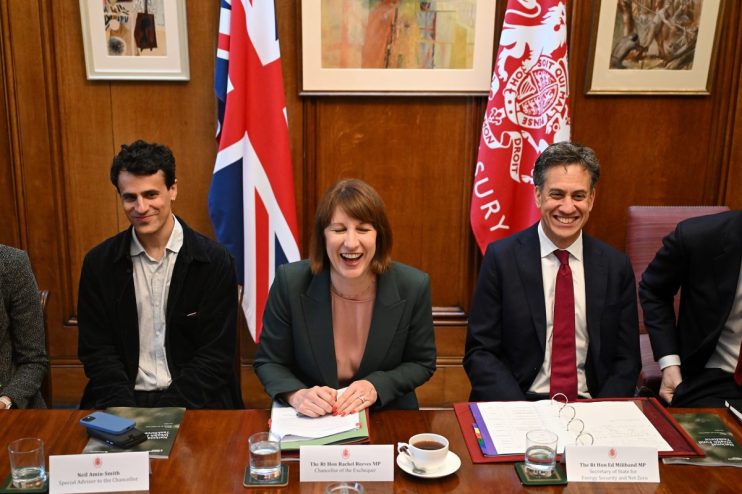
The energy secretary, Ed Miliband, repeats the mantra at every opportunity – “clean energy and Net Zero equals good jobs and economic growth” – and he is echoed in this article of faith by an entire industry (in the public and private spheres) that have thrown their lot in with the clean energy drive, whether through opportunism or conviction.

But what if they’re all wrong?

The debate has animated politicians for years and has spilled over into the culture wars, with scepticism of the environmental consensus becoming a cornerstone of populist and insurgent parties. Cool heads are needed now more than ever, not least because decisions taken today (indeed, decisions taken five and ten years ago) will determine our future prosperity.

Fortunately, Kallum Pickering, chief economist at Peel Hunt investment bank, has undertaken a forensic analysis of the Net Zero policy landscape, and his findings deserve widespread attention.

Pickering traces the roots of the UK’s productivity problem to 2006, when electricity availability began to decline. It has fallen by 21 per cent since then. This fall is attributed to the decommissioning of coal, oil and nuclear production facilities. Coincidentally, this is also when the UK started to become a net-importer of oil and gas. Crucially, demand for electricity continued to grow and, given a deliberate squeeze on supply, the price went up – particularly for businesses, but also for consumers.

Pickering notes that the UK now has “the highest domestic electricity prices in the advanced world.” Translating this issue to the real world, Pickering notes that the US managed to keep its energy consumption stable while growing its living standards (GDP per capita) whereas the UK’s living standards have basically flatlined as energy consumption reduced. This is food for thought.

But have we at least contributed meaningfully to a reduction in global CO2 emissions? Not really, says Pickering, noting that while our own emissions have halved this accounts for less than 1 per cent of the global total.

He concludes that “the UK’s decarbonisation efforts, so far, have resulted in weak economic growth, high energy prices, stagnant productivity and no significant impact on global emissions.”

Politics is about choices, of course, but it should also be about evidence and recognising when and where policies need to change in reflection of reality.

Read more

Markets would take Miliband chancellor appointment ‘worse’ than Streeting, predicts Cavendish chief

Skyline of Canada with iconic financial district buildings, highlighting UK investments and economic growth.

Share this article

  • Facebook
  • X
  • LinkedIn
  • WhatsApp
  • Email

Similarly tagged content:

Sections

  • Opinion
  • News

Categories

  • Opinion
  • Business
  • Economics
  • Energy
  • Politics

People & Organisations

  • Decarbonisation
  • Economy
  • Ed Miliband
  • growth
  • Labour Party
  • net zero
  • UK economy
  • UK Government

Trending Articles

  • Revealed: Secret Treasury plan to tax State Pension before it is paid out

  • Two solicitors linked to Post Office scandal charged with misconduct

  • Burnham’s new chief of staff ran City firm advising Thames Water and rival Heathrow bidder

  • Barclays and Lloyds join banking sector plan for digital ID

  • Reeves’ new tax charge on cash ISAs faces fierce industry backlash

More from City PM

  • Markets would take Miliband chancellor appointment ‘worse’ than Streeting, predicts Cavendish chief

    Markets
    Skyline of Canada with iconic financial district buildings, highlighting UK investments and economic growth.
  • The UK chemicals sector is in trouble

    Opinion
    Lush green fields and livestock on a British farm under clear blue skies, showcasing agriculture in the United Kingdom.
  • No ‘capacity’ for Ed Miliband’s warm homes plan, says British bank boss

    Property
    Breaking news coverage in a general news article, highlighting current events and important developments
  • The climate quango empire will keep growing until cheap matters more than ideology

    Opinion
    Net zero secretary Ed Miliband is set to face more pressure over high energy bills in the UK.
  • Carbon markets must industrialise or the net zero transition stalls

    Partner
    Close-up of a sapling at Aranya Reforestation site in India, showcasing efforts in sustainable forestry and ecological res...
  • Tony Blair has issued a call to arms – but will Labour listen?

    Opinion
    Tony Blair speaking at a press conference, addressing current political issues and highlighting future strategies.
  • X-energy Submits Xe-100 HTGR for UK Generic Design Assessment

    Business Wire
  • OECD: Growth to remain below one per cent as UK economy struggles with unemployment

    Economics
    Sir Keir Starmer and Rachel Reeves discussing policy at a press conference, emphasizing Labours economic strategy

City PM — European politics, business and analysis.

Europe

  • Germany
  • France
  • Europe
  • UK & Ireland

Topics

  • Business
  • Markets
  • AI
  • Technology
  • Opinion
  • Energy

More

  • Politics
  • Economics
  • Fintech
  • Legal
  • Sport
  • Life

Company

  • About City PM
  • Contact
  • Terms of Use
  • Privacy Policy
  • Cookie Policy
© 2026 City PM. All rights reserved.
About · Contact · Terms · Privacy