
What happens now that the Paris 2024 show is over?

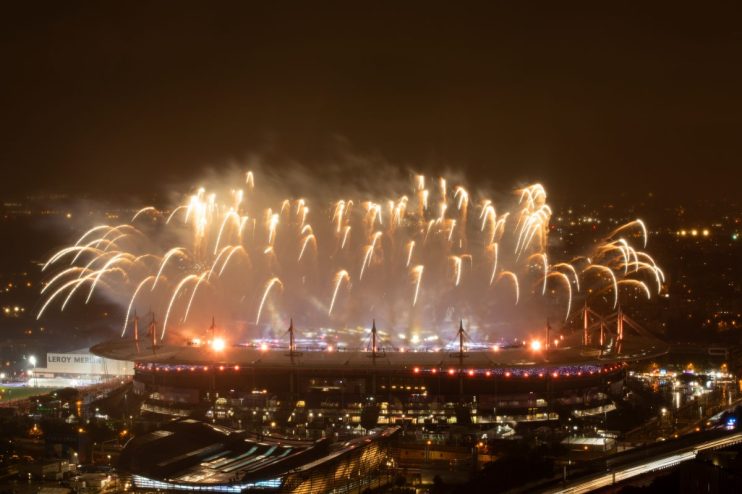
The Paris 2024 show’s over. What next? The small subset of Olympians in sports with lucrative circuits have already returned to action: US Open tennis, club and international football, golf’s Tour Championship, La Vuelta cycling and Diamond League athletics to the fore.
The significance of the Games for these athletes will differ from sport to sport – witness Emma Raducanu swerving Paris 2024 – but all are privileged when compared to those in the majority of Olympic sports and all of the Paralympians.
No surprise that Jonnie Peacock has called for para athletes to be included in the Diamond League, such is the stark disparity in opportunities for those who competed in Paris – both within the Olympics and between the two versions of the Games.
For most, a new four-year performance cycle begins now. Some will decide the time is right to retire, that Los Angeles 2028 is too far away for either their body or their bank balance. Others will find that decision forced upon them by the cessation of public funding.
Post Paris 2024 churn
Coaches, sports scientists, support staff and administrators will ask themselves – and be asked – similar questions. After every Games there is an inevitable churn of personnel.
Each sport will have a sequence of major events between now and LA. World and area championships, plus qualification events for the Games. Significant to those within a sport’s bubble, but often passing unnoticed by a wider public who only tune in for the four-yearly jamboree itself. Targets for those interim events will be vital components of performance plans that should already be in draft and will be firmed up over the coming months.
First though comes a detailed review of the last cycle. The good and the bad. A forensic analysis regardless of the outcome of Paris 2024 for individual and team.
In Britain this will constitute an important element in the funding decisions being taken by UK Sport, with its remit to maximise the breadth and depth of Olympic and Paralympic success.
The funding agency has already given each sport an indication of what lottery and exchequer backing it might receive for the next four years, but this won’t yet have been extended to the athletes, coaches and support staff themselves.
Nor can there yet be any overall certainty for sports because there is a new government trumpeting fiscal restraint and a budget looming on 30 October.
Times are tough when it comes to the economy at the moment, I’m not going to pretend otherwise. But this [UK Sport funding] is important, and it is an investment in the next Team GB – PM Keir Starmer ahead of Paris 2024
Paris 2024 to LA 2028
The mood music for elite sport from politicians has been encouraging, in spite of the belt-tightening rhetoric dominating the national news agenda, but the might of the Treasury trumps all other departments of government, including the relative minnow that is DCMS and the sports ministry within it.
Many will decide that 2025 is a year to take it relatively easy, to let mind and body repair and, crucially, to experiment. Perhaps a new coach and with it new techniques. For team sports, maybe different leadership, new squad members and changed tactics.
Not a year to judge results, but to scrutinise the impact of process. There’s fun to be had on the way in a less stressful environment and fascinating to observe. All with an eye to athletes and their teams peaking in a very short window, perhaps as little as seconds, in July or August 2028.
Blades of glory
Across Paralympic sport the message is the same: competition is fiercer, performance standards higher, medals harder to win. Elite disability sport continues to develop: greater professionalism, imaginative application of technology, more nations making the Paralympics a priority. The data supports the claim. Here’s just one example, chosen unscientifically.
There are two 100m athletics finals at the Olympics but 29 at the Paralympics, such is the range of disability classes competing. Without wanting to disparage any of the other events, the blue riband sprint finals are those for T64 athletes – the ‘blade-runners’. Think Jonnie Peacock, if you are British.
At Beijing 2008, the men’s T64 race (then under a different classification number) was won by Oscar Pistorius in 11.17 seconds. The winning time has got quicker in each subsequent Games until the gloriously named Sherman Isidro Guity Guity* of Costa Rica won in 10.65 in Paris.
In the women’s event, 13.72 seconds secured the gold medal in Beijing. Paris saw Fleur Jong of the Netherlands first over the line in 12.54. Again, each intervening Games saw a progressively faster winning time.
Overall, the men’s gold time has been slashed by five per cent and the women’s by nine per cent across the five Games. Contrast these with the Olympics. Noah Lyles’s 9.79 winning time in Paris was 0.1 seconds slower than Usain Bolt’s in Beijing and Julien Alfred was only 0.06 seconds quicker in Paris at 10.72 than Shelly-Ann Fraser-Pryce had been 16 years before. So much for the trumpeted advances in shoe and running track technology.
Take a look at the disparities between able-bodied and blade-runner times and you might conclude that there remains scope for the women’s to narrow considerably over the coming four years.
De-airbrushed
You won’t find Russian and Belarusian athletes on the official Paralympics medal table, but that’s not because they weren’t victorious. Some 96 competed in five sports, winning 71 medals. A phenomenal conversion rate that would have placed these “Neutral Paralympic Athletes” fifth in the overall medal table had they not been airbrushed out. By contrast, only 32 of their compatriots squeezed into the Olympics across 10 sports, bagging just five medals.
The disparity between the two Games reflects the IPC’s direct control of both para athletics and para swimming, a position it is in the process of backing out of – as flagged in a recent column.
The IPC’s leaders followed the IOC’s lead in leaving individual sports to decide on Russian and Belarusian eligibility. It then seemingly felt compelled to adopt the most lenient criteria for the sports it owns directly, rather than following the hardline approach of World Athletics and World Aquatics, both of which have no involvement in the disability versions of their sports. A bewilderingly weak decision.
The Putin conundrum may yet confront sports’ ruling bodies again in Los Angeles in 2028. I hope that the new independent governing bodies for para athletics and swimming being established in Manchester move swiftly to mirror their Olympic counterparts.
At the Paralympics 92 per cent of the “neutral” medals were in these two sports. Close these two doors and the problem almost disappears.
Chelsea daggered
One reader messaged requesting a clickbait headline above my thoughts on the “worrying [sic] ownership rift at Chelsea”. Another pleaded: “it’s a beautiful relationship – don’t let it die!” A third: “it’s given so much joy to so many in such a short time.”
There have been screeds written about the revolving door of players, dollars, managers, chief executives and now perhaps co-owners at Chelsea FC that all I will offer is the headline nod to The Fratellis and the thought that Albert Einstein himself would be tickled by this case study in repetition and insanity.
Ed Warner is chair of GB Wheelchair Rugby and writes his sport column at sportinc.substack.com