
What business can learn from military drone tactics — and what to avoid

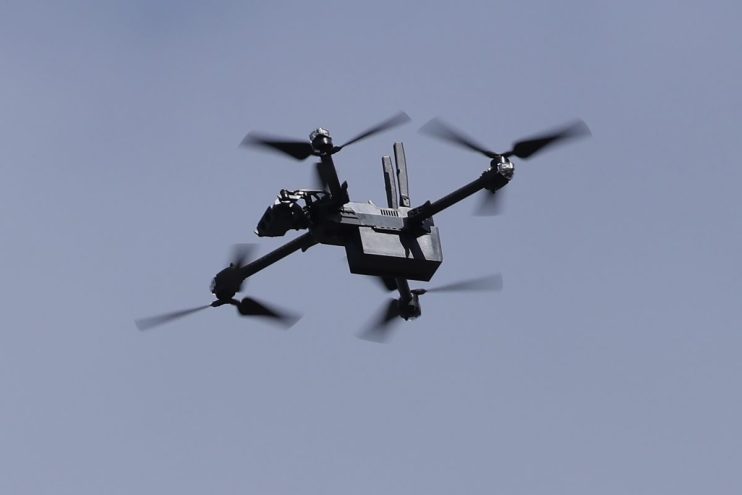
Drone technology could transform how we do business, but brings practical and ethical difficulties with it, says Paul Armstrong
For businesses, the military’s use of AI-enabled drones offers a potent model of efficiency: remote inspection, logistics, and hazard mitigation. Imagine swarming AI drones optimising supply chains or inspecting dangerous infrastructure. The capabilities honed in combat — real-time data analytics, autonomous navigation, adaptive decision-making — are now poised to redefine industries. Drones are already surveying farmland, adjusting irrigation or pesticide deployment based on sensor data. Drones are being used to assist construction workers, mapping out areas, and inspecting risky sites.
War drones bring more than efficiency; they bring new ethical quandaries for businesses. The civilian applications may seem benign, but issues of surveillance, autonomy, and control persist. Will businesses develop a sense of responsibility as they deploy autonomous systems that echo military precision? The ease of use can lead to misuse, as privacy, safety and regulatory concerns get sidelined in the pursuit of optimisation. The very traits that make drones transformative —autonomy, speed, and intelligence — demand a careful rethinking of their place in a civil society.
Recent developments highlight the rapid commercialisation of drone technology. Amazon has launched drone deliveries using its MK30 drones, capable of carrying up to five pounds — a direct application of military-grade tech transitioning to consumer markets. The company has received approval from the UK Civil Aviation Authority to conduct drone deliveries for small packages, aiming for delivery within an hour. The future of drones will be as much in legal and regulatory frameworks as in the hands of corporations. Two significant issues remain: operating beyond visual line of sight and ensuring safe autonomous operation.
Slaughterbots
The drone-as-a-service model is gaining traction. Agentic AI swarms — autonomous drone groups inspired by nature — represent a frontier of innovation and could become the norm in the next decade. The current list capabilities already include disaster relief, large-scale monitoring, and agricultural efficiency. Imagine a swarm dynamically managing supply chain disruptions, rerouting deliveries around a natural disaster, or coordinating emergency medical supply drops during crises. In agriculture, swarms could monitor crop health across expansive farms, detect anomalies, and autonomously administer treatments, drastically cutting labour and costs. As military-grade efficiency moves into commercial spaces, ethical protections are essential to mitigate public fears of ‘slaughterbots,’ once fictional but now very visible in Ukraine’s streets.
Before you Google slaughterbots, remember that drone technology has potential applications far beyond logistics, and guns and bombs do not come attached as standard. Those are choices made by humans. Other humans have made different choices, like in healthcare, where drones are playing a vital role in telemedicine — delivering medical supplies to remote areas or transporting diagnostic equipment to regions lacking healthcare infrastructure. In the energy sector, drones are used to inspect wind turbines, solar panels and oil rigs, minimising human risk and enhancing operational reliability. In urban environments, drones manage traffic, monitor environmental conditions and assist in maintaining infrastructure like bridges and high-rise buildings. There’s also a range of applications from an ESG, conservation, and humanitarian perspective. Yet, most drones are still used for corporate retreat photo ops — a lot of value is being left on the (boardroom) table.
Most drones are still used for corporate retreat photo ops — a lot of value is being left on the (boardroom) table
Autonomous drones operate based on the data they collect, process, and the algorithms that guide their actions. Poorly designed algorithms can lead to unintended consequences — bias in decision-making, violations of privacy, or even dangerous behaviours. Businesses must carefully consider how data is gathered, who has access to the data and how autonomous systems interpret the data. Will these drones respect privacy boundaries, or can they overreach? By how much? You have to decide, and live with any consequences. The design of these algorithms ultimately determines whether a drone is a tool for safety or surveillance, efficiency or control. Initially, businesses must take on the responsibility of self-regulation, ensuring that autonomous systems are safe, unbiased and transparent to avoid public backlash and ethical pitfalls.
To fully capitalise on drone technology, businesses must adopt a ‘jobs to be done’ mindset—zeroing in on real, gritty operational issues and ruthlessly prioritising them. Identify mission-critical tasks, deploy drones strategically, and turn them into competitive, ethical tools. What labour-intensive tasks can drones automate, freeing workers for strategic activities that can elevate the business? What safety risks can be mitigated to ultimately lower insurance costs? Evaluating use cases like infrastructure inspection, supply chain resilience and remote data gathering can unlock significant value. The key is to match drone capabilities to the company’s most pressing needs.
Companies that align their adoption strategies with transparency, foresight and societal values will be the ones best positioned to succeed. Now is the time to think big but tread carefully. The potential rewards are immense, but missteps could prove disastrous. Engage regulators to shape drone adoption rules. Ethical use isn’t just a responsibility — it’s a strategic advantage. Public sentiment can shift quickly. Address privacy, safety and transparency now.
The era of drone-driven business transformation is unfolding now. The future belongs to those who merge technological ambition with societal responsibility. Those who plan only for success without preparing for the challenges will overlook key opportunities for differentiation and growth.
Paul Armstrong, founder of TBD Group, helps companies navigate emerging technologies, to innovate and avoid disruption.