
What are negative interest rates and will the UK turn to them?


Bank of England governor Andrew Bailey this week said he has changed his mind on negative interest rates, saying the BoE is keeping them under “active review”.
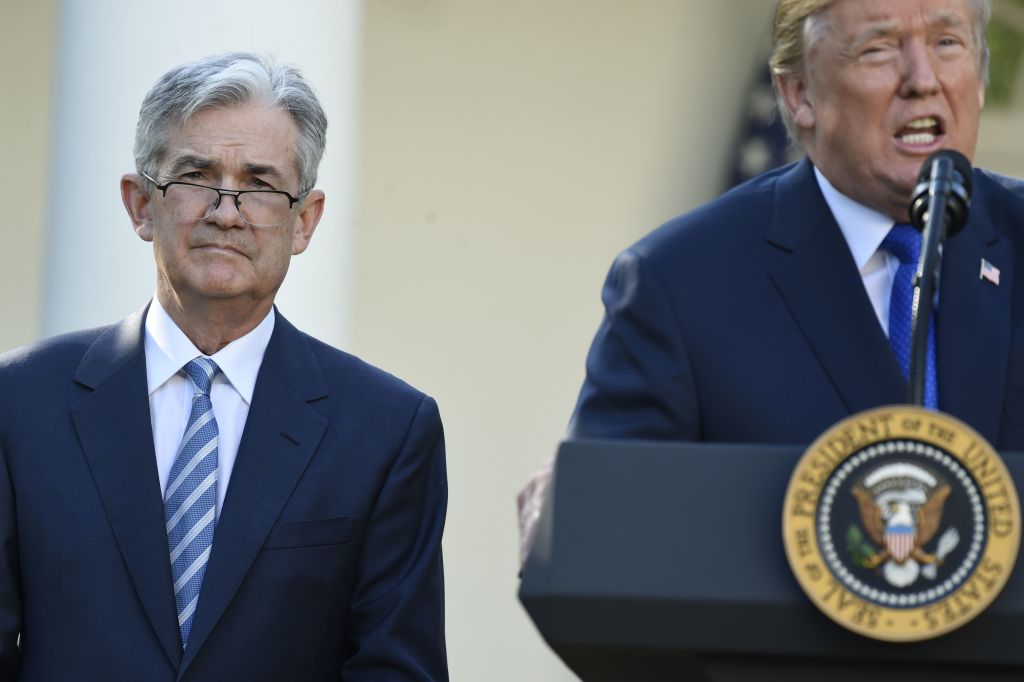
President Donald Trump has repeatedly made clear that he is a fan of negative rates, and wants the US to have them as it deals with the coronavirus crisis.
But what are negative interest rates? Will the UK’s Bank of England or US’s Federal Reserve introduce them? And what would that mean for mortgages and savings?
What are negative rates?
One of a central bank’s roles is to act as a bank for banks, in the sense that lenders keep some excess money there. Central banks traditionally pay interest on the deposits banks keep in their (virtual) vaults.
This interest rate, known as bank rate in the UK and deposit rate in the Eurozone, influences the cost of bank lending throughout the economy. Lower rates therefore stimulate more lending.
Since the start of the coronavirus crisis, the Bank of England has slashed its main rate to a record low of 0.1 per cent. This has prompted questions about whether it will cut into negative territory to stimulate the economy further.
That would mean banks are charged a small amount for keeping their money with their country’s central bank.
The European Central Bank’s (ECB) deposit rate is currently minus 0.5 per cent. Rates are also in the red in Sweden, Switzerland, Denmark and Japan.
Why turn to negative interest rates?
Why on earth would central banks punish lenders for putting some money aside?
Negative interest rates lower borrowing costs throughout the economy. But they also force banks to lend out their spare cash, given that they have nowhere to keep it without paying for it. Bank lending encourages growth by boosting investment.
They also lower the value of the country’s currency. When the BoE cuts rates it means assets denominated in pounds yield less of a return, lowering demand for sterling.
This means a country’s exports are cheaper compared to others. It is primarily for this reason that Trump is so keen on negative interest rates, which he has called a “gift”.
What are the drawbacks of negative interest rates?
Negative interest rates come with negative consequences, particularly for banks and savers.
Not only do they cost banks, they lower the so-called “net interest margin” – the difference between the cost of borrowing and the cost of lending – through which lenders make money.
Lower interest rates reduce banks’ returns on their investments. Yet they cannot easily pass the negative interest rate on to savers, so their margins are squeezed.
They also hurt savers by reducing the amount of interest they gain on their deposits. ECB President Mario Draghi was depicted as a blood-sucking vampire in the German tabloids for damaging the country’s savings.
What would they mean for mortgages and savings?
A change in interest rates will have no effect on fixed-rate mortgages. And given that most UK mortgages are fixed, borrowers would not save money if interest rates turned negative.
Banks could pass on lower interest rates to floating-rate mortgage customers. However, this is unlikely given how much banks have been hit by coronavirus.
Mortgage costs have fallen considerably since central banks began slashing rates over a decade ago and could well continue to do so. Both HSBC and Barclays have lowered their mortgage interest rates this week.
On the other side of the equation, interest rates on savings have been hit hard, as savers know from the repeated letters through their door.
A cut into negative territory would likely cause banks to lower deposit rates further if they can. But analysts say it is unlikely lenders will start charging people interest on their savings, given the likelihood people would withdraw their money.
Will we see them in the US and UK?
Bank of England governor Andrew Bailey has in the past spoken out against negative interest rates. But he appeared to have change of heart this week and has said they are under “active review” for the first time amid the coronavirus crisis.
Bailey told MPs: “We do not rule things out as a matter of principle, that would be, I think, a foolish thing to do.”
But Bailey expressed concern about their impacts on banks and how they would be justified to the public. He said: “We’re not ruling it in but we’re not ruling it out.”
Judging by market movements, traders now think we could see negative interest rates in the UK in December. Yet that is far from certain.
If the BoE ramps up its economic stimulus further in the coming months to tackle the coronavirus fallout, it is likely to buy more bonds. This can lower borrowing costs and spur lending without cutting the main rate.
Fed chair Jay Powell has said he does not think negative interest rates are appropriate for the US economy.
Slyly referencing Trump he said: “I know that there are fans of the policy.” Yet he said: “We think we have a good toolkit and that’s the one we’ll be using.”