
Water recycling: Why we could all be drinking retreated sewage

Britain may be a famously rainy island, with drab weather plaguing people’s summer plans yet again this year, but the country is facing the severe and growing prospect of water shortages.
A growing population and the increasingly potent effects of climate change are expected to put immense pressure on water supplies.
As it stands, the UK is facing shortages to the level of nine million people over the next three decades, according to the National Infrastructure Commission.
It currently expects two thirds of this to be met through met through fixing the country’s creaking and leaking infrastructure and consumer behavioural changes future usage.
Suppliers are leaking up to a quarter of their supply a day with the country’s Big Nine companies leaking almost 2.4bn litres every day, revealed analysis from The Times earlier this year.
Transferring water from wetter regions and the few reservoirs that are finally approved will plug most the remaining gap – with no new reservoirs being built in the UK for nearly three decades.
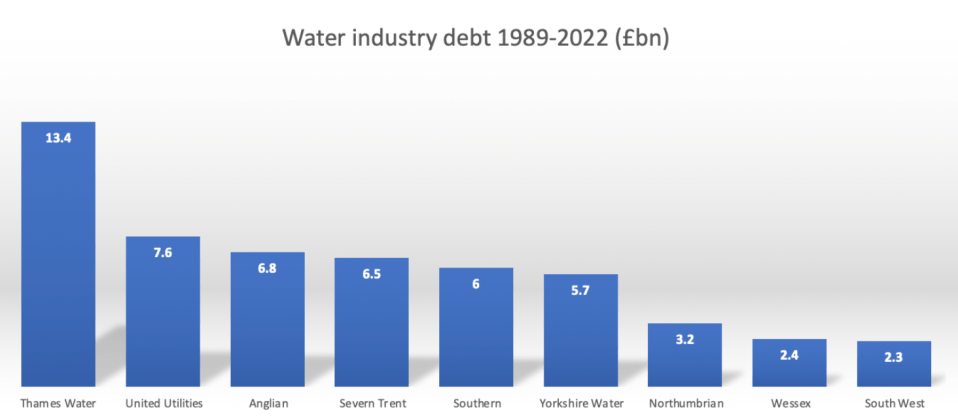
This is a daunting challenge for a sector which has routinely failed to meet its investment targets – with the Big Nine suppliers plagued under a collective debt pile of £54bn.
Ofwat data shows that 14 companies underspent their budget on improving their own pipeline networks, and eight companies underspent their budget for improving their wastewater network between 2020 and 2022.
More controversially, as much as seven per cent will have to be met through recycled water.
What is ‘recycled water’?
Recycled water involves putting sewage from treatment works through a further clean-up process, before releasing into rivers, lakes and reservoirs and being drawn back into treatment works, eventually coming out of taps across Britain.
This would be used for washing, cleaning, and even drinking.
The technology is already in use in developed economies such as Australia, Israel and Singapore – and water companies have presented 10 proposals for water recycling plants to the Environment Agency, which remain under consideration.
These proposals are present within the companies’ Draft Water Resource Management Plan – with location, environmental considerations and supply needs all expected to be scrutinised.
Water UK, the industry body for suppliers, has argued recycling methods will be vital for reducing the risk of supply shortages in the face of a growing population and climate change.
A spokesperson told City PM: “Water recycling is one of several proposals for responding to climate change, alongside new reservoirs and long-distance water transfers. Investment across these projects will be crucial for reducing the risk of future drought and will only proceed if their final drinking water matches or exceeds our world-leading standards, as tested by the independent regulator.”
The government confirmed that any such recycling options would have to meet “the environmental requirements for treatment discharges.
A Defra spokesperson said: “Water regulators are currently responding to the consultations on the draft water resources management plans, which are then referred to the Secretary of State for decisions on whether they can be finalised. We are taking a number of actions to improve water supply through our Plan for Water, including setting ambitious targets for water companies to crack down on leakage.”
When could it be running through our taps?
There are many steps to go before any of the proposed projects for recycled water would enter the building phase, including regulatory sign off and also a stringent planning processes.
City PM understands the industry recognises the need to secure public confidence in the plans and technology.
But it could feature in management plans approved as soon as next year – which will determine the business models of suppliers until the end of the decade.
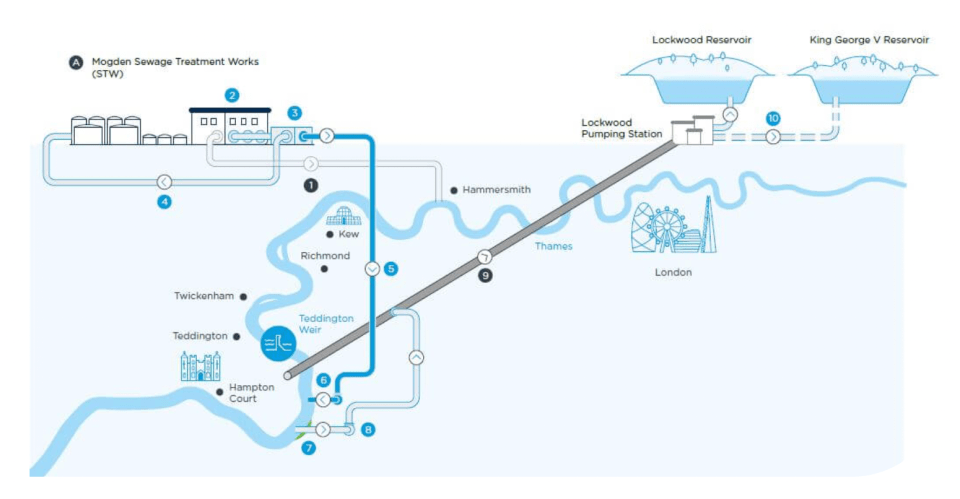
One of the projects being considered is the Teddington Direct River Abstraction (DRA) proposal from Thames Water.
It was first put forward in the company’s resource management plan four years ago, and could be a potential bellwether for the direction of travel.
However, the Environment Agency rejected the scheme at the time due to its unacceptable environmental impacts – including temperature change in the lower freshwater Thames.
The mooted project has since been reformed and re-introduced as an option by Thames Water in their draft management plan for 2024.
A Thames Water spokesperson said: “We need to invest in new sources of water if we are to provide a secure and sustainable water supply for the future. Our work to date demonstrates that the proposed abstraction scheme in West London is a cost-effective option and our environmental studies have shown that the scheme would not cause detriment to the environment. ”
The company estimates the project will provide up to 75 million litres per day as a drought resilience scheme – only being used during during periods of prolonged dry weather.
However, based on the evidence presented, the Environment Agency has demanded a further environmental assessment over the scheme’s long-term feasibility and impact.
This includes further water quality monitoring and modelling, as well as additional assessments of the impact on fish and river ecology.
The timeframe for these assessments is not clear, and the Environment Agency has instead suggested Thames Water develop alternative options that can be substituted into their plan.
Nevertheless, with the UK’s largest suppliers pushing the project for approval in management plans as soon as next year, the concept of water recycling will only gain traction in the industry and become and increasing source of controversy.